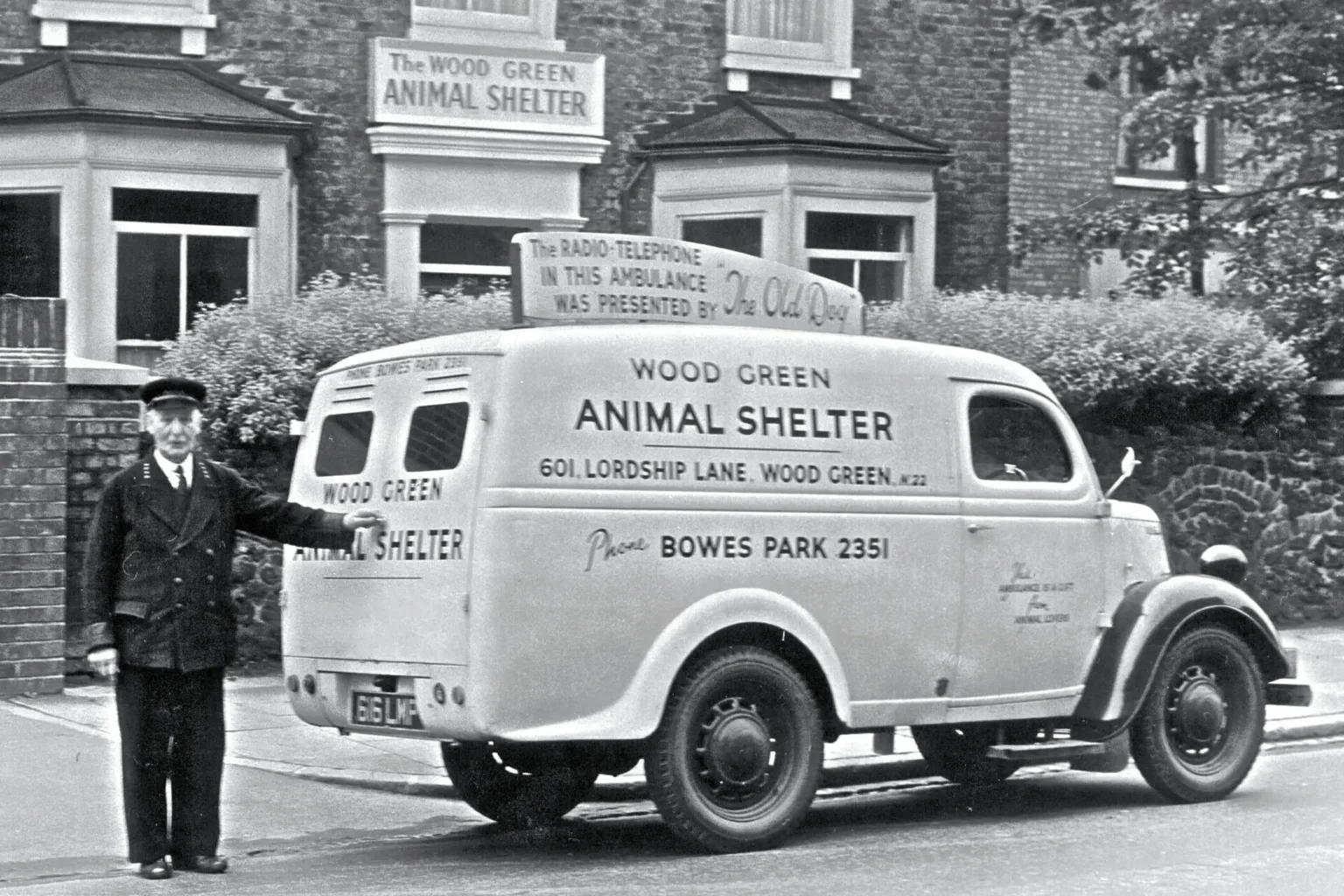
Woodgreen celebrates 100 years
Woodgreen Pets Charity, which started life in north London after the First World War, is appealing for people to share their memories during its centenary year.
November marks 100 years since Woodgreen Pets Charity’s original shelter opened in Lordship Lane in Wood Green, north London.
Pet lovers in the area are being asked to share their heartwarming stories and memories of supporting the organisation over the decades. This could be adopting a beloved pet and the difference it made to their life, memories of volunteering at one of its centres, or how support from Woodgreen’s experts helped transform their pet’s welfare. People can submit their stories at 100years@woodgreen.org.uk
Louisa Snow originally started what was then called Wood Green Animal Shelter in 1924, with help from Dr Philip G Peabody. It was at a time when society was struggling with the devastating after-effects of the First World War. Many people were unable to afford to care for their pets – leaving countless animals abandoned and vulnerable on the streets, facing imminent starvation, illness and other dangers.
In 2020, the charity made the difficult decision to close its London and Heydon Centres, and now has one centre based in Godmanchester, Cambridgeshire. Over the decades it’s grown into an organisation that helps thousands of pets and people each year.
Rohan Putter, chief executive officer at Woodgreen Pets Charity, said: “For 100 years, Woodgreen has been able to help pets and their people thanks to everyone who supports our work. The challenges people faced with their pets in 1924 are as relevant today, whether that’s a behavioural issue, medical condition or simply not being able to afford to care for them. However, the way we help pet owners has changed significantly.
“We’ve learned a lot over the last century, and we’re much better equipped to meet the needs of pets and their people. Looking to the future, we’re excited about embracing a fresh approach.
“Of course, rescuing, rehabilitating and rehoming pets in need will always be a core part of our work. But our new focus is on keeping pets in loving homes through our prevention and early intervention work. We now help three times as many pets through our Community Services team than rehoming, which means keeping more pets in their loving homes.”