Pet advice from Woodgreen
From behavioural issues to dietary needs, we’ve got you covered.
Create the best environment for your hamster
Hamsters are known for sleeping lots – but when they’re awake, they want to be busy exploring, foraging and digging. Creating the best environment for your hamster will help them feel right at home.
You may find your hamster constantly munching away at the bars of their enclosure, or even trying to escape! This is a sure-fire way of telling that your little friend is bored of their home. Their environment may be a bit lacklustre and may need more space or activities to keep them entertained.
Providing your hamster with plenty of toys and activities and swapping these round, will help keep them fit, happy and healthy. Remember, this doesn’t need to cost the earth, there are lots of cost-effective recourses out there to keep your hamster busy and distracted so they don’t attempt to break free.
Your hamster will enjoy:
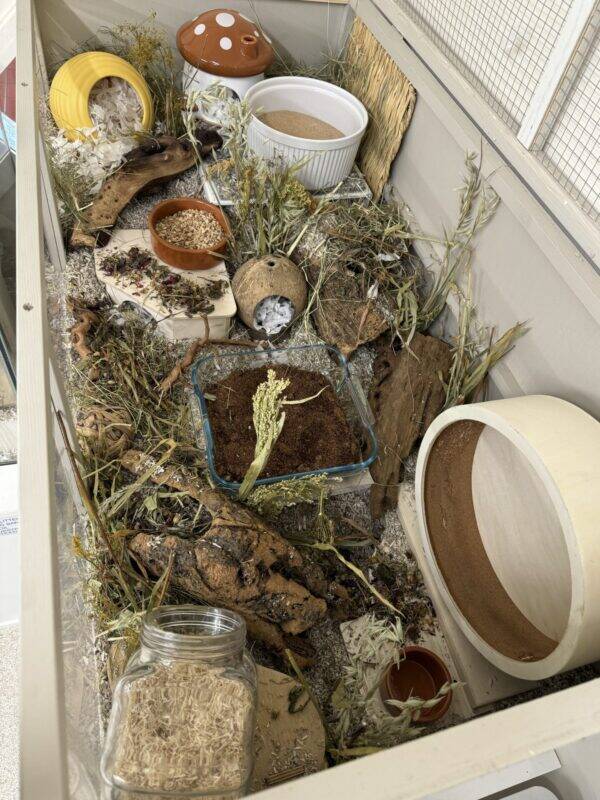
A hamster enclosure filled with natural elements like hay, seed sprays, wood hides, a sand bath, a water dish, a glass jar with hemp in, a large exercise wheel, and a ceramic mushroom-shaped house to make your hamster feel at home.
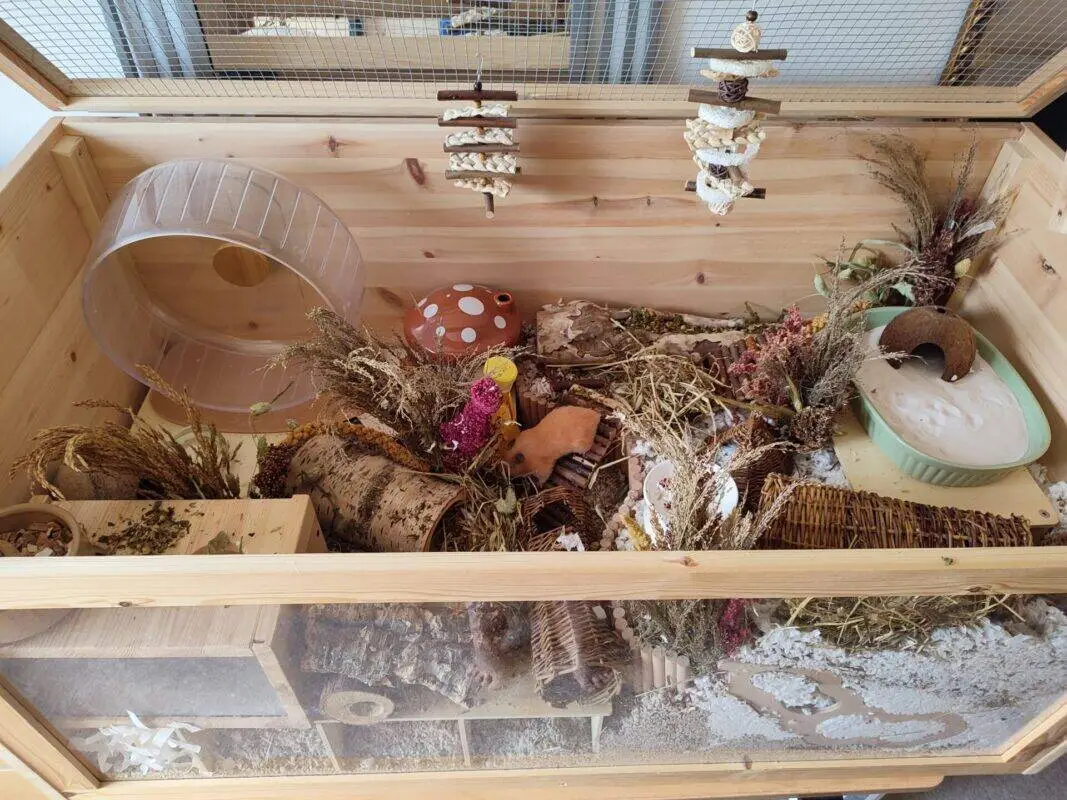
A wooden hamster enclosure filled with natural items like seed sprays, wooden tunnels, a running wheel, a ceramic dish filled with hamster-safe sand, a mushroom-shaped hide, hanging chew toy, and various textures for your hamster’s enrichment.
We don’t recommend exercise balls for small pets. They can often feel disorientated after use, there’s no access to drinking water, and their little toes/feet can get stuck in the ventilation slits. You can however use them as a hiding space in the cage by removing the lid and filling with soft tissue bedding for them to use.
It’s important to use the correct bedding for your hamster, otherwise it could have a negative effect on their health.
Wood shavings or sawdust can be extremely harmful to a hamster’s skin and airway, and it can give us humans an allergic reaction too!
Hamsters in the wild spend a lot of time underground digging burrows. With our pet hamsters, it’s also important for them to be able to display this natural behaviour. To do this, they should have a minimum of six inches of bedding placed throughout the majority of their enclosure.
They should also have a deeper digging space of at least 10 to 12 inches (25 to 30cms), to enable them to create larger burrows and nests.
| Base of cage options | Nesting/digging space |
| Use a couple of the options mixed together for absorbency and stability.
| Options that hold burrows well:
|
*Avoid cotton wool types of bedding and ‘seed pod’ bedding as this can be very dangerous for your pets. It can cause pouch prolapses, intestinal blockages and can get tightly wound around their body and legs.

Keeping your hamster cage clean is key to preventing serious health conditions such as respiratory problems.
*Place any large and heavy toys into the cage first, before the bedding. This will help to prevent them moving or falling and potentially harming your hamster, if placed on top.
Keep as much of their clean used bedding as you can in their enclosure – this will help to minimise stress when placing your hamster back in.
If a link has an * by it, that means it is an affiliate link. By using these links, it might result in a small payment to Woodgreen as the retailer will be able to see that woodgreen.org.uk was the referring website. This helps keep our pet advice available to everyone, and our support services available for those who need them most.
Any products or services we recommend always remains independently chosen by our pet experts. When we link out to a recommended product, for example a type of harness or feeder, we are recommending the individual product, not any particular retailer. Read our affiliates FAQ for more details
Neither Woodgreen, or the affiliate networks we use collect any personal data through these links.