ADVICE
Your rabbits' health: what to look out for
Looking for advice on how to keep your rabbits’ health in tip top shape? You’re in the right place!
Read more about 'Your rabbits’ health: what to look out for'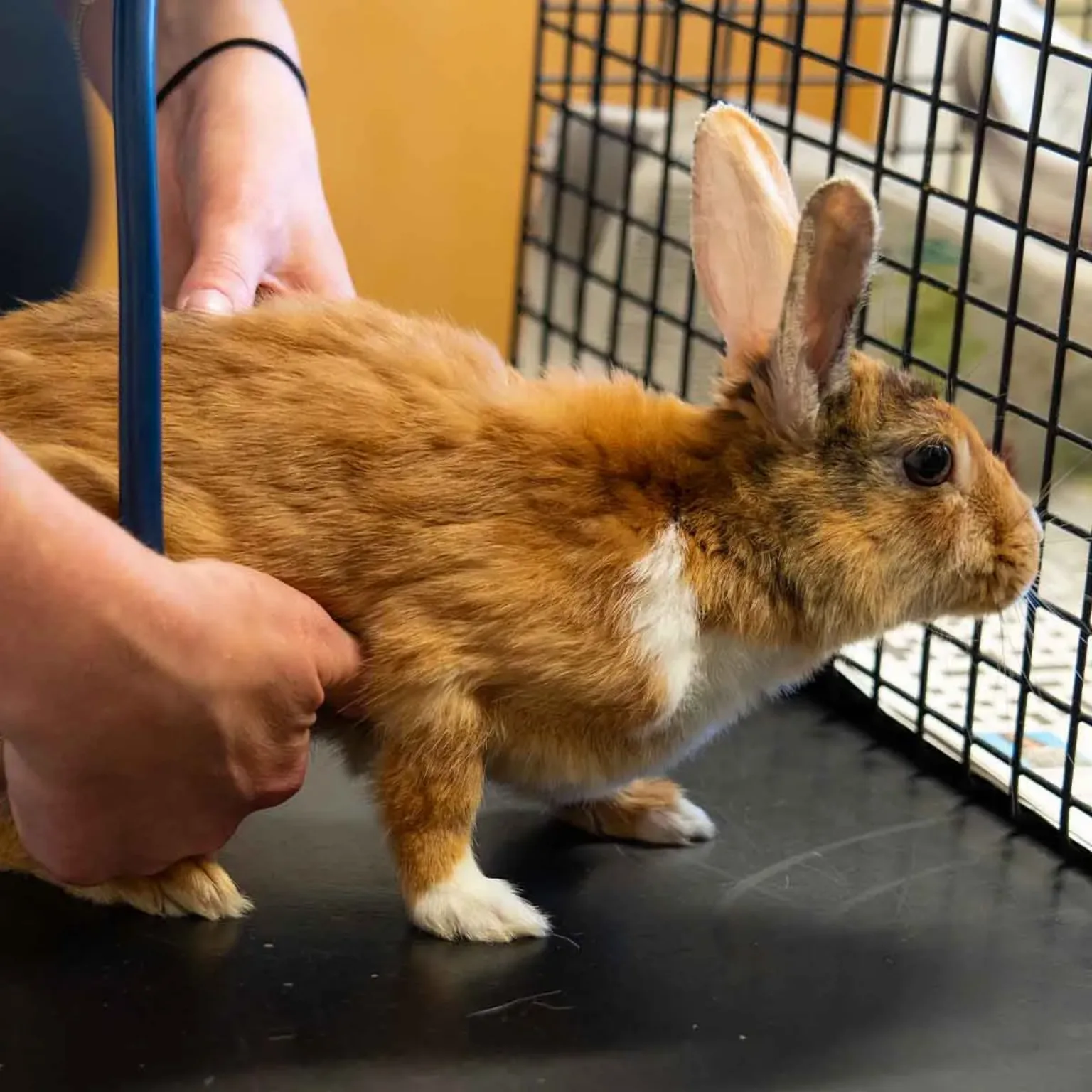
If you suspect your rabbit has flystrike, call your vet immediately. Do not wait to see if things improve. This is an emergency that requires urgent veterinary attention and the sooner your rabbit is seen, the better their chances of recovery.
Flystrike (also known as myiasis) is a condition caused by flies laying eggs on a rabbit’s fur. It is a deadly condition, but rabbits that receive prompt treatment can make a full recovery.
Our guide below covers what to look out for, what causes flystrike, and how to prevent it.
Flystrike occurs when flies, most commonly greenbottles or bluebottles, lay their eggs on a rabbit’s fur. A single fly can lay up to 200 eggs, which can hatch in just a few hours. The maggots that emerge then burrow into the rabbit’s skin and feed on their flesh, causing large painful wounds. The condition can become fatal within 24 hours, which is why it’s so important to act quickly.
The most obvious sign of flystrike is visible maggots or eggs in the fur, particularly around the bottom, tail base, belly, and back. More subtle, early signs include:
Because rabbits naturally mask signs of illness, even subtle changes should be taken seriously. If something doesn’t seem right, check your rabbit thoroughly and call your vet. You can learn more about understanding your rabbit’s wellbeing on our rabbit advice pages.
Any rabbit can develop flystrike. Flies are drawn to warm, damp areas and the smell of open wounds, urine, or faeces, so rabbits with a soiled bottom are at greatest risk. A soiled bottom can result from diarrhoea, a diet with too much sugar or starch, or a dirty living environment. Rabbits produce soft droppings called caecotrophs that they eat directly from their bottom; if they cannot eat them due to dental problems or reach them because of arthritis or obesity, then the droppings collect in the fur and attract flies.
Flystrike is most common between May and October, though it can occur at any time of year. Even indoor rabbits are at risk of flystrike, so always watch out for signs of this condition. According to RVC VetCompass research, flystrike is the leading recorded cause of death for pet rabbits in the UK, which is why early intervention and treatment matters so much.
Check your rabbit for eggs at least once a day – twice daily in summer – focusing on their bottom, tail base, and underside. Part the fur gently and look for small white eggs or whitish-yellow larvae. If you spot either, contact your vet immediately.
Flystrike is a veterinary emergency. Do not attempt to treat it at home and do not put your rabbit in water, as this can cause shock. Call your vet straight away. Treatment usually involves sedation or a general anaesthetic, clipping the fur, and thorough removal of all maggots and eggs. Your vet will provide pain relief and may prescribe antibiotics to prevent secondary infection. A fluid drip may be needed if your rabbit is in shock. In severe cases, euthanasia may be the kindest option.
Prevention is the most effective approach. A few daily habits can significantly reduce your rabbit’s risk of flystrike:
To find out more about keeping your rabbit healthy, read our rabbit health and wellbeing advice, or visit our how long rabbits live article.
Looking for advice on how to keep your rabbits’ health in tip top shape? You’re in the right place!
Read more about 'Your rabbits’ health: what to look out for'
Check out our advice on helping your rabbits feel at home.
Read more about 'How to create the perfect environment for your pet rabbits'
Blocked tear ducts (Dacryocystitis) is an abnormal flow of tears from your rabbit's eyes.
Read more about 'How to spot rabbit dacryocystitis (rabbit weepy eye)'