No cat breed is truly hypoallergenic
All cats produce the protein that causes allergies, but some produce less of it than others.

All cats produce the protein that causes allergies, but some produce less of it than others.
Spending time with a breed before committing is the only surefire way to know how your allergy will respond.
Hypoallergenic means ‘less likely to cause an allergic reaction – not ‘allergy-free’. All cats produce a protein (Fel d 1) in their saliva, skin, and urine, which spreads onto their fur when they groom.
Some breeds produce lower levels of this protein, or shed less, so less of it circulates around the home. Even though some breeds are known to be allergy-friendly, such as the Siberian or Bengal, but you could still react to them.
A pedigree cat has a recorded family tree accepted by a registration body such as the GCCF, Felis Britannica, or TICA.
Because pedigree cats are bred from a smaller gene pool, they can be at greater risk of inherited health conditions than moggies. If you’re considering getting a pedigree breed, always choose a responsible breeder who health tests their cats.
Several pedigree cat breeds are commonly described as lower-allergen options:
Despite a thick, long coat, the Siberian is associated with a lower risk of allergic reactions. They’re affectionate and playful, but their coat needs regular brushing.
The Russian Blue has a short, dense coat that sheds relatively little. They’re calm and loyal and usually form close bonds with their owners.
Similar in appearance to the Siamese but with a longer coat, the Balinese produces lower levels of the proteins which trigger allergic reactions.
Both Rex breeds have short, curly coats that shed very little, reducing the spread of allergen-carrying hair around the home. These are lively and social cats!
The Sphynx has no coat to carry allergens, but they still produce the protein which triggers allergies. Regular bathing helps manage the build-up of skin oils. Before taking on a Sphynx, make sure you do your research as they have quite specific needs.
The Siamese has a short, fine coat and is often cited as a lower-allergen breed. They’re vocal, intelligent and highly sociable, and tend to bond closely with their owners.
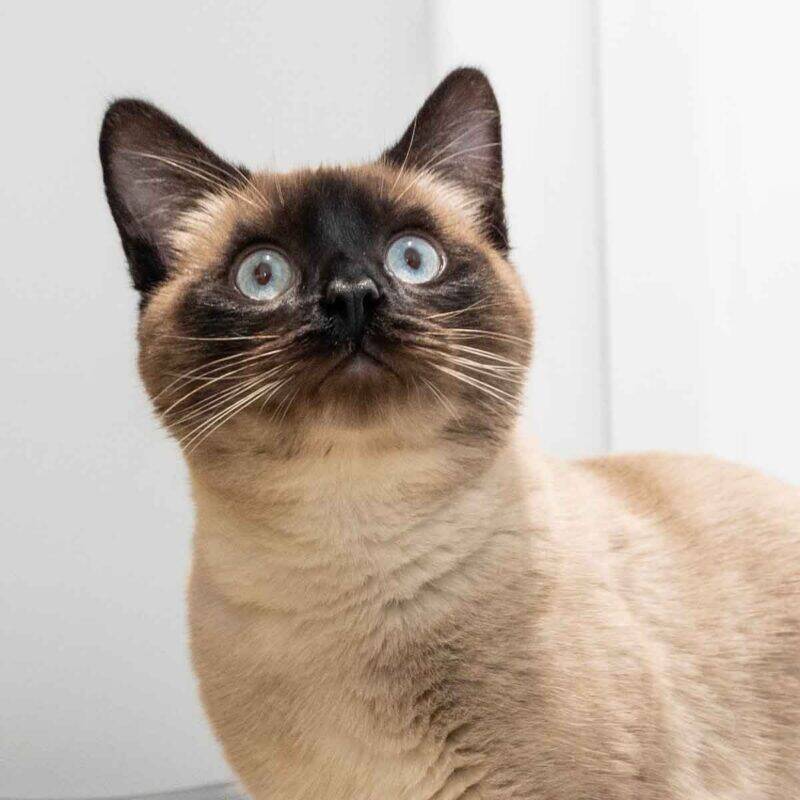
An Applehead Siamese cat
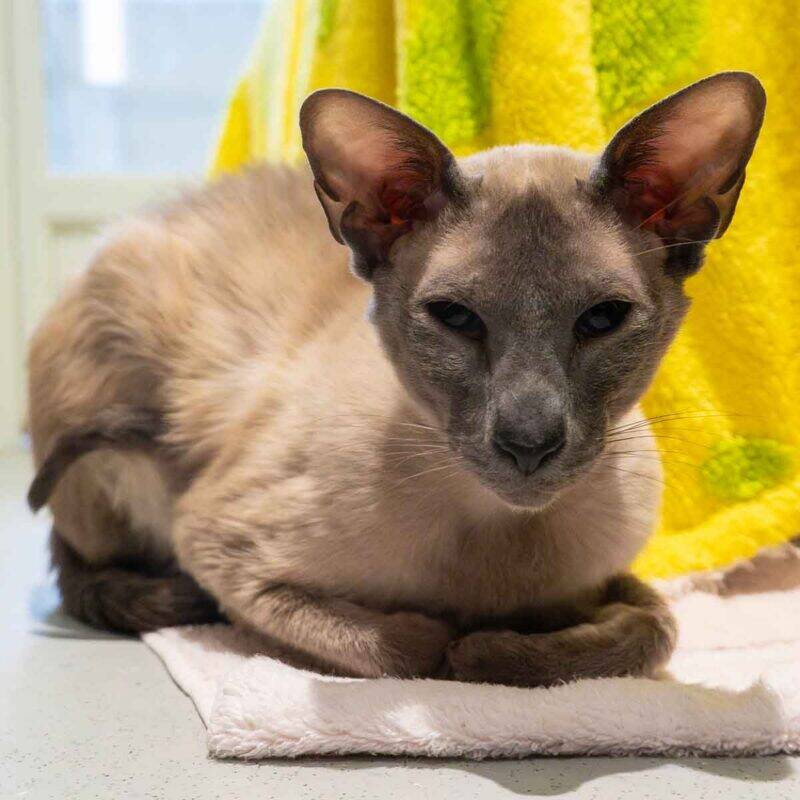
An Wedgehead Siamese cat
As well as choosing a lower-allergen breed, here are some more steps that can help reduce your exposure:
Where possible, ask a non-allergic member of the household to groom your cat. If you do it yourself, wear gloves and wash your hands and clothes afterwards. Grooming outside prevents loose fur and dander from settling on furniture and surfaces indoors.
Male cats produce more of the allergy-causing protein than females, and unneutered males produce the most. Neutering your cat, or choosing a female, may help reduce allergen levels slightly, but it won’t eliminate them.
Visit a breeder or rescue centre and spend time with the cat before committing. No breed guide can predict how your allergy will respond to a specific cat.
If you suspect a cat allergy, speak to your GP before getting a cat. They can confirm the cause of your symptoms and give you advice about medication.
Vacuum regularly, wash soft furnishings often, and consider an air purifier. Whatever breed you choose, these steps will help!
There are plenty of things to consider before you make that decision.
It’s important to regularly health check your cat to ensure they’re in tip-top condition. Here are some simple checks you can do to make sure they're happy and healthy.
Read more about 'How to check your cat’s health at home: a full healthcare guide'
Learn more about our cat adoption process, and apply to adopt one of our rescue cats
Read more about 'Adopt a rescue cat'