ADVICE
An introduction to gerbils
Gerbils are fascinating pets. A lot can be learnt from sitting, watching them in their maze of tunnels.
Read more about 'An introduction to gerbils'
The minimum tank size for two gerbils is:
The minimum tanks size for three gerbils is:
If you’re buying a ready-made enclosure, avoid anything with mesh shelves as these can damage your gerbils’ feet. It’s also important to avoid rodent tanks with solid shelves, as a weaker gerbil may become stuck underneath when trying to dig up for air or to escape.
Suitable gerbil housing is very limited and can be tricky to find. Because of this, we recommend building your own by converting a tank.
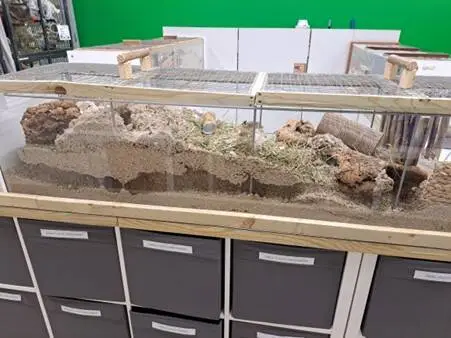
Converted Ikea Detolf
Use a large fish tank or a glass display cabinet like the Ikea Detolf, laid on its back (see above for recommended sizings depending on gerbil group size). Both need a homemade, mesh lid to make sure your gerbils get plenty of fresh air. A standard fish tank lid is not suitable.
To make the lid, start by building a wooden frame, a bit like a picture frame. This will either sit on the inside ledges of the tank or fit snugly over the top edge of the enclosure. Make sure it’s securely built using proper wood screws and not tied or loosely fixed together. For larger glass cabinets, you may need to build the lid in two sections to avoid it becoming weak in the middle.
Once the frame is ready, use a staple gun to fix 1cm by 1cm welded mesh to the lid. If possible, attach the mesh on the inside of the lid to help prevent your gerbils chewing the wood.
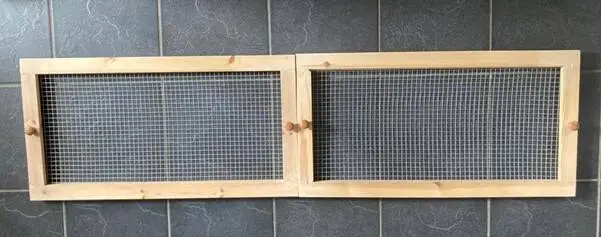
Two rectangular wooden frames with mesh wire centres, ideal as a gerbil homemade lid for tank, are joined side by side.
When choosing where to place your gerbil enclosure, make sure it’s:
Unlike most rodents, providing toys and activities for gerbils can be tricky. Many items aren’t suitable and could injure them. Plastic items should be avoided as they can quickly be chewed into sharp edges. However, there are still plenty of safe options to help keep them active, healthy and engaged.
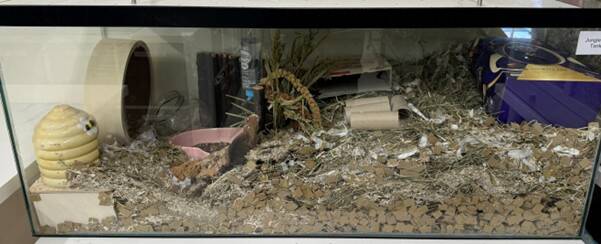
A gerbil glass tank filled with shredded bedding, cardboard pieces, hay, a yellow beehive-shaped hideout, a wheel, a wooden tunnel, cardboard hideouts, and some cardboard tubes.
Top tip – place a roll of unscented toilet paper into their enclosure. They’ll have great fun ripping it up and taking it down into their burrows to make a cosy nest!
It’s important to use the correct bedding for your gerbils, as the wrong type can affect their health. Wood shavings or sawdust can be harmful to your gerbils’ skin and airways, and may also cause an allergic reaction in people too! Click here to find out more.
In the wild, gerbils spend a lot of time underground digging burrows. For pet gerbils, it’s important to support this natural behaviour too. To do this, they should have at least 8-10 inches (20-25cms) of bedding throughout their enclosure, allowing them to build larger burrows and nests. Make sure there is enough space at the surface for them to reach up on their hind legs without touching the lid.
Use two or more of the options mixed together for absorbency and stability.
*Avoid cotton-wool type bedding and ‘seed pod’ bedding as this can be very dangerous to your pets – it can become tightly wound around their body and legs, causing severe injury.
Keeping your gerbil enclosure clean is key to preventing serious health conditions.
This may need to be done more often depending on how many gerbils you have:
*Place any heavy toys into the enclosure first, before the bedding. This will help to prevent them moving or falling and potentially harming your gerbils as they dig.
Gerbils are fascinating pets. A lot can be learnt from sitting, watching them in their maze of tunnels.
Read more about 'An introduction to gerbils' Gerbils are generally quite healthy animals – most of their illnesses come with age.
Read more about 'Your gerbils’ health: what to look out for'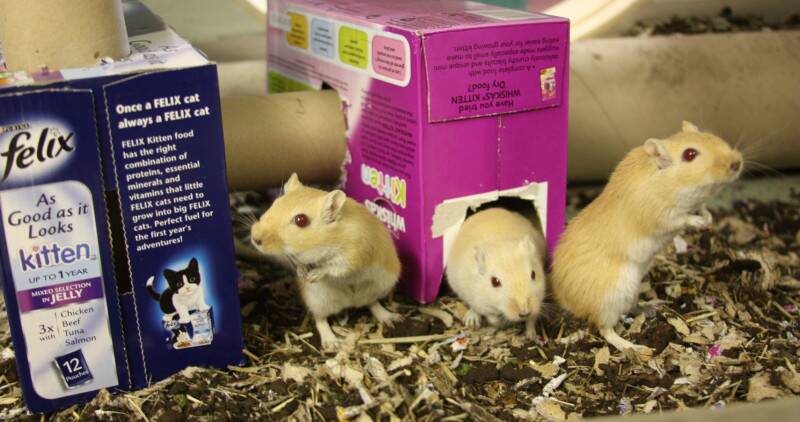
We all love to treat our pets and keep them happy. If you are looking to give your gerbils and hamsters a special something, then follow our steps to create some cheap and easy hamster and gerbil hotels!
Read more about 'Make your own: hamster and gerbil hotels'