There is a constant risk of bird flu spread by wild birds in the UK. It doesn’t matter how many, or what birds you keep – by law you must act to keep your pets safe all year.
What is bird flu?
Bird flu (avian influenza) is a highly contagious and fatal viral disease that can affect both wild and domestic birds. There are many strains of the virus, some more severe than others. The strain known as H5N1 – a type of highly pathogenic avian influenza (HPAI) – is behind most of the outbreaks across the UK and Europe in recent years.
Bird flu poses a serious risk to backyard flocks and commercial poultry. There are certain strains which can affect humans, but this is rare.
How does bird flu spread?
- Mixing with infected wild birds
- Being exposed to faeces and feathers from infected birds
- The virus being brought into your bird’s environment, for example from dirty footwear or clothing
What are the signs of bird flu?
Symptoms can vary, but signs to look out for in your chickens and other poultry include:
- Loss of appetite
- Lethargy
- Coughing, sneezing or gurgling sounds
- Nasal or eye discharge
- Swollen head
- Discolouration of the wattles, comb (often turning blue)
- Reduced egg production
- Loss of coordination, tremors or twisting of the head and neck
- Sudden death, sometimes with no prior symptoms
For a more detailed list of symptoms, read the government’s guidance on bird flu.
Bear in mind that waterfowl such as ducks and geese don’t always show visible signs of infection. This is why it’s so important to keep them separate from your other birds.
If you suspect any of your birds have bird flu, you are legally required to report it straight away. You can find the full guidance on reporting on the government’s website.
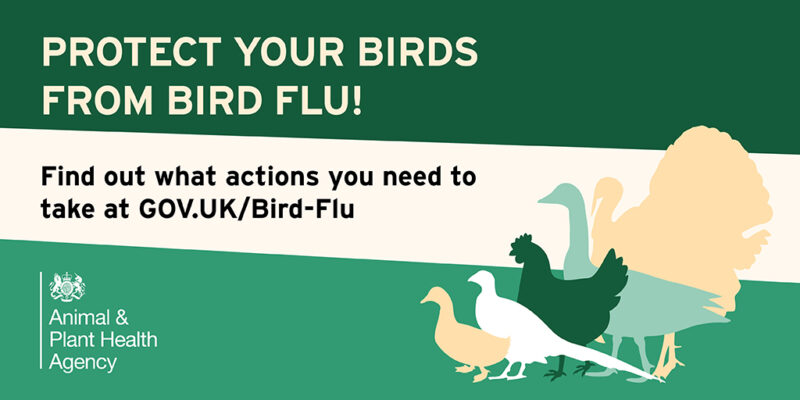
What do I need to do to protect my birds?
Did you know it’s now a legal requirement to register any poultry you own?
When you register, you’ll be notified if there are any bird flu or disease outbreaks in your area. You’ll also be given information on how to protect your flock and prevent the spread of disease.
You can find out more information and register by reading the government guidance on mandatory bird registration.
Here are some simple measures you can take to protect your birds against bird flu:
- Place food and water under cover to prevent contamination from wild birds
- Change or disinfect your footwear when entering the enclosure to prevent any contamination
- Remember to wash your hands before and after tending to your birds
- Regularly clean and disinfect equipment and hard surfaces
- Ensure you have proper rodent/vermin control in place
- You can make your premises unattractive to wild birds by using scarecrows, foils or streamers
- Prevent your birds from having access to neighbouring poultry
- Reduce the movement of people, vehicles or equipment to and from areas where poultry are kept
I only have a small flock – do the restrictions still apply to me?
Yes! Since October 2022, around one in five bird flu cases were from poultry kept as pets in a garden.
When restrictions and mandatory housing measures are in place, it is a legal requirement to follow these restrictions and practise good biosecurity to help prevent the spread of bird flu.
What are the current bird flu restrictions?
Bird flu restrictions in the UK can change quickly depending on the time of year and the level of disease activity. The government may introduce a mandatory housing order, requiring all keepers to house their birds securely – regardless of flock size. At other times, a set of enhanced biosecurity measures may be in place even without a full housing order.
Because restrictions are updated regularly, it’s important to be aware of the government’s latest position. You can find the most up-to-date information, including any active housing orders and local disease control zones, on the UK government’s bird flu guidance page. You can also use the avian influenza disease map to check for restrictions in your specific area.
Where can I find the most up to date advice?
How can I stop my birds from getting bored?
When restrictions are in place, your birds will unlikely be able to enjoy free-range time in your garden. However, there are a number of things you can do so your flock doesn’t get bored:
- Look at extending your birds’ enclosure to provide them with a larger space to enjoy during these periods.
- Provide wooden perches and/or repurpose old furniture, such as chairs and tables, for them to jump and sit on. Large boxes and carriers are brilliant for them to nest in or sit on top of.
- Add dust baths filled with organic compost or sand (this must come from a sealed bag and not from your garden).
- Try hanging up a range of tasty treats, such as cabbages, carrots or corn on the cob. If you’ve got a selection of old CDs or DVDs you no longer use, you can also hang these up – your chickens will love looking at them!
- Include feed balls, filled with a tasty treat like corn, for them to move around their enclosure.