- Feel over their body for any lumps and bumps. These often appear under the jaw line due to dental problems, or at the ear bases due to ear abscesses (particularly lops), or along the back/rear end if they’ve been in a recent fight.
- Check their ears, skin and fur for any signs of parasites – find more information on this below.
- Check their eyes. If one or both eyes is weeping it could be a sign of dental disease. Swollen, red, puffy eyelids can also be early signs of myxomatosis, a serious viral disease.
- Check their mouth and front incisors for any signs of unusual growths.
- Check their nose for any discharge or sounds of noisy breathing.
- Your rabbits should appear bright, alert and inquisitive with a healthy-looking coat.
- Monitor their hopping. Rabbits should never appear to walk on their tiptoes. If they do, it could be a sign of spinal problems.
- Check their bottom for a build-up of faeces, blocked glands or signs of fly strike, as these can be indicators that your rabbit is overweight. It could also mean something isn’t quite right with their diet.
- Check that your rabbit doesn’t have a head tilt or appears to be swaying to one side. This could be a symptom of E. cuniculi or an ear infection.
- Lastly, check their litter trays and enclosure for any abnormal poo. This can be an early sign of several life-threatening illnesses or dietary problems.
Always neuter your rabbits
Neutering your rabbits is extremely important to:
- Prevent unwanted litters
- Dramatically increase the chances of bonding a pair of rabbits successfully, as it removes hormones which can cause them to be overly territorial
- Stop males from spraying and reduces mounting
- Reduce ‘grumpy’ behaviours
- Stop females from going through stressful phantom pregnancies
- Prevent uterine cancer in females, which is very common in rabbits over the age of two years
Male rabbits can be neutered as soon as their testicles have appeared – around three to four months. Females can be neutered from around four to five months, depending on their size and preference of your vet. Although the procedure is now very straightforward and considered safe, it’s extremely important you take your rabbits to a recommended, experienced rabbit-savvy vet to avoid complications.
Look here to find a rabbit-friendly vet in your area: Recommended Rabbit-Friendly Vets | Rabbit Welfare Association & Fund (RWAF)
Rabbit skin conditions – mites
Rabbits are prone to mites which can find their way onto them through hay and other bedding. This makes it difficult to prevent them completely. Mites can affect your rabbits’ whole body, or often just show up behind their ears. It’s important to look out for mites regularly when health checking your rabbits. Signs to check for include:
- Flaky dandruff and fur loss between the shoulder blades, known as walking dandruff fur mites
- Very small black dots when back combing hair around the rear area, which can be accompanied by ‘tufty’ fur
- Head or ear shaking and scratching
- Redness, blood spots, scabs or crusts building up around the ears
If you spot any of these symptoms, take your rabbits to a rabbit-savvy vet.
Myxomatosis and VHD
Your rabbits will need vaccinating twice a year – one to help protect them against myxomatosis & RVHD1 & 2 (rabbit viral haemorrhagic disease), and the other for the newer highly virulent RVHD2 strain. These diseases are fatal and easily contracted.
Myxomatosis is spread by mosquitos and fleas, so even indoor rabbits are at risk.
Signs of myxomatosis to look out for:
- Puffy, red or swollen eyes and genital area
- Small bumps and lumps appearing in the ears and over the body
- Crusty lump appearing on the nose
- Noisy breathing
- Sitting hunched and fluffed
- Eyes shut with a glue-like appearance.
Sadly, once this disease has taken hold of a rabbit, they are highly unlikely to survive. While they may live for up to two weeks after contracting the disease, they will likely suffer a lot during this time. So the kindest option is to consider euthanasia, with support from your veterinary practice.
Vaccinated rabbits have a small chance of contracting myxomatosis as no vaccine can be 100% effective. However, vaccinated rabbits, if given the correct treatment promptly, can recover from myxomatosis, particularly the nodular form.
Rabbit viral haemorrhagic disease is very much a silent killer and now comes in three strains. RVHD 1 has been around for many years, although it’s not particularly common in the UK currently.
RVHD2 appeared in the UK in 2015 and has rapidly spread across the country. It’s responsible for the death of thousands of pet rabbits and the decline in wild rabbits. There’s also another highly virulent strain of RVHD2 which has been found in Europe within the past couple of years. This can be spread to your rabbits on your clothes or footwear if you’ve unknowingly been in contact with it. Or it can be passed on if your rabbit is in contact with a rabbit in the early stages of the disease.
If your rabbit passes away suddenly with no obvious reason, it’s recommended to have a post-mortem carried out by your veterinary practice. Positive results can then be documented to help track the virus’ movements.
There are little or no symptoms of RVHD. Signs of the disease include:
- Sudden death with no symptoms
- Jaundice (yellowing of the skin and eyes)
- Sudden collapse where death follows within hours
- Projectile diarrhoea, followed quickly by death
- A loud scream followed by death
Dental health
Poor dental health is one of the most common killers in rabbits, often because of an incorrect diet or due to genetics.
Rabbits should eat a diet of at least 85% hay or grass. If they don’t, their teeth may elongate and begin to wear unevenly, causing sharp ‘spurs’. These can then lead to ulceration to the tongue or cheeks. The tooth roots can also break through the jawbone or grow up into the eye sockets of the rabbit, causing pain and abscesses.
Feeding your rabbits the right diet will dramatically reduce these risks, and in some cases resolve very early symptoms. Signs to look out for include:
- One or both eyes weeping or blocked tear ducts
- Weight loss
- Drooling
- Dirty bottoms or regularly finding soft stools in their enclosure
- Change of size and or colour of their faeces. Their hard faeces should be large and golden
- Lumps/abscess along the jawline
- Lack of appetite
- Fly strike
- Overgrown front teeth with matted fur wrapped around them
- Being selective about what they eat. Hay is usually a food they won’t eat if they have dental issues, but they may also avoid dry food or a specific vegetable or forage
A rabbit with perfect teeth can still develop dental issues in later life. Keep a close eye on your rabbit for signs of problems and visit the vet at least twice a year for regular dental checks.
Unfortunately, dental disease is rarely treatable, only manageable – it can be a very slow and painful end for your rabbit. It may be kinder to put them to sleep sooner rather than later, with the support of a rabbit-savvy vet. To help prevent dental disease, ensure your rabbits have a good diet full of fibre to help keep their teeth in check.
Ear problems
Ear issues can be a big problem for rabbits, especially lop-eared types. Naturally, rabbits have upright ears and rarely have problems with them, if at all. But lop-eared rabbits are more prone to a build-up of wax in the ear as well as ear infections, due to having narrower ear canals.
If you notice any of the following signs, take your rabbit to the vet to get their ears checked:
- Shaking their head more than normal
- Scratching their ears more frequently
- Changes in their behaviour such as becoming grumpier or falling out with a friend
It’s worth making sure your rabbits have a full check over by a rabbit-savvy vet at least twice a year when they have their vaccinations. This should include a good look in their ears using a scope.
Gut stasis
As the name suggests, this is when the gut slows down or stops moving. It’s usually a symptom of an underlying problem.
Rabbits, just like guinea pigs, always need to have food passing through their gut to help keep their gut bacteria healthy and working properly. Being a prey species, they tend to hide signs they’re feeling unwell for as long as possible, so it’s important to look out for the main symptoms, which are:
- Lack of appetite or stopping eating altogether
- Appearing hunched with a bloated belly
- Looking like they’re struggling to get into a comfortable position
- Hiding away, not wanting to be near their friends
- Pressing their belly to the floor
- Producing very few (if any) droppings, which are smaller and darker in colour than normal
- Hiding away at mealtimes when they would usually excitedly run over to get their food
If you notice any of these symptoms, take your rabbit to a vet immediately. Without urgent treatment, gut stasis can be fatal. Often owners decide to wait until the next day to see if they improve – when it’s usually too late.
Once treated, your vet can then investigate the cause of the gut stasis and be able to advise ways to prevent it from reoccurring.
Some things you can do to help prevent gut stasis include:
- Ensuring your rabbits have a diet consisting of 85% hay/grass, 10% safe plants and vegetables, and 5% nuggets.
- Grooming your rabbits when they moult. Long-haired rabbits will need to be groomed regularly, as this can help to prevent them from ingesting too much fur which could cause a blockage.
- Ensure they’re having a health check by a rabbit-savvy vet at least twice a year. This helps to ensure they don’t have any obvious underlying conditions which could cause them to be in pain or feel unwell.
Fly strike
Fly strike is a condition which is very preventable, but it can come on suddenly and cause your rabbit a lot of pain, or even death.
Fly strike occurs when a fly lays its eggs around the rear end or tail area of the rabbit. These look like small grains of white rice. Maggots quickly hatch out and start to feed on your rabbit’s flesh and move up through the genital area. Rabbits commonly at risk include:
- Those without litter trays or trays that are not cleaned daily. Using, and regularly cleaning, litter trays reduces the smell that attract flies. It also reduces the chance of rabbits getting soiled fur, which is another thing that attracts them.
- Those who struggle to, or are unable to, clean themselves
- Elderly, less mobile rabbits
- Hutch or indoor cage-bound rabbits
- Long hair breeds prone to becoming matted
- Obese rabbits with double chins
- Rabbits with digestive issues or those who have an incorrect diet that often produce smelly grape-shaped poo
If your rabbit is at risk, they’ll need daily checks to monitor any signs of eggs or maggots. Remember, if you suspect your rabbit has fly strike, get to a vet immediately as there won’t be much time before it’s too late.
For rabbits who are at high risk of flystrike, vets may recommend using a product which can help with preventing it.
Keep an eye on their poo
Although not everyone’s favourite subject, it’s important to monitor your rabbits’ poo regularly for any change in size, shape, consistency, smell, or amount. Healthy poo should be around the size and shape of a pea, or larger in big breeds. It should also be light brown and be made up of lots of hay.
Poo is one of the biggest clues to poor health in a rabbit, so if you spot anything unusual, contact your vet. Look out for:
- Very limited amounts or none seen in the last 12 hours
- Smaller size or strung together like pearls
- Poo coated in a smelly, jelly-like texture. The rabbit may have a very bloated belly and appear to be sitting uncomfortably
- Very loose poos with a watery consistency
- Uneaten caecotrophs – these are a very soft, dark, sticky, types of poo. You shouldn’t normally see these as your rabbits should be eating them directly from their bottom every day (for their own good!).
Is your rabbit obese?
Obesity can cause many health problems in rabbits. Signs of an obese rabbit include:
- ‘Sticky bottom’: a big build-up of smelly faeces around the bottom.
- Regularly seeing lots of soft poos around the hutch/enclosure. These look very similar to bunches of grapes, just a lot smaller.
If you suspect your rabbit is obese, contact your vet for advice about a change of diet and weight management.
You can also keep an eye on their weight visually by using the UKPetFood size-o-meter. For more advice on how to manage obesity in your rabbits, read our helpful obesity article.
Microchipping your rabbits
Microchipping your rabbit is very important. Rabbits are keen escape artists, and many end up in rescue centres like Woodgreen as unclaimed strays. They can travel quite quickly, so it may not be your neighbour who finds them!
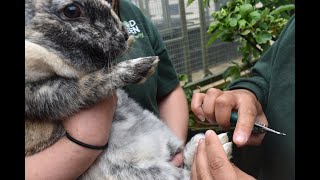
All Woodgreen rabbits are microchipped so escapees can quickly be reunited with their owners. If you have homed your rabbit from somewhere else, your vet can microchip them for a small fee.