We’re changing over systems from 22–27 April, impacting our adoption and intake services. Thanks for your patience.


We’re changing over systems from 22–27 April, impacting our adoption and intake services.


Rat Pregnancy – all you need to know

What steps should you take if you suspect your rat is pregnant, or they’ve given birth to an unexpected litter? Read on to find out.

Do rats get pregnant every time they mate?

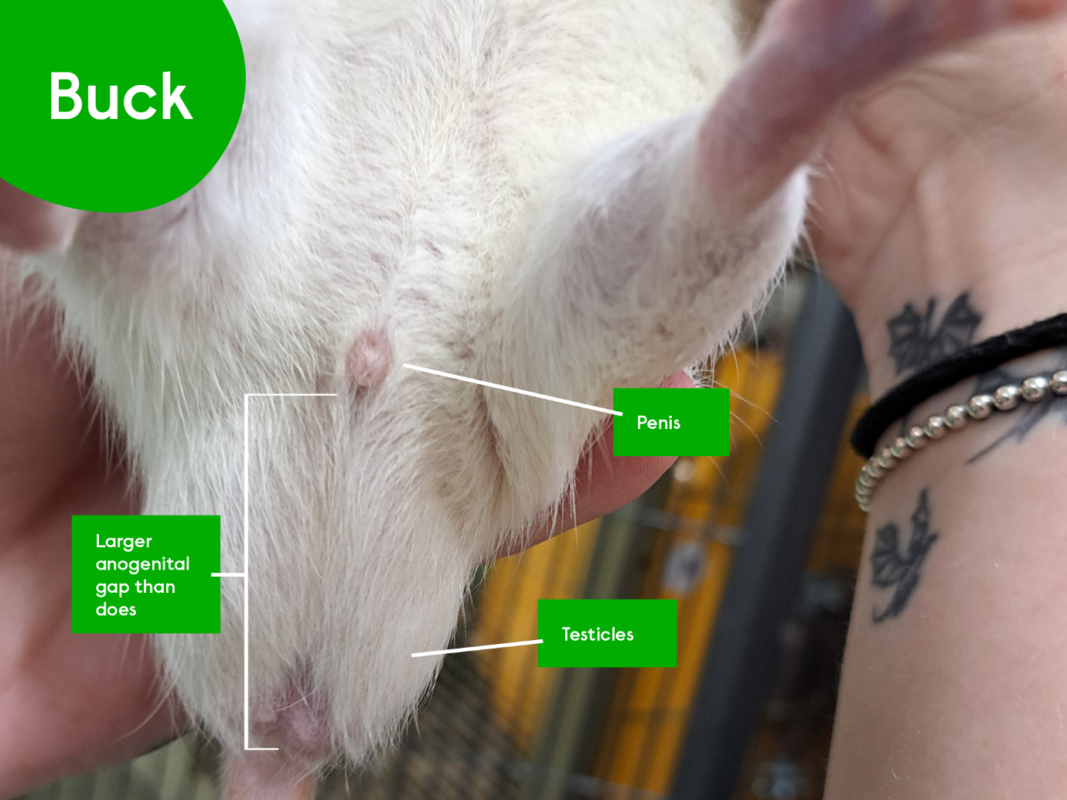
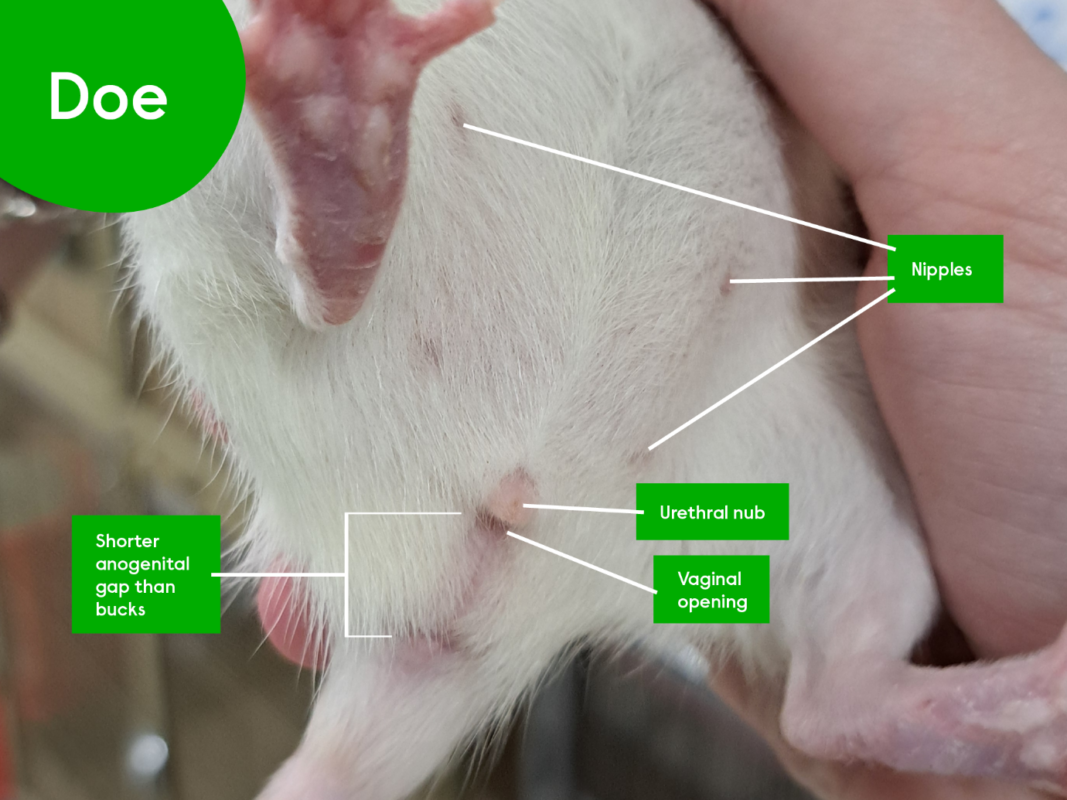
Female rats can get pregnant easily – it only takes one go! The most common reason for accidental litters in rats is being mis-sexed by the pet shop or breeder. Registered breeders can be found by visiting the National Fancy Rats Society (NFRS) website or there are local clubs such as Midlands Rat Club who also keep lists.

Close-up of a person holding a small animal, labelled Doe, showing anatomical features including teats, urethral nub, vaginal opening, and shorter anogenital gap.
  • A common mistake is housing males, known as bucks and female ‘does’ in the same room. The safest plan is to keep only one sex. If you do keep both, take steps to prevent mating. Firstly, always count the rats back into their cage after free range time before letting another group out.
  • House males and females in separate, secure cages. Avoid splitting a cage between both sexes, but if you must, make sure it has metal bases that can’t be chewed through and a pop-hole that can be securely closed.
  • Both cages for the bucks and does should have bar spacing no wider than 1.6cm. Wider gaps could allow does to escape or squeeze through during free range time.

Another reason why you may end up with a surprise litter is introducing a recently neutered male to females too soon. Castrated males can stay fertile for 9 to 10 days after the procedure, so check with your vet how long to wait before trying introductions.


What age can rats breed?

Male rats can breed from as young as 5 or 6 weeks old, so make sure whoever you got baby rats from has separated the bucks at the right time.


How long are rats pregnant for?

A rat’s pregnancy lasts around 21-24 days.


How can I tell if my rat is pregnant?

If she hasn’t been with a buck or hasn’t had contact within the last 24 days, chances are she’s not pregnant. Early pregnancy in rats isn’t easy to spot, it becomes more obvious towards the end of the pregnancy. She will look like she has swallowed a tennis ball a few days before giving birth.

You may also find she is extra grumpy with her cage mates and doesn’t want to be handled by you. At this point it is important to move her to a suitable birthing cage.

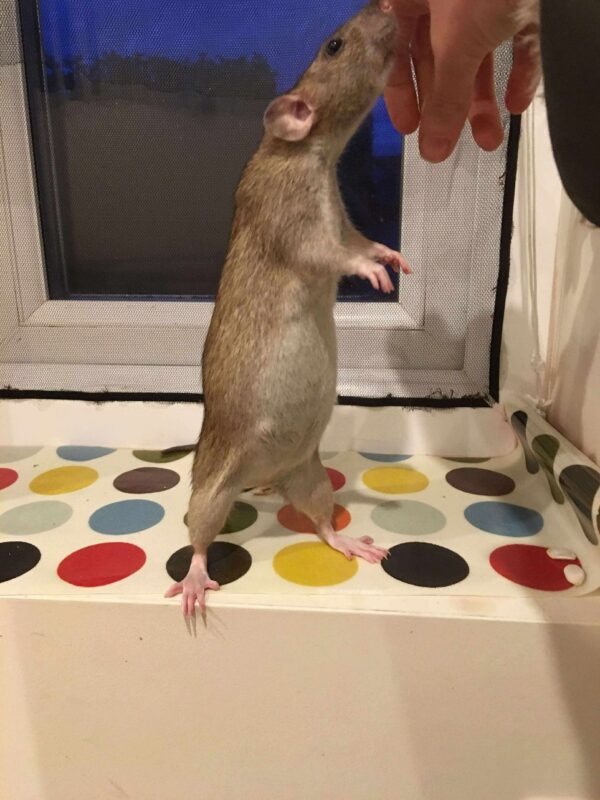
A pregnant rat stands on its hind legs on a spotty surface near a window, sniffing or nuzzling a person's hand.

A pregnant rat

How to prepare for your rat to give birth

Mum needs somewhere secure and ideally away from her friends to give birth. The cage needs to be safe, so babies don’t fall off ledges or out of hammocks when they start to move around.

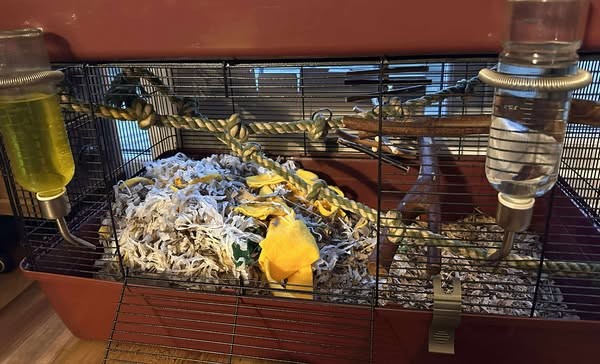
You will need a single level wire top cage with narrow bar spacing (about 1cm is fine). A cage of about 80cm x 50cm x 35 cm is ideal such as the Grosvenor Cage. Put a deep layer of your usual substrate in along with lots of soft tissue bedding so she can make a nest to give birth in and keep the babies warm and clean.

A compact rat cage with shredded paper bedding, yellow fabric pieces, two water bottles at the front, plus climbing ropes and wooden perches inside.

Put the birthing cage somewhere calm and quiet with no draughts. A spare bedroom or dining room would be good, a room that isn’t used regularly.

Place mum in a day or two before she’s due to give birth and ensure she has her usual ration of rat food and a couple of water bottles attached to the cage.


How many babies can rats have?

Rats can have up to about 20 babies (known as kittens), but they will most commonly have between 8 and 14 kittens per litter. As females can get pregnant again within 24 hours of giving birth, it’s important to move any male rats immediately.


How will I know when my rat is in labour?

Her behaviour may change leading up to the birth and for a few weeks afterwards. Look out for:

  • Becoming more defensive and moody than usual
  • Being unsettled when she is a few hours away from giving birth
  • Alternating between adjusting the nest, wandering around and stretching.
  • Signs of some discomfort due to contractions and being unsure what is happening

Most rats will give birth when it’s quiet, usually in the early hours of the morning, when they feel safest and less threatened. Mum will give birth quite quickly, so you’ll likely see the whole litter when you first come across them.


What do I need to do if I find my rat has given birth?

The best thing you can do is to leave the new mum to do her job! If you didn’t know she was pregnant, do not panic!

If mum has given birth in a hammock or on a ledge, the safest thing to do is to move mum and her babies to a single level cage. If she has given birth on the ground floor of the main cage, it’s best to leave her where she is.

Provide some extra soft tissue bedding so she can build a nest, and move her cage mates to another cage.

If you bought the rats from a pet shop and they were mis-sexed or already pregnant, the shop will often provide a cage to separate the rats. Get in touch with them to see what support they can offer.

If the rats came from somewhere else, you may have to purchase a cage or ask a local rescue if they’re able to lend you one.

Most rat mums will be quite attentive and happy to feed her babies with you watching, so it’s worth having a little peek at them to make sure everything is well. Another sign they’re all okay is you’ll hear the babies making a high pitched “eeping” noise. This is how they let their mum know they’re hungry.

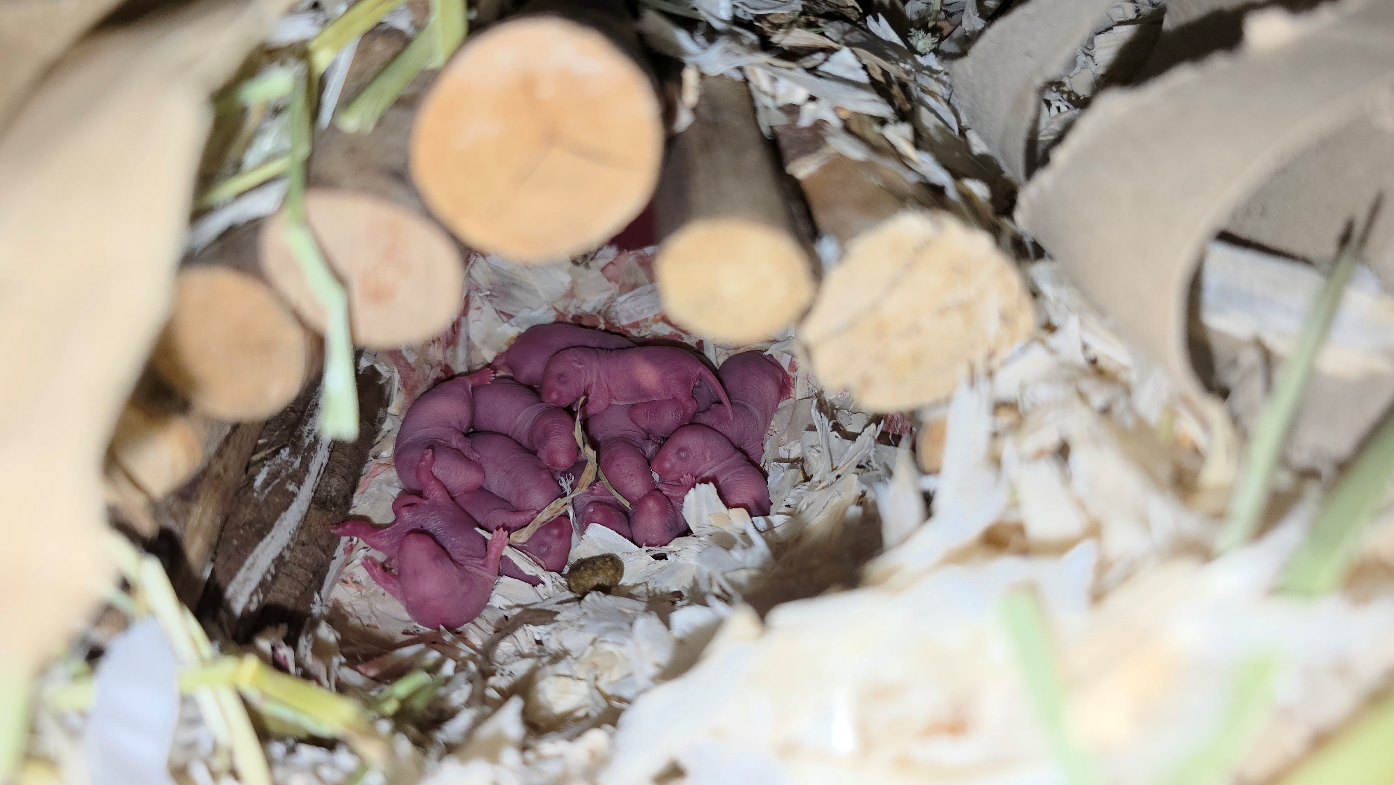
Once you have seen mum feed the babies, you will see a patch of white on their abdomen. This is known as a “milk band” which is the milk in their stomach you can see through their skin. This is how you can tell the babies are healthy and feeding well.

A group of tiny, hairless pink baby rats huddle together in a nest made of shredded paper, straw, and wooden sticks.

When you first look in on the kittens, avoid touching them unless absolutely necessary so mum doesn’t get stressed after giving birth.  At the same time, check that mum is looking well. She should be:

  • bright and active
  • have a glossy coat
  • be taking an interest in the babies.

If she looks fluffed up with a dull coat, hunched, lethargic or has discharge or blood even after an hour of giving birth, then she may need to see a vet.

If you have to transport the babies for some reason, scoop the whole nest into a carrier so that you don’t disturb the shape and smell.

If you find babies outside the nest with their eyes and ears still closed, this may indicate a medical issue. It can also happen if mum is slightly stressed because she didn’t manage to give birth in the nest.

Should you find any kittens out of the nest, reunite them back with their siblings as soon as possible. If they feel warm, pick them up and pop them back in the nest. If they are cold, warm them up first as mum is more likely to accept them. You can warm them up on a microwaveable pet heat pad, or gently against your skin if you don’t have one.

If mum doesn’t accept them back, this can be very upsetting. You can absolutely attempt hand rear, but most sadly, most babies don’t survive this way.


Feeding baby rats

The kittens will start to appear out of the nest at around 13-16 days old. At this point they will start to nibble on some of mum’s food as well as having their milk from her. It’s important to notice how much they’re eating as you will need to increase the amount of food you give over the next few weeks to make sure both mum and babies are getting all they need.

As well as the dry food mix, both mum and babies will need some fresh vegetables and a protein meal a few times a week, such as:-

  • dog food
  • sardines in tomato sauce
  • egg
  • chicken
  • beans e,g. butter beans

A few water bottles dotted around the cage at easy to reach heights is essential as they will also learn to drink from these. Bottles should always be full of water and changed every day. Avoid using a bowl as they will likely use it as a toilet or fill it with substrate.

When the kittens are around four to 4.5 weeks they should be fully weaned and getting all their nutrition from solid food. You may however see them have a feed from mum occasionally as she will still be producing some milk.


Can I handle baby rats?

Yes, but it’s a good idea to let mum get to know them and settle into motherhood. She may get a little stressed if she sees you handling them, so you can either pop her back in with her friends or into a carrier with her protein meal and veggies so you can check them over.

The babies will have left the nest after a couple of weeks, so mum shouldn’t mind you getting involved when she’s around. You can either pop her back with her friends to enjoy some well-needed adult time or, if she’s fine with you handling the babies with her present then you can interact with them all.

It’s very important to get the babies used to being handled once they‘re out of the nest and moving around. It’s good for them to know that humans are positive and not scary, this will make finding homes for them much easier.

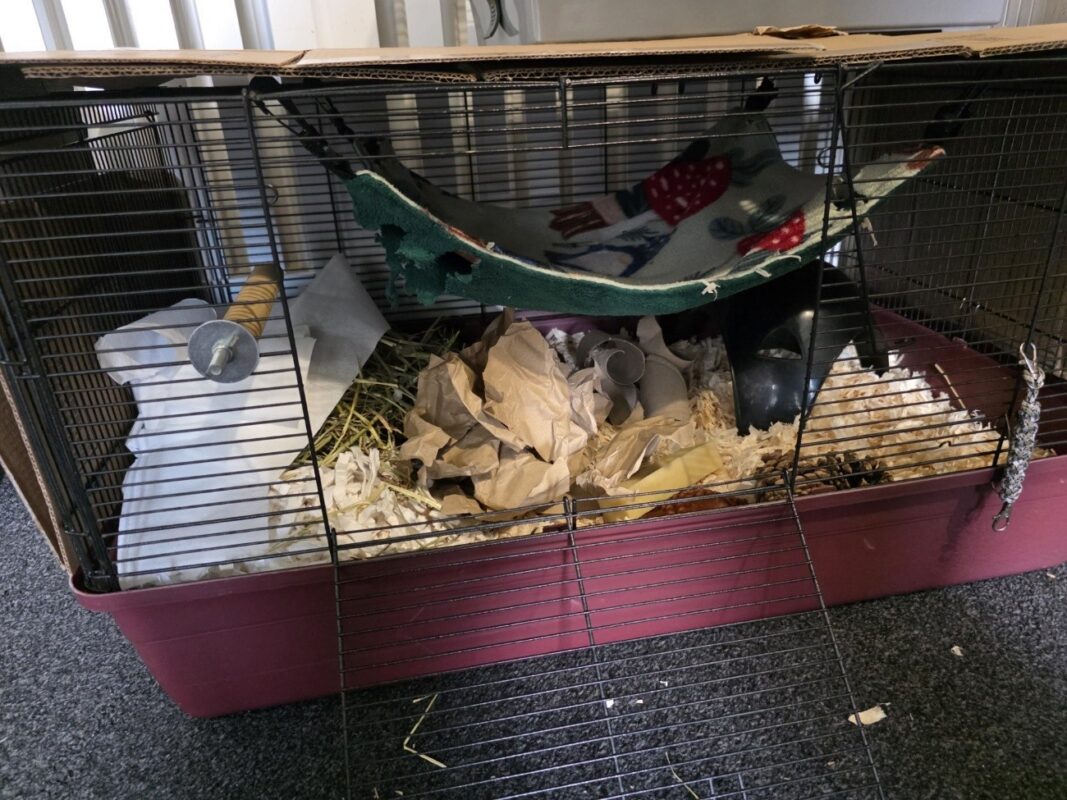
At this point more enrichment can be added to the cage to encourage them to work on climbing and moving around as much as possible.
A small rat cage with a maroon base and black wire top, containing shredded paper bedding, hay, cardboard tubes, a water bottle, and a green fleece hammock hanging above.

When do the young male and female rats need separating?

At around 4.5 weeks males should be separated from mum and their sisters to avoid further pregnancies. Rats can become fertile very young so it’s crucial to note when mum gave birth so you know to move the boys to their own enclosure 4.5 weeks from the day they’re born. If time escapes you, it’s a good idea to mark the date on your calendar or set a reminder on your phone!

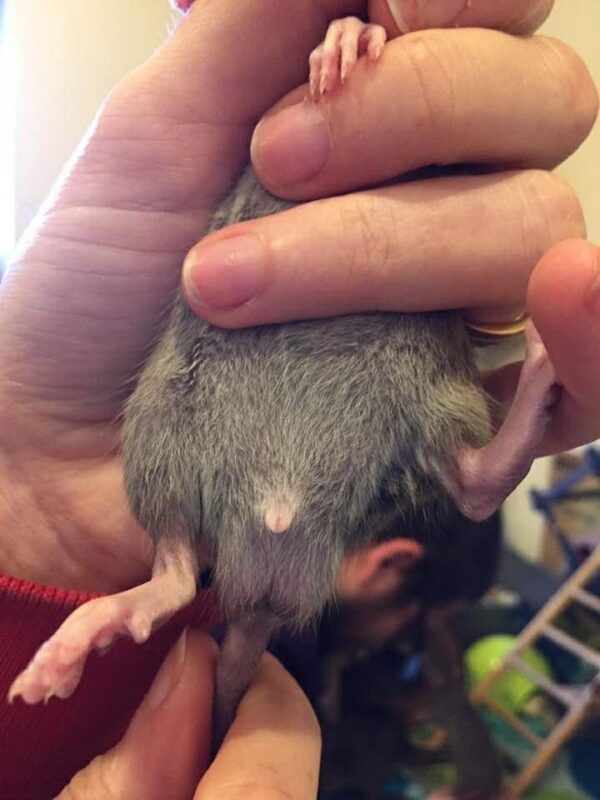
A person holds a buck rat at four and a half weeks old, showing its belly and legs. The animal’s genitals are visible for sex identification, whilst the person’s fingers gently support the young rodent.

A buck rat at 4.5 weeks old

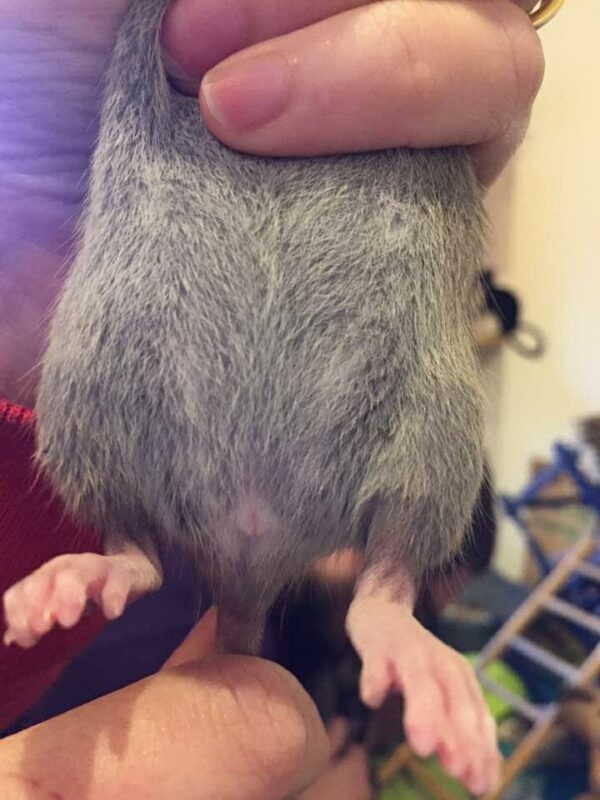
A close-up of a person’s hand gently holding a doe rat at four and a half weeks old, showing its soft grey fur, underside, legs, and tiny pink feet. The background is blurred.

A doe rat at 4.5 weeks old

Males can stay in their sibling group until they’re ready to go to new homes. Female rats can stay with mum or move mum back in with the friends she lived with before having babies. If she’s been visiting them regularly then you can pop her straight back in. If it’s been a while and she’s not mixed with them, you’ll  need to rebond them. As they already know each other, this may be quite quick.

If you end up with only one rat of each sex (which is very rare) it’s essential to find them a companion of the same age. This is essential for their psychological development. Contact your local rescue or a  registered breeder for help.


How can I prevent my rat having any more litters of babies?

Remove the male rat(s) if they are still with mum, and house them somewhere completely separate. The female may already be pregnant again, but separation is essential.

Neutering the male isn’t necessary unless he has hormonal aggression. He will need a friend or two as soon as possible. While there may be some baby males in the litter, they won’t be ready to live with dad for another 10-12 weeks which is too long for him to be alone.  Contact a local rescue such as Woodgreen to see if they have any suitable male companions.

Mum should live in a same sex group or mixed group (as long as at least one sex is neutered). If she doesn’t already have female or neutered male friends consider keeping at least 2 female kittens with her so she’s not lonely.


Finding a home for baby rats

Many rats in the UK are currently looking for new homes, and while rescues are often busy, they don’t have long waiting lists for rats as they tend to home well.

It’s best to contact your local rescue for help as they can double check the litter has been sexed correctly or may offer to do this when the litter are old enough to be separated. Rescues are experienced at vetting homes and providing the most up to date advice.

You may decide to rehome your rats yourself if rescues are full or you don’t have one local to you that takes in rats. Rat Rescue Network UK on Facebook is a good place to look for new homes. However, it’s up to the individual to make sure any new home is suitable for their rats. The group has advice on how to do this appropriately or can contact Woodgreen for advice.

Baby rats must be rehomed in same sex pairs even if they’ll be living with other rats. Baby rats need companions of the same age (+/- 2 weeks) for their development.

First-time rat owners should start out with a trio and add to the group in 6 months to a year for a nice mixture of ages. It also means that vet bills (and unfortunately deaths) do not come all at once and become overwhelming both mentally and financially.


If you’re struggling with pregnant rats, unexpected litters, or other aspects of caring for your rats, you can contact our friendly team for advice and support.

How helpful was this?

Thanks for your rating

Rated this article 3 stars or less? Tell us what we could do to make it more helpful.

5
(2)
Let's do it