Cats are naturally more active at dawn and dusk, so night-time meowing often lines up with their body clock.
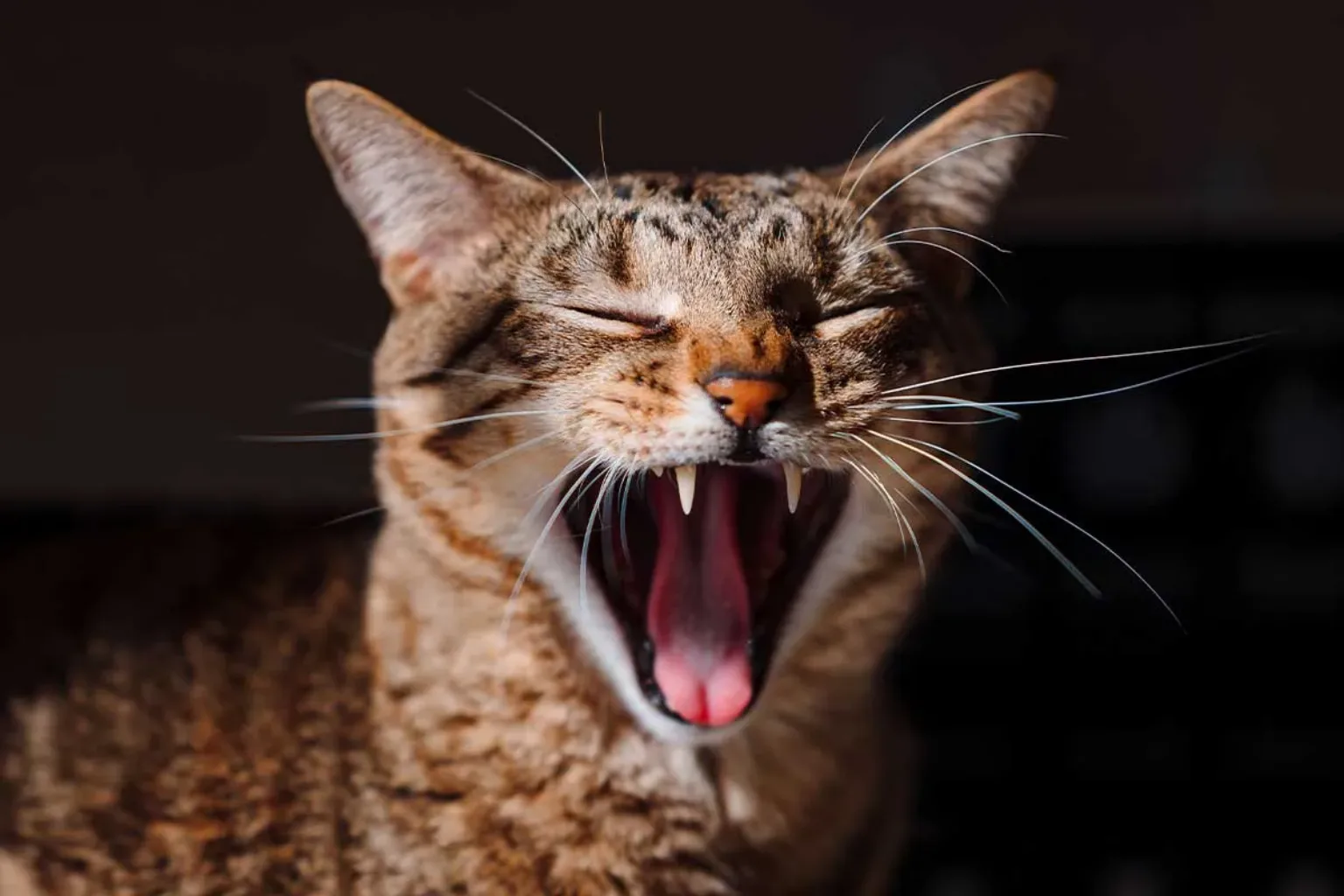
Why does my cat meow at night?

Three things you should know
Sudden or new meowing at night, especially in an older cat, is worth mentioning to your vet.
Responding to meowing with attention or food can accidentally teach your cat that meowing works, making the behaviour more likely to continue.
Our expert advice
Being woken by a meowing cat night after night is exhausting, and it can be hard to know whether it is simply your cat’s nature or a sign that something is wrong. Understanding what is behind the meowing is the first step towards a quieter night.
Why does my cat meow at night?
Cats are crepuscular, meaning they are naturally most active around dawn and dusk. Since most cats naturally rest for long stretches during the day, night can feel like the ideal time to play, explore or seek attention.
- Hunger: if your cat’s last meal is early in the evening, they may wake you looking for food later in the night.
- Boredom: a cat who does not get enough mental and physical stimulation during the day may have excess energy at night.
- Attention seeking: if meowing has led to food, play or fuss in the past, your cat may repeat it to get the same response.
- Stress or a change in routine: moving house, a new pet, or changes to your schedule can unsettle a cat and lead to more vocalising.
- Ageing: older cats can develop cognitive changes that cause disorientation or altered sleep patterns, along with reduced hearing, which sometimes leads to louder, more frequent meowing.
- An unneutered cat in season: an entire female cat may yowl loudly and repeatedly when she is in season, and this call is designed to travel a long distance.
Health causes of night-time meowing
A sudden increase in meowing, particularly in an older cat or one who does not usually vocalise much, can be a sign of an underlying health problem.
Conditions such as an overactive thyroid, kidney disease, high blood pressure or joint pain can all lead to a change in vocal behaviour.
If your cat’s night-time meowing is new, sudden or paired with other changes such as weight loss, increased thirst or reduced appetite, contact your vet for a check-up before assuming it is behavioural.
How to stop your cat meowing at night
- Once you have ruled out a medical cause, a few consistent changes to your cat’s routine can help reduce night-time meowing.
- Fit in a play session before bed that includes all stages of a cat’s natural hunting cycle: stalk, chase, pounce and catch, followed by their final meal. Replicating this sequence can reduce built-up energy and help them settle for the night.
- Feed your cat a small meal just before bed, so hunger is less likely to wake them in the early hours.
- Add enrichment such as puzzle feeders or new toys, so your cat has more to do during the day and has less excess energy for the night. Find more ideas in our guide to keeping cats entertained and stimulated.
- Avoid responding to meowing with attention, food or play, as this can accidentally reward and reinforce the behaviour, unless your cat is visibly stressed or distressed, in which case check on them. Otherwise, only give attention once your cat is calm and quiet.
- Keep your cat’s routine as consistent as possible, since sudden changes can increase stress and vocalising.
- Try a timer feeder set to open around the time your cat usually wakes you, giving them a small meal to keep them occupied and satisfied for a few more hours.
If you decide to stop responding to attention-seeking meows, be prepared for things to feel a little worse before they improve. This is a normal pattern, sometimes called an extinction burst, where a cat tries harder to get a response that has worked before. Staying consistent, rather than giving in, is usually the key to seeing an improvement within a few weeks.
When to Seek Help for Persistent Meowing
If your cat’s meowing continues despite a consistent routine and a clean bill of health, it may be worth speaking to a qualified cat behaviourist, who can look at your cat’s individual circumstances and routine in more depth.
Three things you can do today
Play before bed
Tire your cat out with an active play session in the evening, then offer their final meal, to help settle them for the night.
Don't reward the meow
Avoid getting up to feed, fuss or play with your cat when they meow, as this can reinforce the behaviour.
Book a check-up
If the meowing is new or sudden, book a vet visit to rule out pain or an underlying health condition first.
Related content

ADVICE
Cat behavioural traits
When it comes to your cat's behaviour, they may be trying to tell you how they're feeling.
Read more about 'Cat behavioural traits'
ADVICE
Separation anxiety in cats
No two cats are the same! Some love the company of humans, while others prefer their independence. Then we have the ones in between who like a balance. But what about cats that experience separation anxiety? Here we look at what this means, their behaviour and how you can help your feline friend.
Read more about 'Separation anxiety in cats'
ADVICE
How to keep cats enriched and entertained
Cats are very intelligent animals, and they can easily become bored! Here are some top tips to help keep them entertained – plus more useful advice.
Read more about 'How to keep cats enriched and entertained'