ADVICE
Chinchilla health
Chinchillas can live for between 12 and 20 years – and during their lives they may suffer a few health concerns.
Read more about 'Chinchilla health'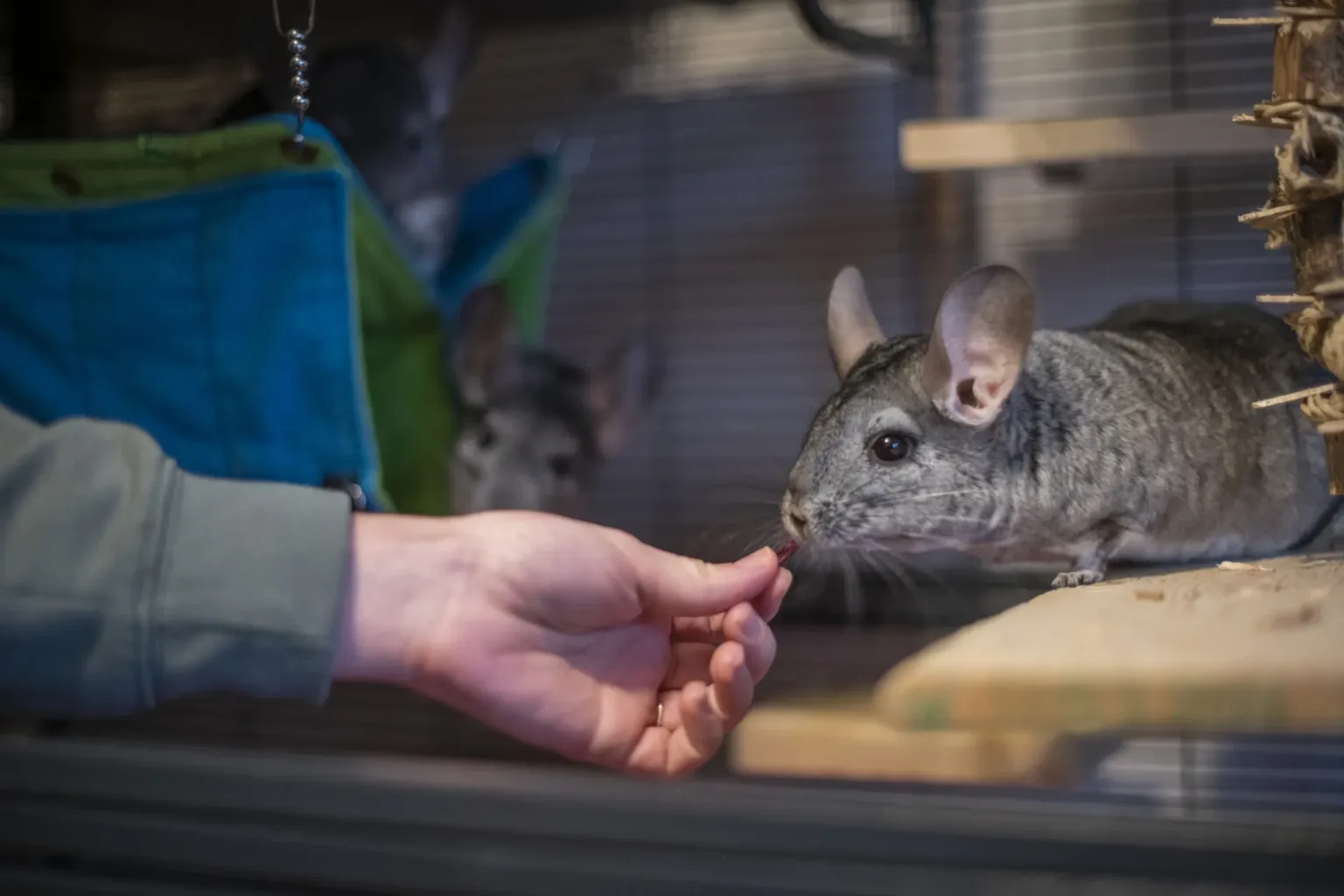

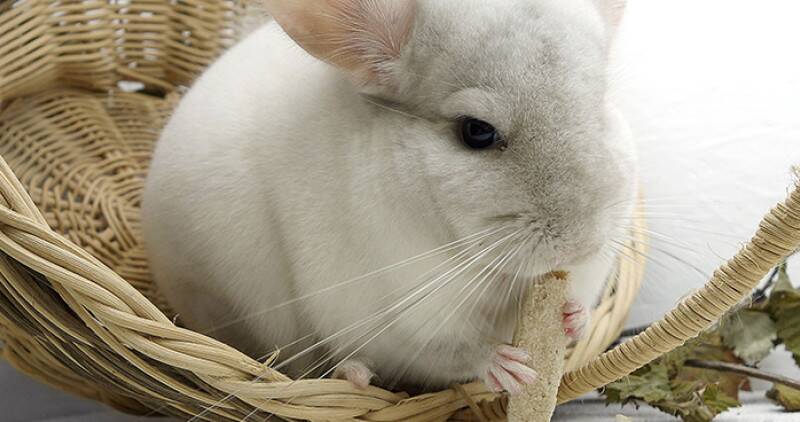
Chinchillas are fibrevores. This means they only eat plant-based food and should not be fed meat, dairy, eggs, nuts, seeds, fruit and vegetables.
Feed your chinchillas a good quality pellet food to avoid health conditions like dental disease and obesity.
Your chinchilla’s diet should be made up of the following:
Spread this around their whole enclosure, on shelves and in hiding spaces. Chinchillas need constant access to hay, as it makes up the largest portion of their diet. It’s also great for helping to keep their teeth healthy and it’s a lovely bed for them to snuggle in too!
Offer a mixture of varieties such as:
A single chinchilla should eat around four tablespoons (30g) of pellets a day. Chinchillas should not be fed muesli mixes as they’re high in sugar and can lead to dental problems. There are many different brands of chinchilla pellets on the market, including Science Selective, which you can buy online or from pet shops. Instead of placing their food in a bowl, try scattering it around their enclosure for them to search and forage for.
Feed your chinchilla forage as well as pelleted food. Scatter around four tablespoons (30g) of healthy forage in their cage, per chinchilla, per day. Take care to choose healthy treats as it can be very easy to over feed your chinchilla with sugary foods, which will lead to health problems like diabetes. Below are some ideas of what to feed your chinchilla daily (in addition to pellets). They’ll need a variety of these foods, so only feed them small amounts of each:
Avoid colourful chew sticks. Instead, stick to healthy, natural food options that they can enjoy occasionally alongside their weekly diet:
It’s important your chinchillas have access to daily, fresh, clean water. Ideally, provide this in two bottles or securely mounted bowls at each end of the cage, or across both levels if you have a large two-tier cage, in case one spills or breaks.
Chinchillas can live for between 12 and 20 years – and during their lives they may suffer a few health concerns.
Read more about 'Chinchilla health'
Chinchillas can become very tame if they are socialised well.
Read more about 'Chinchillas: your day-to-day guide'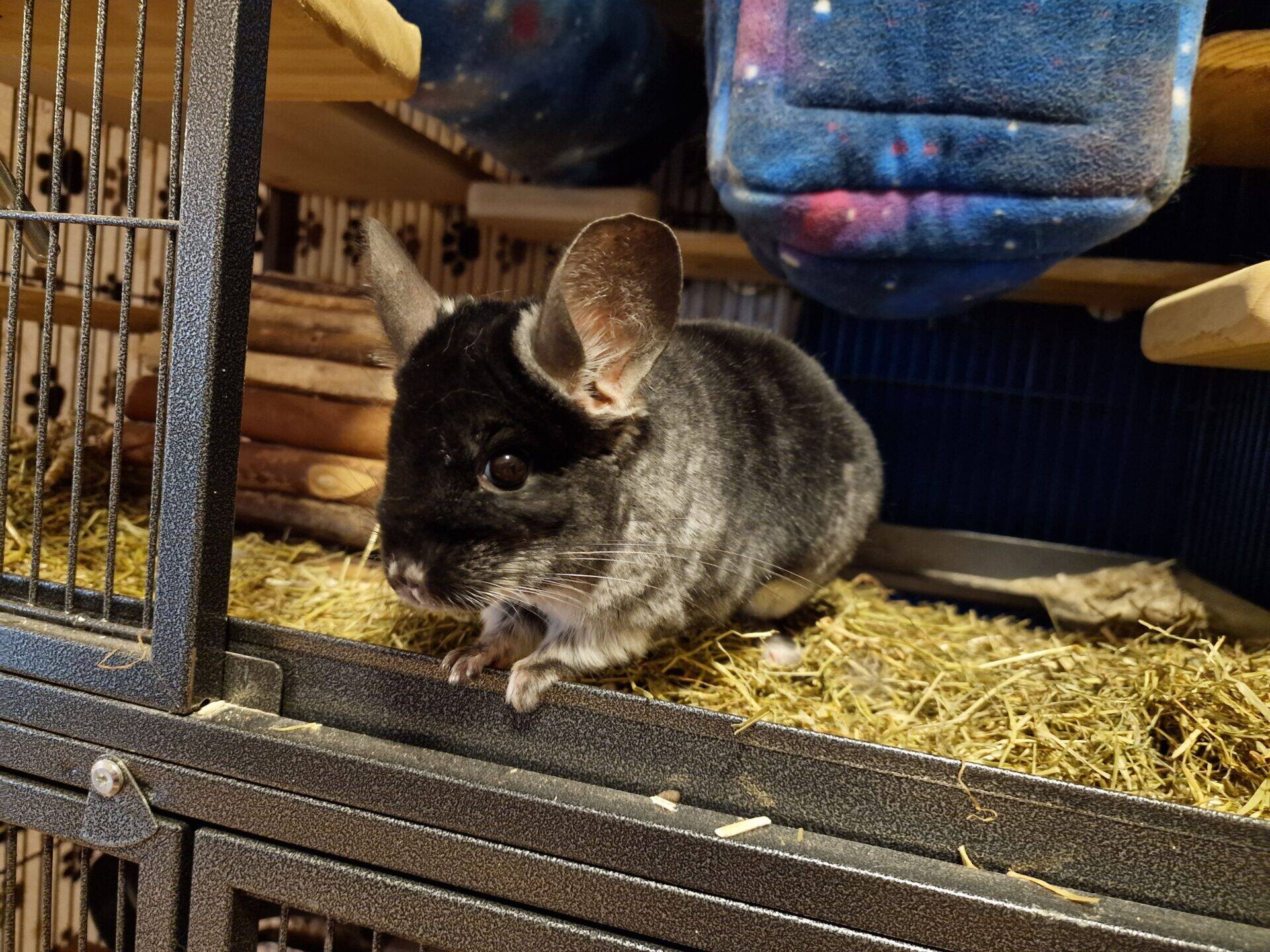
Although chinchillas are small creatures, they can be very active and need plenty of space to run around.
Read more about 'How to make your chinchillas feel at home'