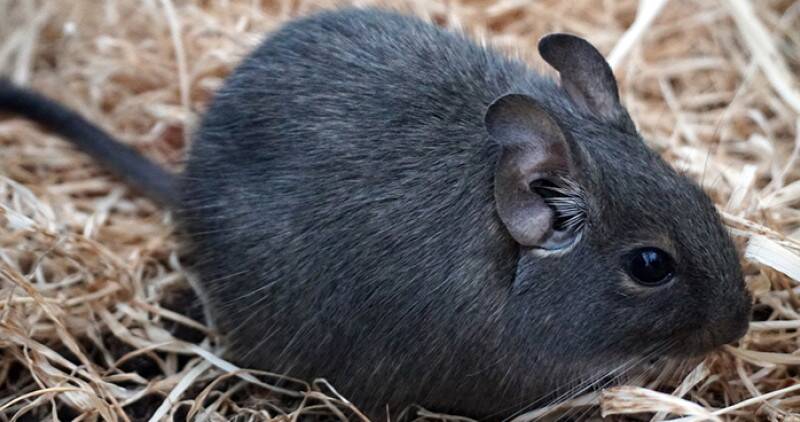
How to house your degus

Although degus are small creatures, they are very active and need plenty of space to run and jump around.


The minimum cage size for two to four degus

  • 123cm high by 93cm wide by 63cm deep (these dimensions do not include a cage stand)
  • Bar spacing – up to 18mm


Recommended cages for up to four degus

Degus love chewing, so they will need to be housed in an all-metal cage to prevent the chance of them nibbling through and escaping!

  • Liberta Explorer – 158cm x 93cm x 64cm (including stand). Available at various places online or you may be able to find them second hand. Note: Wire mesh ladders will need covering or removing.
  • Little Zoo Venturer Cage – 158cm x 93cm x 68cm (including stand) – Available at various places online. Note: Wire mesh ladders will need covering or removing.
  • Aventura Cage – 160cm x 92cm x 64cm (including stand) –Wire mesh ladders will need covering or removing. Only one half of the cage opens on both levels.

The following cages are difficult to source at this current time but you may be able to find them secondhand:

  • Savic Royal Suite – 159cm x 95cm x 63cm (including stand)
  • Savic Royal Suite XL – 153cm x 115cm x 67.5cm (including stand)
  • Rat & Ferret Cage by PetPlanet – 159cm x 96cm x 63cm (including stand) – www.petplanet.co.uk. Wire mesh ladders will need covering or removing


Ideal cage location

When you’re choosing a location for your degu cage, make sure it’s:

  • Away from busy areas and loud noises such as the TV or music system
  • In a well-ventilated room to help prevent odours from building up
  • Away from windows and draughts
  • In an area with low humidity
  • Away from direct/constant sunlight, although the room will need a natural daylight source
  • Away from radiators, or ensure they are switched off
  • Safe from other pets such as cats and dogs
  • Safe from young, unsupervised children


Enrichment and cage setup ideas

Degus are very active and enjoy items in their enclosure that they can safely chew, jump on and even dig in! It’s very important to furnish their cage with safe items that your degus can’t injure themselves on. You can also place some of these items in their free-range space to make things more interesting for them.
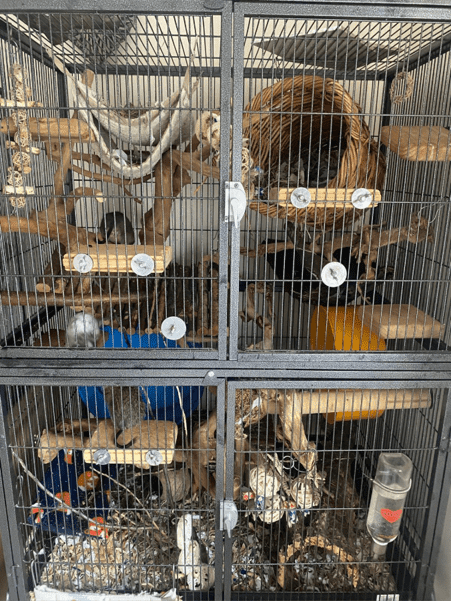
Enrichment items degus enjoy

  • Twigs, stumps and branches from apple, pear, or willow (weeping, goat or pussy willow only) trees for them to chew and jump on.
  • Wooden or card boxes for them to sleep in and chew on.
  • Wooden platforms. Degus love to jump from level to level and these are great for breaking up the space and preventing falls from a height.
  • Hammocks made from anti-pill fleece. Like the wooden platforms, these are great for allowing your degu to jump around and also to break up the space, helping to prevent a fall.
  • Card, ceramic or metal tunnels.
  • Kitchen rolls or cardboard tubes stuffed with hay.
  • Ceramic or granite tile for helping them to keep cool in the summer months.
  • Dig trays. If your degus have a shallow cage base, why not give them a card box filled with a deep layer of hay, or a mixture of organic soil and sand for them to dig through and forage for food!
  • Dust bath in a metal tray for them to dust bathe in several times a week. Avoid leaving it in all the time as they may start using it as a toilet and their skin may become overly dry.
  • Minimum of a 12” solid metal upright wheel
A multi-level metal cage for small pets featuring various platforms, wooden branches, a hanging hammock, a woven basket, and a water bottle.

Liberta Explorer cage filled with wooden ledges, branches, hammocks and hiding spaces.

Degu toys to avoid

  • Plastic toys will be destroyed very quickly and may become dangerous.
  • Hanging toys such as parrot or rodent ropes and swings. As degus are very fast and reactive, they can damage their legs or become caught on hanging items.
  • Any toys that the degus may trap their legs in whilst jumping and climbing around, like mesh ladders.
  • Any toys that they can get their heads stuck in such as hanging hay balls and many hay racks.
  • Take extra care and monitor individual degus with items that can be easily chewed such as card or paper, as these can cause blockages in the digestive system if swallowed.


Bedding and nesting materials

It’s important to use the correct bedding for your degus, otherwise it could have a negative effect on their health. Wood shavings or sawdust can be very dusty, are a common cause of skin related issues and can give you an allergic reaction too!

Make sure your degus have a nice, soft bedding base for their cage, rather than using a mesh floor. This will avoid injury to their feet and help meet their natural behavioural and environmental needs.

Base of cage options

Nesting/comfy bedding to place in hiding spaces and on shelves

  • Hemp bedding such as Aubiose (non-fragranced)
  • Greenmile – shredded card material
  • Aspen
  • Soft, short, sweet-smelling, good quality meadow hay

Free-range time

Once your degus are settled with your daily routine and happy to feed from your hands, you can build up to allowing them some free-range time in a secure room for half an hour or more each day; ideally, in the same room that the cage is housed in. By doing this, they will feel safe to explore the room and can go back into their enclosure if they get spooked or scared by anything.

Your degus will love running and jumping all over the place exploring, so make sure the room is completely safe and secure. Ensure all wires are protected and any house plants are removed, you will need to ensure the room is completely degu proof. They love to chew, so be prepared that they will chew anything and everything they can reach – even your skirting boards! You can prevent damage to your home by covering skirting boards with safe wood, attaching metal strips to any corners of the wall and providing plenty of safe things for them to chew.

Free-range time is a great opportunity to sit, socialise and even health check your degus. You can set up the space with lots of different toys for them to explore and interact with (click here for some ideas). They will also enjoy climbing on you and using you as a lookout tower!
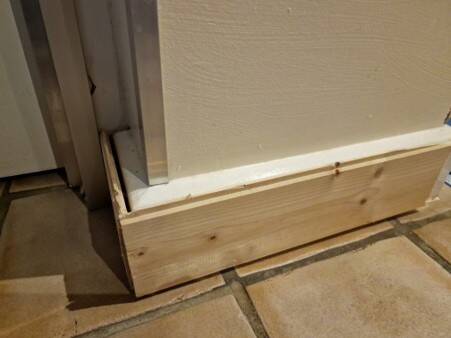
Unfinished wooden skirting board installed at the corner of a wall with tiled flooring.

Degu proofing – metal strips on corners of walls and skirting boards covered in wood.
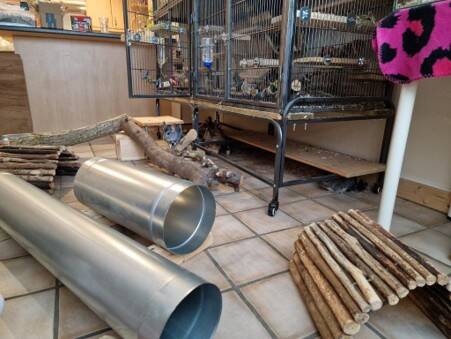
Two metal tubes and a curved wooden bridge sit on a tiled floor in front of a large, multi-level wire pet cage with chinchillas inside.

Free roam space for degus filled with metal tunnels, branches, wooden hides and platforms.

Cleaning your degu enclosure

Keeping your degu cage clean is key to preventing illness.

Daily – spot clean

  1. Remove poo and wet/dirty bedding.
  2. Replace dirty bedding.
  3. Change their water.

Fortnightly – refresh clean

  1. Place degus in a secure wire mesh carrier with plenty of bedding from their cage in the base, along with a hiding space. Place the carrier in a safe, quiet space away from where you are cleaning.
  2. Remove soiled toys, soiled or damaged enrichment and bottles. Clean them with pet-friendly disinfectant. Dispose of any toys which have been chewed and may become dangerous.
  3. For any hammocks, wash in your washing machine with non-bio detergent at 60°C.
  4. Fully sweep out their cage and wipe down with pet-friendly disinfectant.
  5. Set up enclosure with fresh bedding and place different enrichment in the cage for interest.

Top tip: place any hammocks that need to be machine washed into an old pillowcase or a laundry bag. This will stop any metal clips from clogging up or damaging the machine.

How helpful was this?

Thanks for your rating

Rated this article 3 stars or less? Tell us what we could do to make it more helpful.

0
(0)
Let's do it