Four guinea pigs sitting on hay

How many guinea pigs should I get?

If you’re wondering how many guinea pigs you should get, our advice will help!

Guinea pigs are naturally sociable creatures that need companionship to stay happy. Out in the wild, they live together in large herds, so they should always be kept in pairs or small groups.

In this article, we explore the importance of guinea pig companionship and suitable combinations – with some top tips thrown in too.

So, the short answer is you should get two or more guinea pigs to keep them happy and healthy. But there’s lots more you need to know – like how you can help them become forever friends!


Best guinea pig pairings (male vs female combinations)

  • Two or more sows (female guinea pigs).
  • Two boars (male guinea pigs) – now this can be tricky; mixing two single boars together can take multiple introductions to single males before a good match is found. If you have a pair under one year old, there’s a risk they may start to fight as they mature. This could lead to them needing to be separated.
  • A neutered boar with one or more sows.


Can three male guinea pigs live together?

You should think very carefully about housing three sibling boars together. Although they often start off living together well, one guinea pig is likely to be badly bullied. So there’s a high risk of them fighting and needing to be separated in the future.

The same goes for a boar with a young male under one year old. While the mix may work at first, the young male will compete for dominancy when he matures. This could result in serious fights.


Neutering: what you need to know

Vets don’t typically agree to neutering female guinea pigs, unless it’s necessary to treat another illness. This is because it can come with many complications.

Males can be neutered if they will not pair with a male and need to be mixed with females.

Unlike other species, neutering a male guinea pig will not affect their behaviour, so it’s not a solution to a fighting pair of males. If you do have to get your guinea pigs neutered, choose a vet who specialises in small pets. They should also have lots of experience in neutering guinea pigs to ensure a swift recovery.


Unsuitable combinations

A rabbit and a guinea pig should not live together. Although some owners have found that a rabbit and guinea pig can live happily in each other’s company, there’s a risk the guinea pig will be accidentally kicked when the rabbit is running and hopping about. Communication is a big factor to consider as well. Guinea pigs are vocal communicators, whereas rabbits are mostly silent, and this can be upsetting for both species.


How to introduce your guinea pigs to each other

If you find yourself with a single guinea pig, or you’d like to expand your herd, we can help! Woodgreen’s is great for owners looking for support with finding their single guinea pigs a lasting companion. This could involve mixing onsite or providing you with advice on how to mix them at home.


Do guinea pigs need to be in pairs?

Guinea pigs thrive in the company of other guinea pigs. The best combinations are:

  • a pair of male guinea pigs
  • 2+ female guinea pigs
  • a neutered male and at least one female

 Choosing a space to introduce your guinea pigs

When introducing guinea pigs, it’s very important this is done on neutral ground. This is to prevent them from becoming territorial which could lead to a fight.

A good place to start a mix can be in an outside run as this will give them plenty of space. Move the run onto a patch of fresh grass so it’s neutral. As grass eaters, it also serves as a good distraction!

Depending on the time of year and the weather, it may be better to introduce your guinea pigs in a more sheltered space. This could be a large area sectioned off in a shed, or even a large space within an indoor room. Your chosen area should also:

  • be safe from predators
  • not be somewhere you use regularly, like a bathroom or kitchen, so you won’t disturb the guinea pigs


Preparing to mix guinea pigs

Before mixing your guinea pigs, make sure you have everything set up ready and the space is neutral. Start in the morning so you have the whole day to watch them closely.

Your mixing check-list:

  • Clean the mixing area with pet-friendly disinfectant.
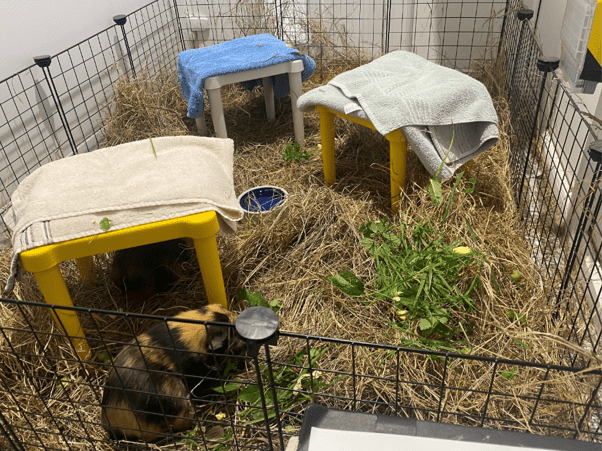
  • Add new/clean open-ended hides such as wooden bendy bridges or children’s plastic stools (at least one per guinea pig, plus one extra if you can fit it in).
  • Keep any hides or tunnels away from the edges of the enclosure so there’s enough space for them to move around without having to squeeze by one another.
  • Scatter plenty of hay throughout the mixing area or place multiple piles of hay around the space and under hiding spaces.
  • Scatter their pelleted food and any greens or forage around the space.
  • Place a couple of water bottle or ceramic bowls filled with water into the mixing area.
  • Make sure you have a towel ready to step in and separate the guinea pigs if a serious fight starts.


 

A cosy guinea pig enclosure features hay flooring, two adorable guinea pigs, tables covered with towels, a blue water bowl, and fresh greens scattered inside a wire pen—showing why many wonder: how many guinea pigs should you keep for their happiness?.

Mixing area setup indoors with scattered hay and greens, along with three small stools for shelter areas.

Top tip: Don’t put any bowls of food or hiding spaces with just one entrance into the mixing area. This is to stop the guinea pigs from becoming territorial or from becoming ‘trapped’ in a hiding space by another guinea pig, which could then lead to a fight.

Watch our video below for advice on choosing the right companion for your guinea pig, how to mix them, and the behaviours to look out for:

Starting the bonding process

Once your mixing area is up and running, your guinea pigs are ready to enter. It’s best to:

  • do this when you can closely monitor them for a couple of days – over a weekend works well
  • start the mix in the morning so you have the whole day to monitor them

Place your guinea pigs in at the same time. You should also allow them to explore their new surroundings, and approach each other, in their own time.

Signs your guinea pigs may accept each other

  • Eating close to each other.
  • Grooming each other’s faces.
  • Happy gentle squeaks.
  • Calmly following each other.

Signs your guinea pigs may not accept one another

  • Rearing their heads up at each other with open mouths (raising head over other guinea pigs to show dominance).
  • Chattering of teeth.
  • Regularly walking to the side with their rump (rear end) in the air.
  • Fur standing on end.
  • Frequent rumbling noise and/or chasing that doesn’t settle after a few days.

If you see the following during a mix or between an already bonded pair, you should separate the guinea pigs immediately.

  • Attacking the face or rump.
  • Signs of injury/blood – call your guinea pig friendly vet so they can be checked over.

Health check your guinea pigs daily to spot any hidden injuries. When mixing a group, make sure you watch them carefully to make sure there is no bullying.

Leaving them overnight

If mixing is taking place indoors and everything is going well by the late afternoon/early evening, leave them in that space overnight. By separating them, you’ll need to start the mix from scratch the next morning.

If you choose to mix outdoors, make sure their main living space has been thoroughly cleaned. Then move their hiding spaces and hay from their mixing space into their normal living area. This will help the guinea pigs settle in the environment, as it will smell like both of them. Keep a close eye on them to make sure they settle into the new space without any issues before leaving them overnight.

The next day, check the guinea pigs thoroughly for any injuries. If you notice any signs of injury, contact your vet so they can have a closer look.

What to do next

If your guinea pigs stayed overnight in their mixing area, keep them in this space for the next few days to give them time to continue bonding. You should notice them becoming more settled and spending more time near or next to one another. Continue scatter feeding in this time.

When you’re satisfied they’re relaxed and comfortable with one another, clean out their normal living space and move across the hay and hiding spaces from the mixing area to help them settle.

Avoid adding any enclosed hiding spaces such as tunnels for a week or two until they’re fully settled. When you start adding them in, do this gradually, removing any items if you notice it causing any negative behaviours or interactions between your guinea pigs.


Introducing run/free-roam time

It’s best to avoid giving your guinea pigs free-roam / run time for the first couple of weeks. They need time to get used to being together and fully develop their bond before being moved to a new, and sometimes much larger space. Doing it too soon can lead to fighting and the guinea pigs then needing to be separated.

When you begin to introduce it to them, you can add in hiding spaces and hay from their main enclosure and monitor them closely. Look out for any unexpected behaviours when they come back into their main space, such as making a noise, chasing or nipping at each other. If you notice this, it should settle usually quite quickly. But if it continues, leave it a few more days before trying again.

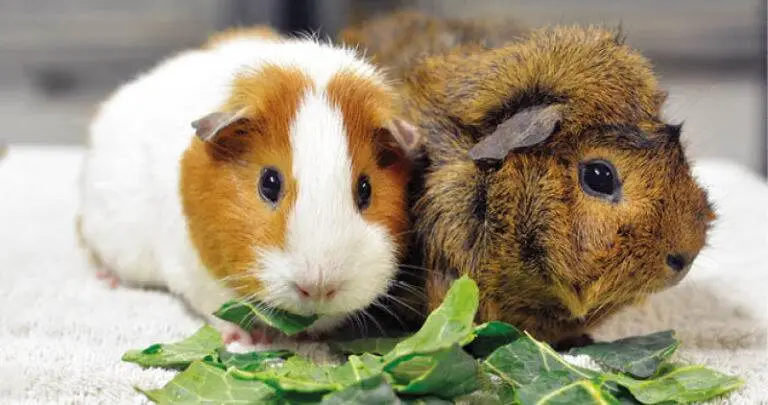
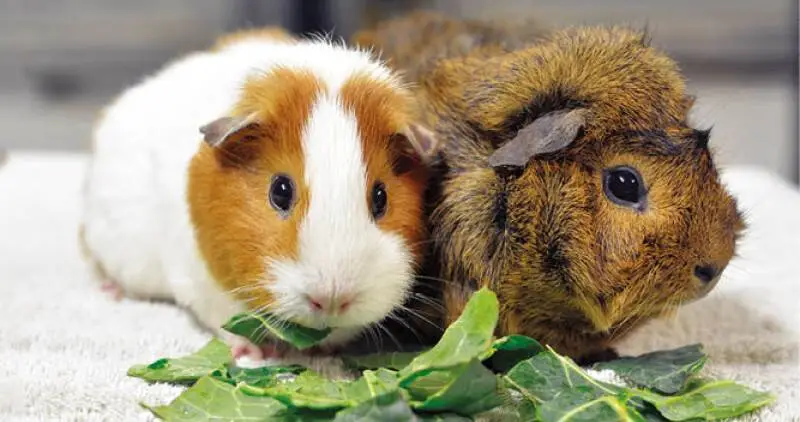
Two guinea pigs, one with white and brown fur and the other with dark brown fur, sit side by side on a towel, eating leafy greens.

Guinea pig e-learning course

A self led e-learning course suitable for anyone with guinea pigs, thinking of them as pets or who would simply like to learn more.

Learn more about accommodation, diet, companionship, vet care, handling and more! Free!

Let's do it