ADVICE
Your rabbits' health: what to look out for
Looking for advice on how to keep your rabbits’ health in tip top shape? You’re in the right place!
Read more about 'Your rabbits’ health: what to look out for'
If you have any rabbits in their golden years, there are some things you need to know to keep them in tip top shape – but our advice can help.
A small to medium-sized rabbit will usually live to be about 10-12 years of age. Giant rabbits can live anywhere between 5 and 10 years. We consider rabbits ‘older’ when they’re around 7-8 years of age, or 4-5 years for giant breeds.
As rabbits get older, their care needs will evolve. Look out for any changes in your rabbits’ movement, grooming habits, weight and behaviour. Any differences could be signs of pain, medical problems, or evidence they need some adjustments made to their living space.
It may sound obvious, but one of the most important parts of good rabbit care is making sure they’re not in pain, as they’re prone to hiding it! Rabbits are prey animals, and just like wild rabbits they can hide signs they’re in pain, as this attracts predators.
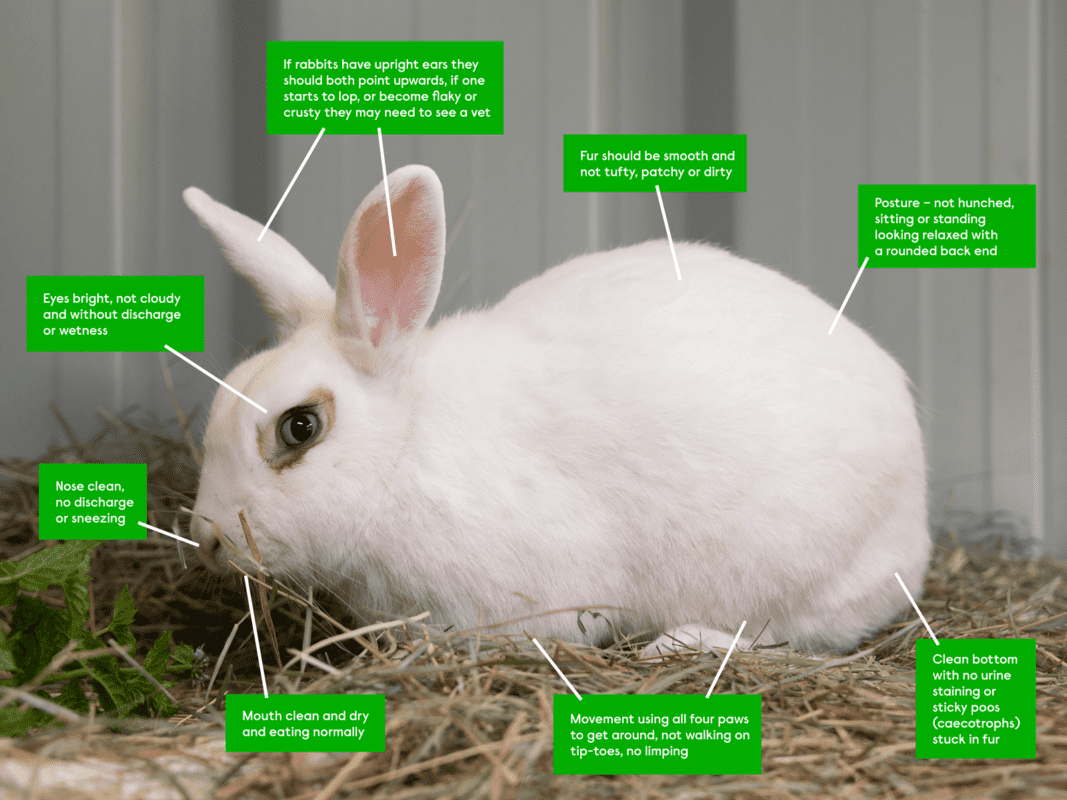
As they get older, rabbits can develop illnesses and conditions which are painful, but the signs can be subtle, so you’ll need a good understanding of your rabbit’s normal behaviour and appearance. This will help you quickly spot anything out of the ordinary.
Here are some signs to look out for:
If you notice any of these signs, it’s important to see a rabbit-savvy vet as soon as possible so you can get the right treatment for your rabbit.
Prevention is key – health checks for older rabbits are very important. It’s a good idea to build these into your weekly care schedule.
Rabbits are hindgut fermenters – this means they need to be fed a diet which is high in low nutritional value fibrous food such as hay, grass and foraged plants. For most rabbits, a good, balanced diet should consist of 85% hay/grass, 10% plants or green leafy vegetables, and 5% rabbit nuggets.
As rabbits age, their dietary needs may change. Older rabbits can become less active due to pain. This can lead to muscle wastage around their back end from not moving around or jumping up onto levels as much. They can also appear ‘skinny’ in the same area.
Some rabbits may become overweight due to be being less active, which can put extra strain on their heart. This can lead to them moving even less and gaining more weight, which makes it harder for them to reach all of their body for a proper clean.
This extra weight also makes it difficult for them to eat caecotrophs (soft faeces) directly from their back end. These faeces have an important purpose as eating them helps rabbits get more nutrients from their food. By not eating them, the rabbit’s back end can get dirty, which could lead to flystrike – a condition which can be fatal.
Some rabbits may lose weight in older age, and the causes can vary. The most common is teeth issues which make it harder to absorb nutrients from their food. It’s important to keep an eye on their weight and ensure that quantities of foods, like their nuggets, are appropriate for keeping a steady weight.
There are rabbit nuggets which are designed to suit the dietary needs of rabbits who are five years old or above, such as Burgess Mature Rabbit Food. It’s a good idea to choose these if you have older rabbits, but not essential if you’re already feeding them a good quality nugget.
If you find that your rabbit is struggling with either weight loss or weight gain, speak to a vet as soon as possible.
Maintaining a healthy weight is essential for your rabbits. It’s even more important when they’re older as they can be more difficult to care for, so you’ll need to keep an extra close eye on them.
We recommend aiming to maintain a body condition score of three for your rabbit – using the five point scale (Rabbit Size-O-Meter). A dry food specifically tailored to their life stage can also be beneficial. These will include all the nutrients they need, such as Burgess Mature Rabbit Food.
Rabbits can find it more difficult to process nutrients from their food as they get older. If you notice your rabbit losing weight and a vet rules out any health issues, it might be sensible to make some minor changes to their diet. A rabbit-savvy vet should be able to advise you on how best to do this.
Any rabbit still needs their diet to be made up of around 85% hay/grass and 10% forage and/or leafy greens.
Here are some tips on helping your rabbit eat more of the good things:
If you take these steps and don’t see a slow and steady increase in weight, you can try giving them more dry nuggets, but only if necessary as they can make rabbits feel fuller and less likely to eat enough hay. This can then lead to dental disease or gut problems, as well as increasing their risk of flystrike if they get a dirty back end.
Always seek veterinary advice from a rabbit-savvy vet before making any dietary changes to your rabbits, in case there’s a medical reason for their weight gain.
It’s not good for any species to be overweight as it puts additional strain on their body. If a vet finds there isn’t a health condition causing your rabbit’s weight gain, it’s still sensible to find out the potential cause. Here are some possible explanations that may help you solve the mystery!
This is one of the first things to ask yourself when health issues are ruled out. Rabbits will favour eating high calorie foods instead of their hay, but if they have too many of these foods, they will put on weight.
It’s important to give around an eggcup full of nuggets per rabbit daily, and limit or completely leave out sugary fruits and vegetables such as apples and carrots. You should also avoid feeding them brightly coloured shop-bought treats and seed sticks. These are high in calories and often contain unsuitable ingredients including seeds, honey and even eggs and dairy.
And of course, make sure they have constant access to plenty of hay or grass, as this should be their main food source.
You can find more useful advice about managing obesity in rabbits.
If your rabbit is struggling or unable to reach the raised levels or enrichment items (such as tables) in their living space, we have some ideas about making these items more accessible below. This can also be helpful with ensuring they make use of their whole space and burn off some of those excess calories!
Exercise is great for building muscle, burning calories and their overall mental wellbeing, which in turn makes them less likely to want to sit around all day doing nothing!
Rabbits, just like all other pets, need access to clean drinking water at all times. Traditionally, rabbits have been given water via a plastic drinking bottle as this saves space in small accommodation. It’s also less likely to be spilled and soak their bedding.
But things have changed. It’s been found more recently that rabbits will drink bigger amounts if given access to a bowl instead. This is particularly true for older rabbits who may struggle to get into the correct position to drink from a bottle, or if they have pain or stiffness in their joints. These rabbits may become slightly dehydrated as a result.
As modern welfare standards have improved, today’s enclosures are large enough for a bowl of water to be placed on the floor and allow for a more natural drinking position. If your rabbits have a bottle, there’s no need to remove it. A large ceramic bowl filled with water in addition to the bottle will allow your rabbits to choose between the two.
One of the biggest changes you’ll probably need to make for your rabbit as they get older is their housing.
If they have already have permanent access to a space which meets the minimum standards of at least 3m long x 2m wide x 1m high, you won’t need to make drastic changes. But there are some small tweaks listed below to consider which can make your rabbits’ more comfortable in their golden years. For more advice, see our article on how to house your rabbits.
Rabbits can get arthritis just like humans. This means achy joints which can be made worse by the cold – when in wet weather. If their accommodation is quite exposed (mesh roof or mesh on multiple sides), it’s important to ensure there’s some shelter to keep the space as dry as possible.
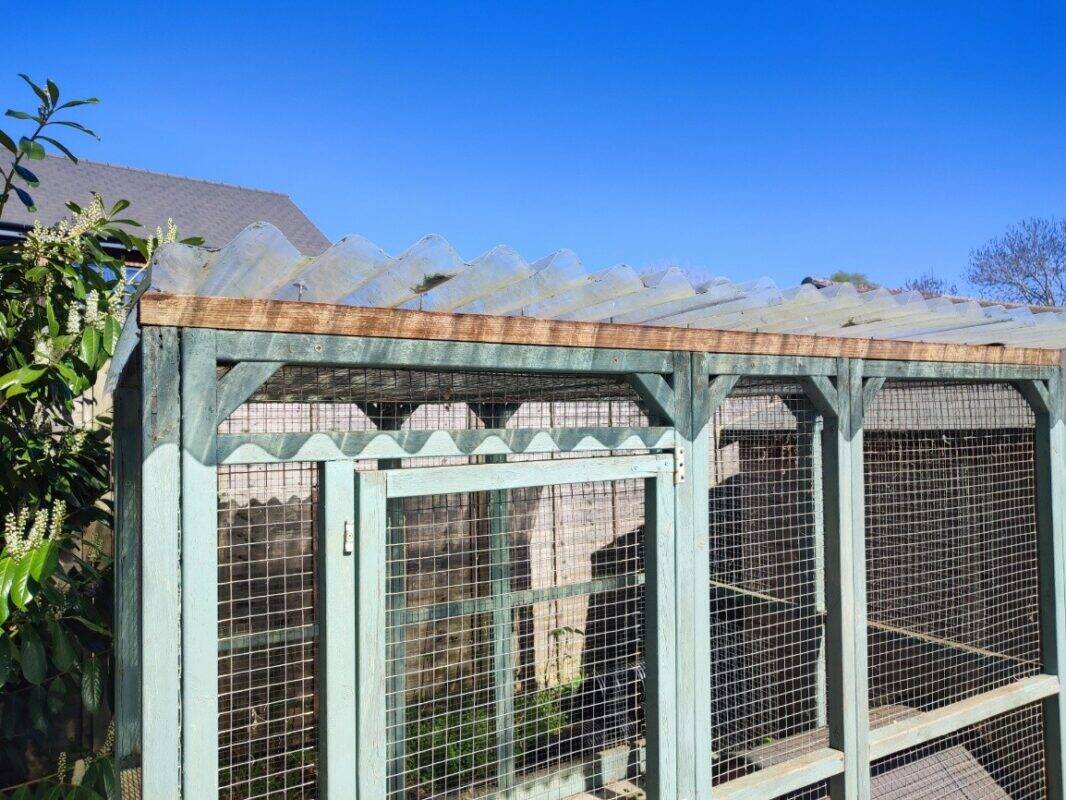
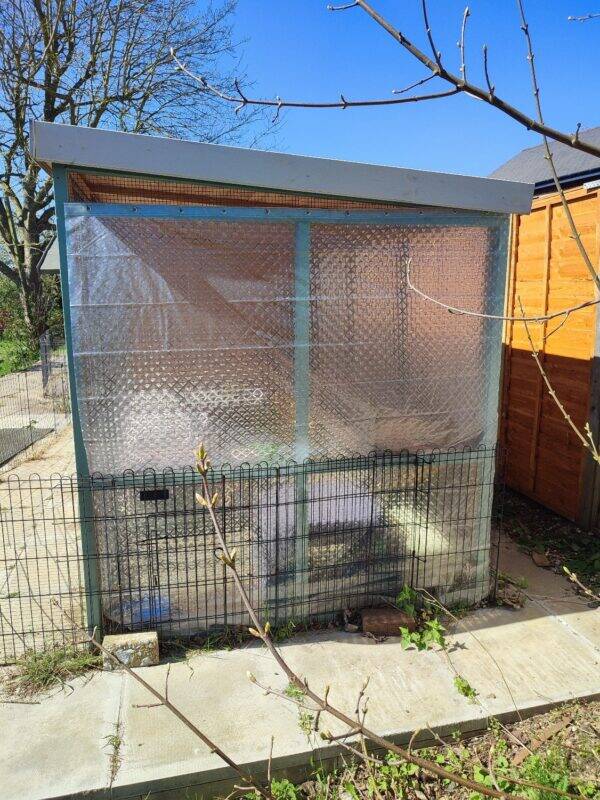
Corrugated and Perspex sheets like the ones above can make great additions to a mesh roof – keeping out the rain and snow. They can also be added to the sides of a run but they’ll need to be removed in the summer so it doesn’t get too hot.
It can be expensive to use Perspex, but there are other more affordable options. You could add secure shower curtains or tarpaulin to the sides of the run, which will keep your rabbits’ enclosure as dry as possible.
During the winter, your rabbits will need a nice warm, dry enclosed space to snuggle up in. If your enclosure contains a hutch, make sure it’s out of the way of any wind (if possible), and stuff it full of hay to help keep your rabbits warm. You can also buy a hutch cover (which will also help your hutch last longer) or cover the front of it with tarpaulin when it’s very cold.
Sheds and wooden children’s playhouses are great for creating large, warm spaces for your rabbits. They can be insulated if necessary and washable cotton rugs or vet beds can be placed on the floor to insulate from any cold concrete underneath it. Cardboard boxes or dog beds can also be filled with hay to give your rabbits somewhere warm to sit.
As rabbits get older, they can suffer from weaker back ends due to muscle wastage. This can lead to them struggling to grip onto surfaces. It may also affect their balance when jumping onto or off of items.
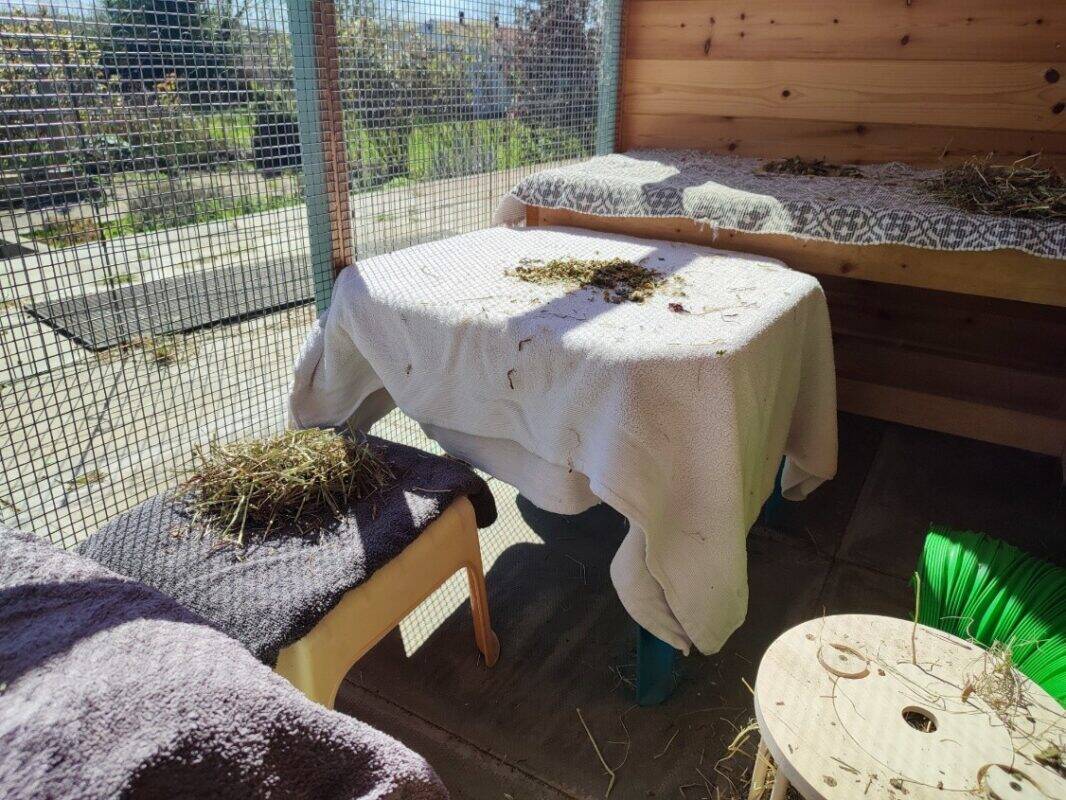
To prevent any accidents or serious injuries and provide some grip, cover any enrichment like children’s plastic tables or wooden items with a towel folded in half, an old bathmat or rubber backed vet bed.
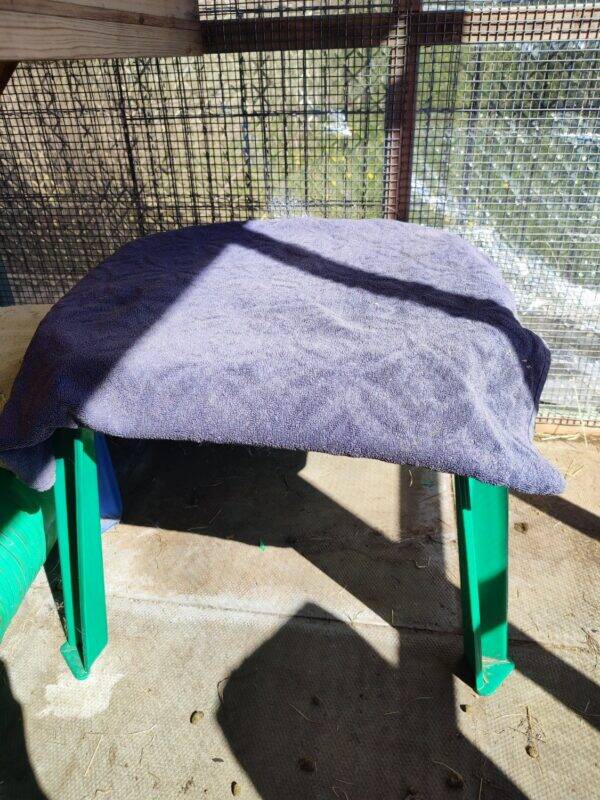
As rabbits start to lose muscle in their senior years, it’s even more important to keep them active. It’s easy to think that you should move them to a smaller enclosure or remove anything they can jump onto, but the opposite is true!
Rabbits need to continue to live in a spacious enclosure with lots of things to hop on, push around or sit under. This keeps them both physically and mentally stimulated, doing the world of good for their muscles and their mind.
Any enrichment items, such as tables, need to be sturdy so they can’t tip it over whilst jumping or moving around on it, potentially causing an injury.
You’ll also need to consider how they access these items. A rabbit may no longer be able to jump up three foot onto a platform or table like they used to! They’ll need some shorter items which can act as a staircase for them to gently hop up instead of doing one gigantic leap.
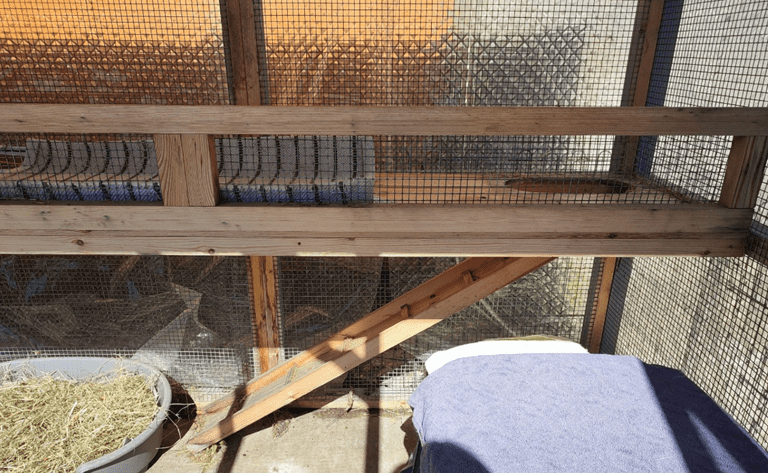
Ramps leading up to solid platforms can be helpful to older rabbits. But they need to:
If you have a double-tier hutch in your rabbits’ enclosure, be aware that the ramps in these tend to be narrow and short. This means they’re also quite steep, which rabbits can struggle with at the best of times, let alone when they get older!
Remove the ramp and replace it with a large sturdy box securely covered with a towel or blanket for grip. They can then hop up or down onto this when going between the levels.
High-up levels should be constructed with a barrier across the front so your rabbits are unable to jump or fall off easily (see below).
Rabbit company is very important for a rabbit’s mental wellbeing, whatever their age. This keeps them active and also helps to keep them warm. The best ‘hot water bottle’ for a rabbit is having a friend.
If your senior rabbit has lost their companion, we advise finding them a new one. You can start with contacting your local rescue centre to see if they have another rabbit or two they can help you bond your rabbit with.
Looking for advice on how to keep your rabbits’ health in tip top shape? You’re in the right place!
Read more about 'Your rabbits’ health: what to look out for' To help your rabbits live a long and healthy life, their diet should be as natural and varied as possible.
Read more about 'What do rabbits eat? Feeding your rabbits'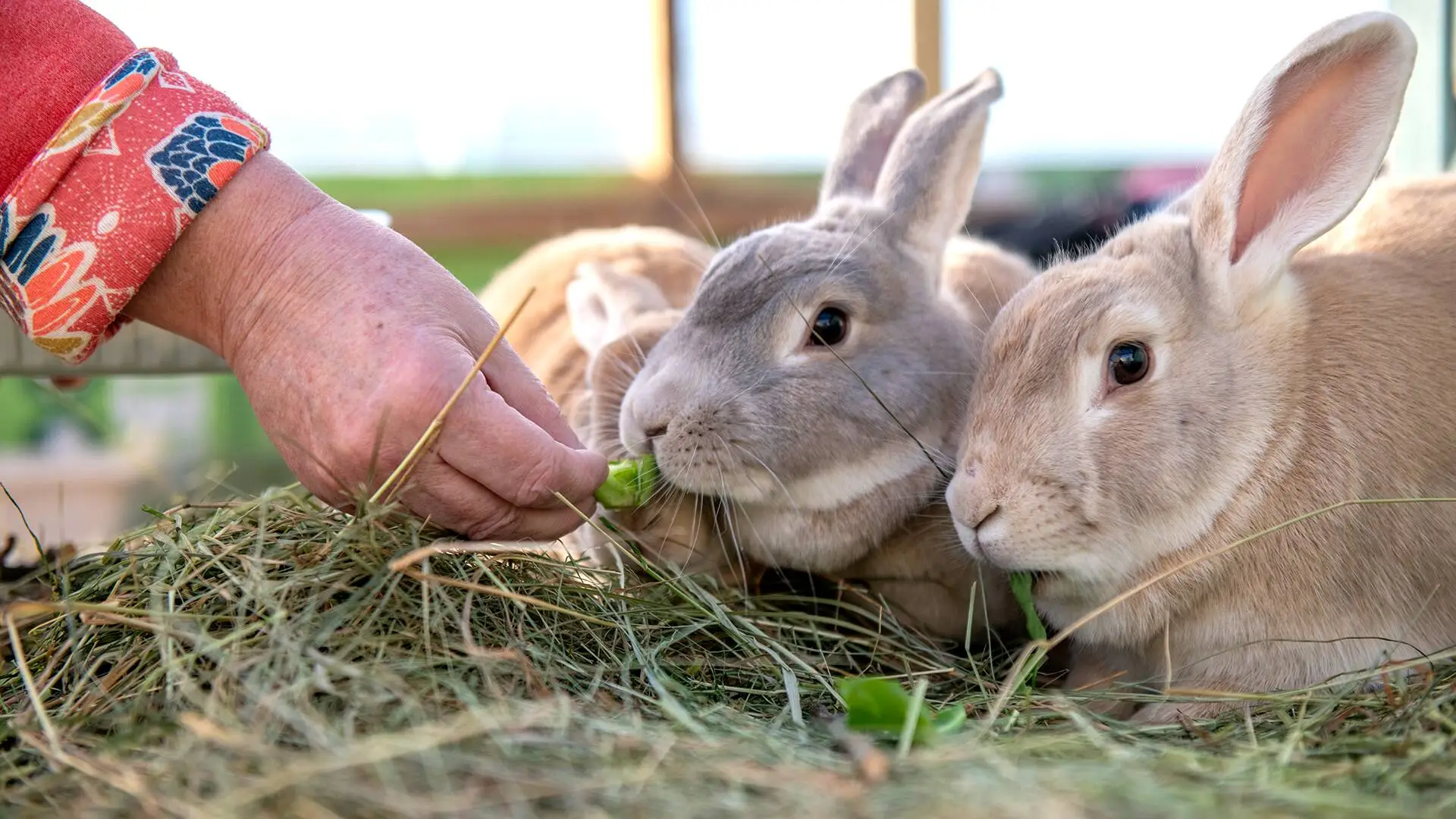
Check out our advice on helping your rabbits feel at home.
Read more about 'How to create the perfect environment for your pet rabbits'