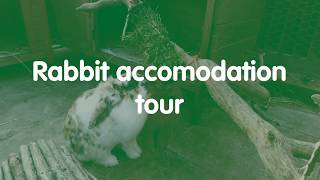
You’ll find many rabbit hutches available in pet stores and online. However, many are very poorly made and often fall apart within the first two years. You should consider investing a little more with a welfare-approved company, where the rabbit hutch is made of strong wood and suitable bolts have been fitted on the doors.
Double-level hutches are not ideal for rabbits. Your rabbits can be at risk of falling down the ramp or floor hole when they are elderly and less mobile. If you choose this option, build a banister along the ramp and around the top-level hole to aid them.
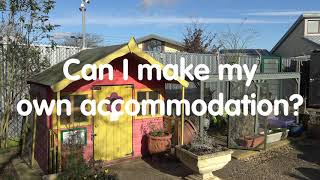
Wooden Wendy Houses or garden sheds can make an ideal home for your rabbits. You can easily convert them with mesh doors and a step-over barrier to stop them escaping. A shed gives your rabbits more floor space, and means it’s easier to socialise with their rabbits whatever the weather.
Whether you’re planning to buy a rabbit hutch or build your own, carry out regular inspections on your rabbits’ accommodation to check for damage from poor weather conditions.
Housing your rabbits indoors
Rabbits can be housed indoors too. They’ll ideally need 24hr access to a rabbit-proofed room, or a space within a room at least 3m x 2m in size. This will need to be in a quiet room, away from other pets in the home and have non-slip flooring to prevent injuries. Find out more on things to consider when housing rabbits indoors.
Can rabbits live outdoors all year?
Rabbits can live outside year round with the right setup. They need 24hr access to a secure, predator-proof enclosure at least 3m (l) x 2m (d) x 1m (h) in size, along with a large shelter space for protection from the weather such as a hutch or shed.
Mixing with guinea pigs
Rabbits shouldn’t be housed with guinea pigs. They have different dietary needs and communication styles, and guinea pigs can be injured by a rabbit’s kick.
Mixing with cats
Rabbits are a prey species, with many fearing predator species like cats and dogs and also finding them threatening. It’s important that the rabbits have their own predator proof space separate from other pets in the home to help them with feeling safe.