Pet rabbits cannot wear down their nails naturally the way wild rabbits do, so regular trimming is an important part of keeping them healthy.
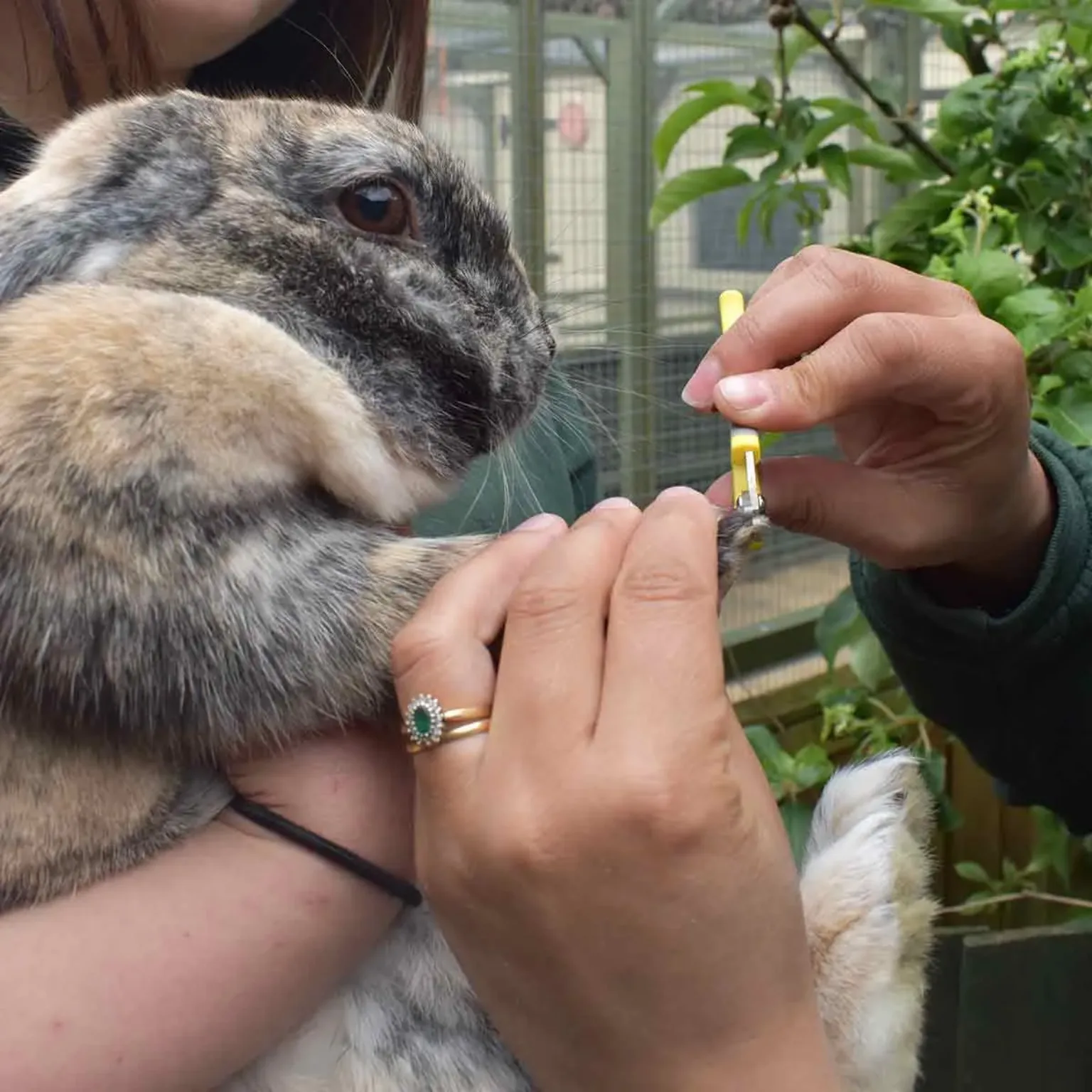
How to cut your rabbit’s nails safely at home
Three things you should know
Inside each nail is a blood vessel called the quick. It’s important for owners to understand where the quick is so they can avoid clipping this area and harming their rabbit.
With the right clippers and a calm, patient approach, most owners can learn to trim their rabbit's nails safely at home.
How to trim rabbit nails
Trimming your rabbit’s nails might feel daunting at first, but it becomes much easier with practice. If you would like some guidance before trying it yourself, ask your vet or vet nurse for a demonstration – most will be happy to show you during a routine appointment.
Step 1: Choose the right rabbit nail clippers
Use clippers designed for small animals – scissor-style and guillotine-style both work well. Never use human nail clippers, as rabbit nails are rounded and human clippers are flat, which can crack or split them. Make sure the blades are sharp, since a blunt blade will crush the nail rather than cut it cleanly.
Step 2: How to hold a rabbit for nail trimming
Trimming your rabbit’s nails can be easier with someone else’s help – one person can hold the rabbit while the other trims the nails.
To hold your rabbit safely, place one hand under their chest and support their bottom with your other hand, holding them gently against your body. The second person can then trim the nails.
Never hold your rabbit on their back. Although some rabbits appear still in this position, it is widely considered a fear response rather than relaxation.
If you don’t have help, place your rabbit on a flat surface with a towel underneath so they feel secure. Ensure all four feet are supported. Offer some tasty greens to keep them distracted, then gently lift one foot at a time to trim the nails.
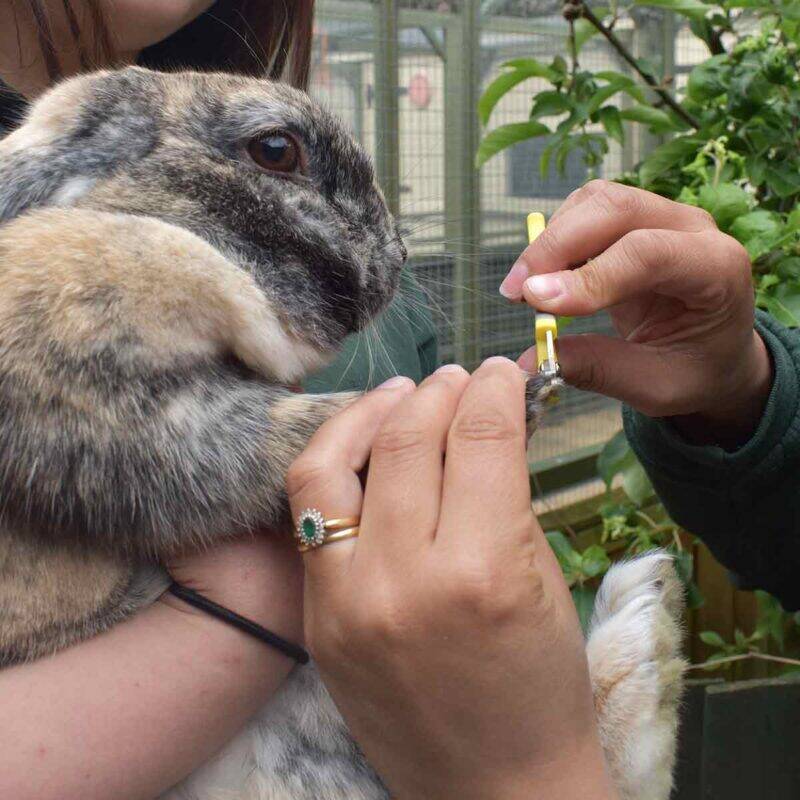
Step 3: How far to cut rabbit nails
Each nail contains a quick – the blood vessel running through the centre. In pale nails, the quick is visible as a pinkish line. For darker nails, shine a torch behind the nail to help you see where the quick ends.
Cut just in front of the quick, leaving a small margin. A rabbit’s nails should sit roughly level with the surrounding fur*. Always remove less than you think you need to – you can always trim again in a few weeks.
If you do nick the quick, press cornflour firmly onto the nail tip to stop the bleeding. The Rabbit Welfare Association and Fund (RWAF) has further guidance on managing the quick safely.
*This won’t be true for Rex rabbits, who have shorter fur. Scroll down for specific advice on trimming Rex rabbit nails.
Step 4: Rabbit nail clipping tips
Keep each session short and positive. Rabbits have 18 nails in total – five on each front foot (including a dewclaw on the inner leg) and four on each back foot – so it’s fine to split the task across two or three short sessions.
Reward your rabbit afterwards with some tasty greens to help them associate nail trimming with something positive.
How often to trim rabbit nails
Most rabbits need their nails trimmed approximately every six to eight weeks, although this varies depending on the individual rabbit, their age, and how much time they spend on hard surfaces.
Check your rabbit’s nails as part of your routine rabbit health checks.
Rex rabbits and nail trimming
Rex rabbits and nail trimming
Rex rabbits have shorter fur than other rabbits and this includes the fur on their feet. When clipping their nails, you won’t be able to use their fur line as a guide. As such, it’s best to take care and only trim very small amounts off and/or speak to your vet for guidance.
Check your rabbit's nails today
Take a close look at your rabbit's nails. If they extend beyond the fur line or are starting to curve, it is time for a trim.
Book a vet nurse appointment
Ask your vet nurse to show you how to trim your rabbit's nails safely. One demonstration can give you the confidence to do it at home.
Identify and avoid the quick
Knowing where your rabbit’s quick is will help you to avoid causing them any accidental pain and make you confident whilst trimming.
Related content

ADVICE
How long do rabbits live? Average lifespan by breed and what affects it
Read more about 'How long do rabbits live? Average lifespan by breed and what affects it'
ADVICE
Your rabbits' health: what to look out for
Looking for advice on how to keep your rabbits’ health in tip top shape? You’re in the right place!
Read more about 'Your rabbits’ health: what to look out for'
ADVICE
How to create the perfect environment for your pet rabbits
Check out our advice on helping your rabbits feel at home.
Read more about 'How to create the perfect environment for your pet rabbits'