Female rabbits are called does and male rabbits are called bucks. Telling them apart gets easier once they're a few weeks old.

Rabbit sexing and gender

Three things you should know
A male rabbit is able to breed from around three months old, so it's worth knowing your rabbits' sex early to avoid an unplanned litter.
If you're ever unsure, ask your vet to check. It's an easy mistake to make, even for experienced rabbit owners.
Our expert advice
Knowing whether your rabbit is male or female (a buck or doe) matters more than you might think. It affects when you should book them in for neutering. Sexing rabbits isn’t always straightforward, especially in young or nervous rabbits, so it’s best to take your time and ask your rabbit-friendly vet to check.
How to tell if a rabbit is male or female
To check a rabbit’s sex, ask someone to help you hold them securely on a non-slip surface, such as a towel on a table or your lap. Support their bottom and avoid holding them on their back, because rabbits can find this very stressful. Gently part the fur around their genitals, just above the tail, and apply gentle pressure just above the opening.
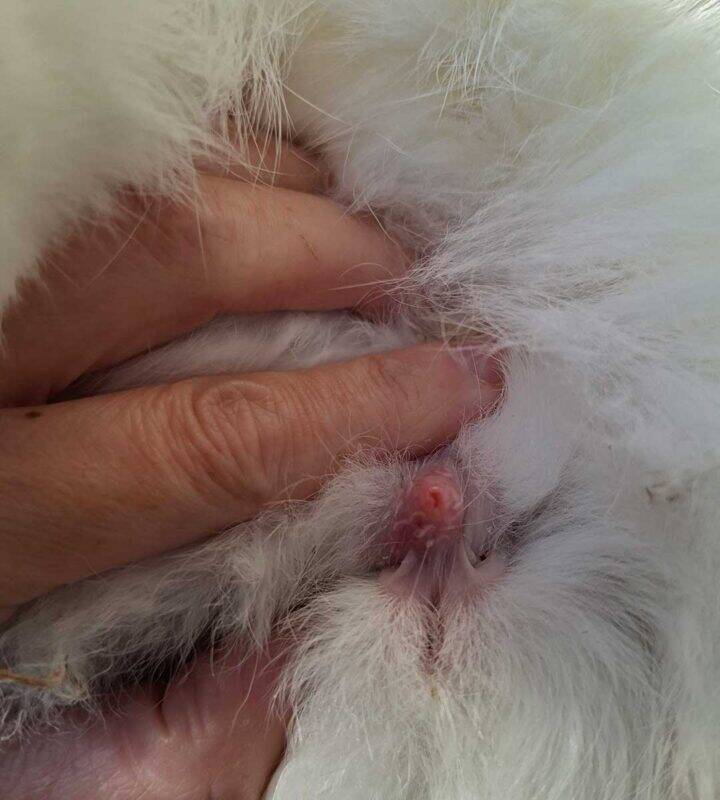
Checking a male rabbit
Applying gentle pressure will make the penis come out, appearing as a small pink tube with a rounded, circular opening. Don’t rely on looking for testicles alone as bucks often hold them close to their body (especially if they are nervous), and young males may not have visibly descended testicles until around ten weeks old.
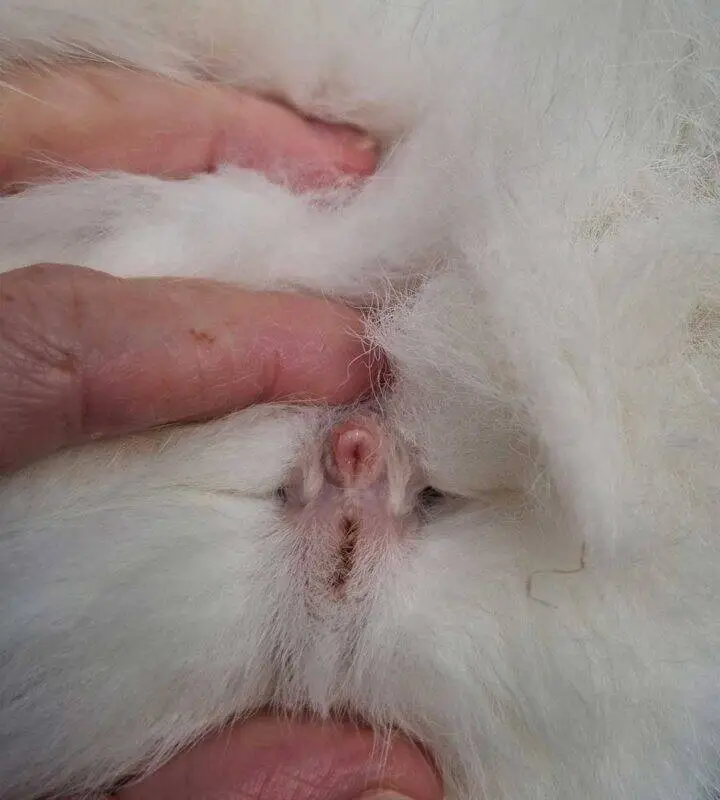
Checking a female rabbit
You’ll see a vulva instead, which has a slit-shaped opening rather than a circular one. This tends to look pointier than a male’s. If you’re finding it tricky to tell the difference, it can help to compare against a rabbit whose sex you already know, or ask your vet for a second opinion.
When can you tell a rabbit’s sex?
Most rabbits can be sexed from around six weeks old. It’s not easy though, especially with wriggly or nervous rabbits during handling. If you’re not confident, it’s always worth asking your vet to check. Getting it wrong is a common and understandable mistake, even among experienced rabbit owners.
Why getting your rabbit’s sex right matters
A male rabbit is able to breed from around three months old. If you have a pair of rabbits, knowing their sex early can avoid an unplanned litter. Same-sex pairs need to be neutered early to help prevent fighting as they mature.
Neutering and sexing
Neutering is recommended for all pet rabbits to prevent unwanted litters and support long-term health and bonding success.
Male rabbits can usually be neutered once their testicles have appeared, from around three to four months old. For females, this is usually from about four to five months, depending on their size and your vet’s preference. Neutering also reduces the risk of early fighting between rabbits.
In females, it prevents uterine cancer, which can be more common from around four years old. Removing the uterus means the cancer can no longer develop there.
Rabbit behaviours worth knowing about
Unlike humans, female rabbits don’t have a menstrual cycle. Instead, they’re induced ovulators, meaning they release eggs in response to mating, so an unneutered mixed-sex pair can fall pregnant at almost any time. Female rabbits can also mount each other to establish who’s in charge, which is a normal social behaviour and much less common once they’ve been neutered.
Unneutered male rabbits can be particularly difficult to manage. Two unneutered males kept together often start fighting as they mature. And an unneutered male may constantly mount a female, or spray urine to mark his territory, including on other rabbits. Neutering usually resolves these behaviours and makes it much easier for rabbits to live together safely.
Why accurate rabbit sexing matters
Surprisingly, it’s common for even experienced breeders to get a rabbit’s sex wrong, particularly in young or nervous individuals.
If a same-sex pairing unexpectedly produces a litter, it’s worth having both rabbits re-checked by a vet rather than assuming it was a one-off mistake.
Adopting from an ethical rescue centre, such as Woodgreen, avoids this uncertainty altogether. This is because rescue rabbits are correctly sexed and neutered before they go to their new home.
Choosing the right rabbit pairing for a happy bond
Traditionally, it was thought that a neutered male and neutered female make the strongest bonded pair. Same-sex pairs or small groups of rabbits can also live together very happily, providing they are all neutered, have enough space, and resources like separate feeding and hiding spots.
Three things you can do today
Get a second opinion
If you're not confident checking your rabbit's sex, ask your vet to check at their next visit or vaccination appointment.
Separate mixed-sex pairs
If you have littermates of different sexes, separate them by around ten to twelve weeks old to avoid an unplanned litter.
Book a neutering consultation
Speak to your vet about the right time to neuter your rabbit, based on their sex, size and general health.
Related content

ADVICE
Neutering your rabbits: what you need to know
Like with all procedures, neutering rabbits comes with its risks, and these should be discussed with your small pet-savvy vet.
Read more about 'Neutering your rabbits: what you need to know'
ADVICE
How to bond rabbits – and why companionship is so important
Rabbits are very sociable animals. They live in large colonies in the wild for companionship, safety and comfort. Find out more in this article.
Read more about 'How to bond rabbits – and why companionship is so important'
ADVICE
Your rabbits' health: what to look out for
Looking for advice on how to keep your rabbits’ health in tip top shape? You’re in the right place!
Read more about 'Your rabbits’ health: what to look out for'