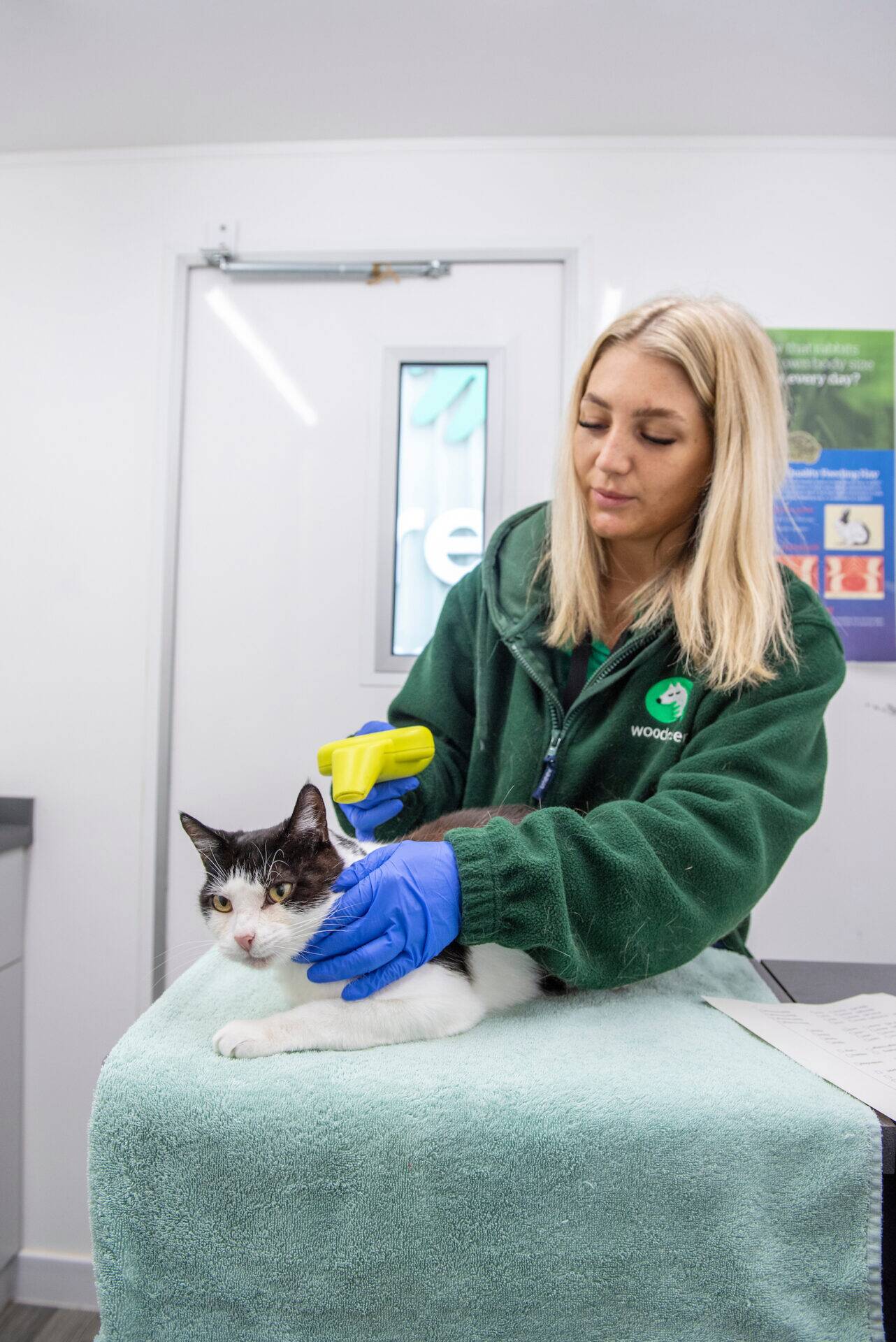
As we enter the peak breeding season for cats, it’s key for owners to identify whether their cat is pregnant or calling for a mate, and know what to do if they have an unexpected litter on the way.
Cat owners are encouraged to observe their pets and speak to Woodgreen about any noticeable changes that may indicate a forthcoming pregnancy if their female cats are not neutered.
How to tell if your cat is calling for a mate
If your cat isn’t neutered, there are a number of tell-tale signs that they are calling for a mate. Female cats will typically become very vocal, which can be confused with pain as it can be very loud. They will also start ‘presenting themselves’ and roll around on their back. Both male and female cats may also disappear for a few days at a time as they go in search of the opposite sex.
When is breeding season for cats?
Breeding season for cats typically runs from February to October, triggered by increasing daylight hours. During this time, an unneutered female may come into heat repeatedly, with each cycle lasting anywhere from a few days to two weeks and recurring every couple of weeks until she’s mated. Unlike dogs, cats don’t bleed during their heat cycle, so there’s no obvious visual sign of fertility. This means the vocalising can easily be mistaken for pain or distress, rather than recognised as your cat calling for a mate.
How to tell if your cat is pregnant
When a cat is pregnant, the early symptoms are very subtle. The first sign is ‘pinking up’, whereby their nipples become darker and potentially enlarged, alongside some behavioural changes. It’s likely that cats will have an increased appetite and be more emotionally needy than usual, although this does vary from cat to cat. Of course, their stomach will feel firmer and grow throughout pregnancy, which lasts around 63 days.
A vet will usually be able to feel for kittens from around three weeks into the pregnancy, and an ultrasound can confirm pregnancy from around this point too. Later on, an X-ray can confirm exactly how many kittens to expect.
Signs your cat is going into labour
As labour approaches, your cat may become restless and start pacing. She’ll also begin nesting, seeking out a quiet, hidden spot to have her kittens. Active labour usually follows within a day of these signs appearing.
Need help with your pet?
If you think your cat might be pregnant, if they have already had kittens or if you need help with any other aspect of pet care, please contact us. Woodgreen provides a range of free services for pets and owners including pet advice, behavioural support, essential supplies and, in some cases, financial assistance to cover the cost of pet care.