There are over 50 recognised rabbit breeds in the UK, but most pet rabbits are crossbreeds or one of a handful of popular types.
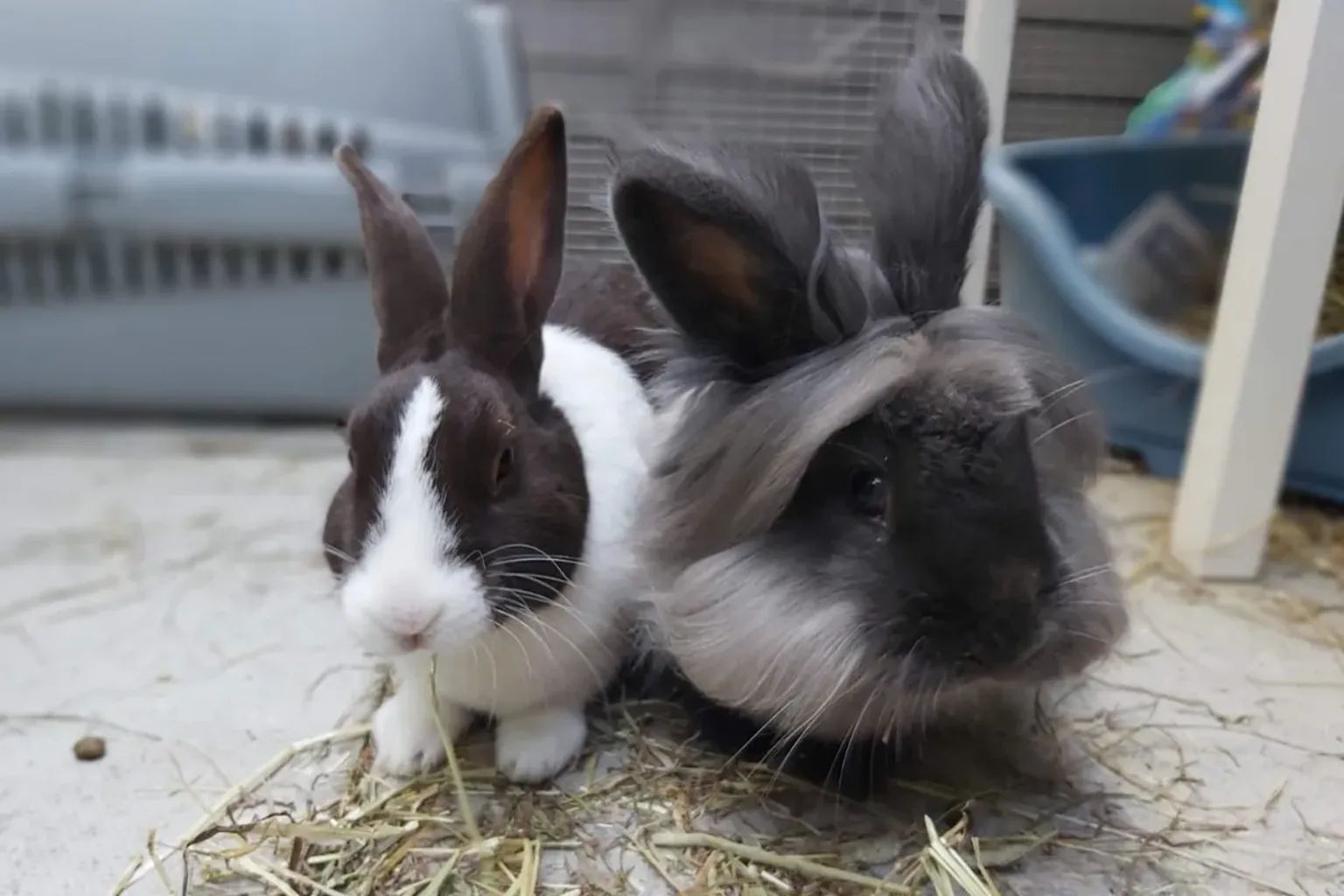
Rabbit breeds: a guide to popular pet bunnies in the UK
Three things you should know
Breeds with flatter faces, such as lop-eared rabbits, can be more prone to dental and breathing problems due to their skull shape.
All rabbits, regardless of their breed type, are highly social animals and should always live with a bonded companion or as part of a group rather than alone.
With so many known rabbit breeds, choosing the right one can feel overwhelming. Rather than covering every breed out there, here are some of the most popular pet rabbit breeds in the UK, along with what makes each one distinctive.
What species are pet rabbits?
Every pet rabbit you’ll meet in the UK, from the Netherland Dwarf to the Lionhead, belongs to the same species, the European rabbit (Oryctolagus cuniculus). All domestic rabbit breeds were developed from this one wild species through selective breeding, so the differences you see in size, coat, and ear shape are breed differences, not separate species. Here’s how the five breeds covered below compare at a glance:
| Breed | Adult weight | Grooming needs | Main health point to watch |
| Mini Lop | Up to around 1.6kg | Short coat; minimal grooming; floppy ears need regular checking | Ear infections and dental problems |
| Netherland Dwarf | Under 1kg | Short coat; minimal grooming needed | Dental problems from compact head shape |
| Lionhead | Around 1.5kg | Regular brushing of the mane to prevent matting | Matted mane and obscured vision |
| English Angora | 2.5–3kg | Daily grooming of the long wool coat | Digestive problems from ingested fur |
| Dutch | Around 2–2.5kg | Short coat; minimal grooming needed | Generally fewer dental and breathing issues, but still needs regular checks |
Mini Lop
One of the most popular pet rabbit breeds, the Mini Lop is compact, round-faced, and known for being friendly. Their floppy ears need regular checking, as the shape can make ear infections more likely, and their compact, rounded face means they are prone to dental problems.
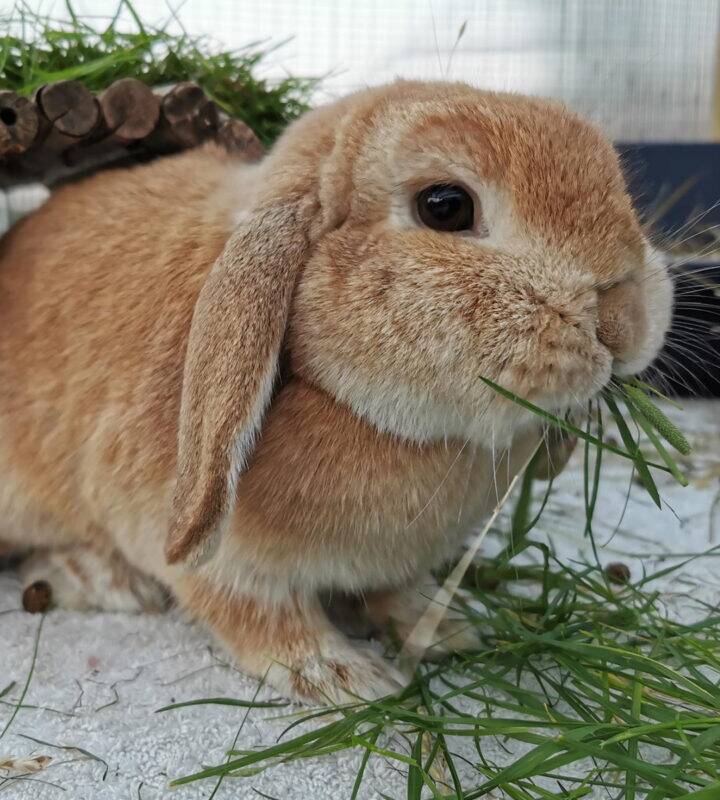
A Mini Lop rabbit
Netherland Dwarf
The smallest breed of rabbit commonly kept as a pet, the Netherland Dwarf weighs under a kilogram. Their compact head shape means they can be prone to dental problems, so regular check-ups are important. They can also be more nervous than other breeds and benefit from gentle, patient interactions.
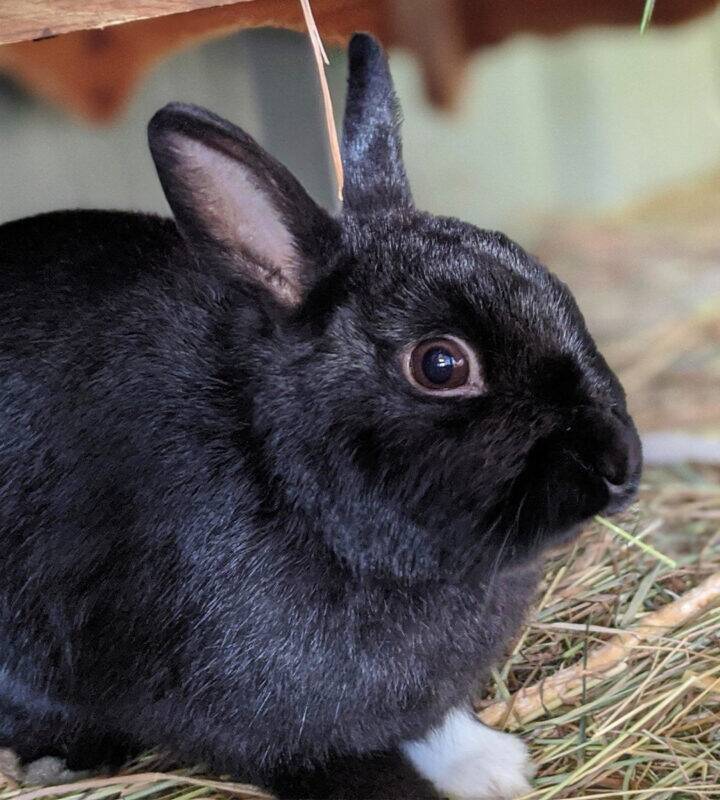
A Netherland Dwarf rabbit
Lionhead
Easily recognised by the fluffy mane around their head, the Lionhead is generally docile and friendly. Their longer fur needs regular grooming to prevent matting, and routine vet checks help catch dental issues early. Their mane can also obscure their vision, so it’s best to approach them calmly and speak softly as you get close, giving them a chance to know you’re there before you touch them.
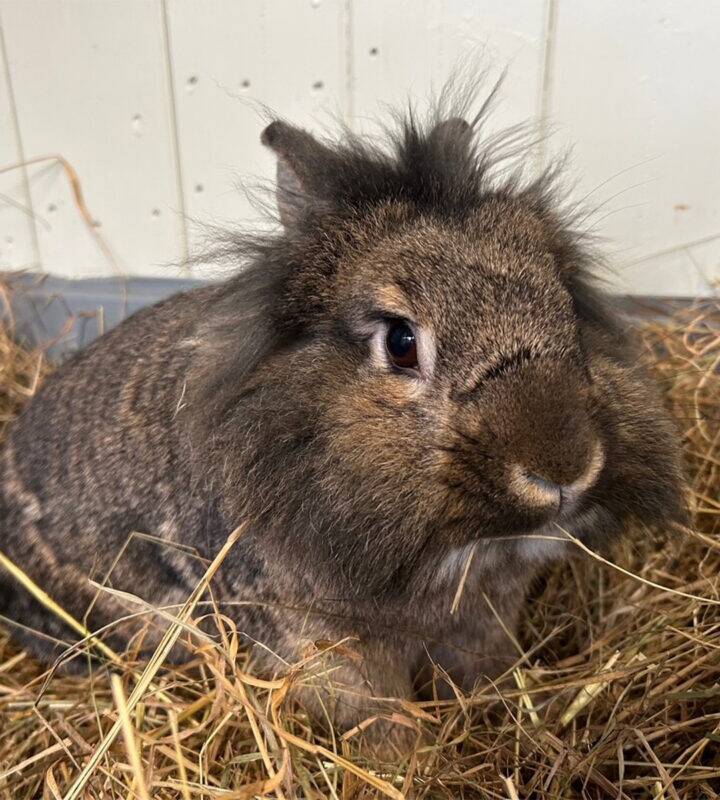
A Lionhead rabbit
English Angora
Known for their long, wool-like coat, English Angora rabbits are generally affectionate but need daily grooming. This helps to prevent matting and a build-up of ingested fur, which can cause serious digestive problems. Their long fur can also obscure their vision, which may make them more prone to nervousness or being startled if they haven’t noticed you approaching.
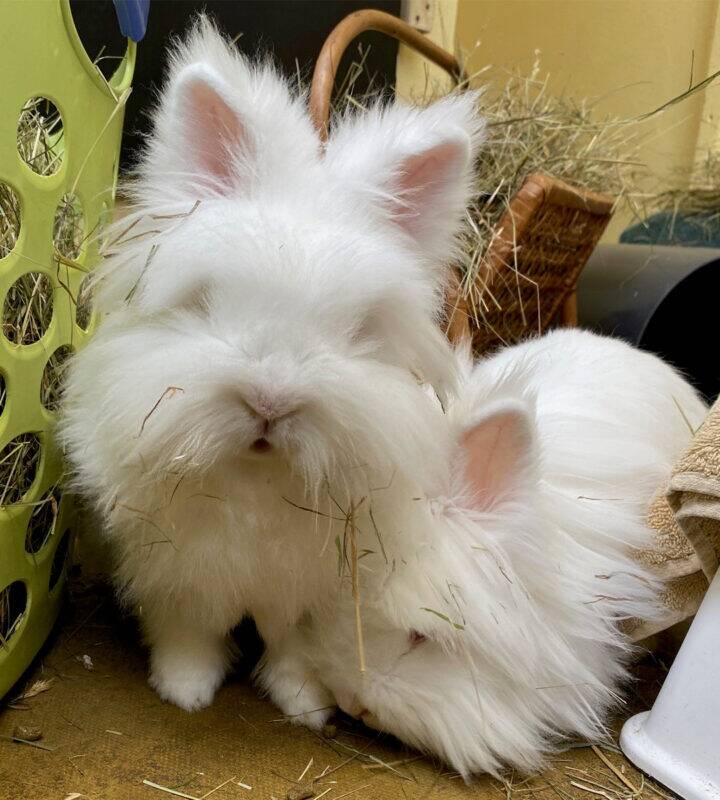
English Angora rabbits
Dutch
With a distinctive white band and coloured markings, the Dutch rabbit has a more traditional head shape compared to flatter-faced breeds, which can mean fewer dental and breathing problems. They are generally calm and sociable, making them a popular choice for first-time owners.

Dutch rabbits
Which are the smallest rabbit breeds?
Of the breeds covered above, the Netherland Dwarf and Mini Lop are the smallest, with Netherland Dwarf rabbits weighing under 1kg and Mini Lops weighing up to around 1.6kg as adults. Despite their size, a smaller rabbit still needs just as much space as a larger breed to run, dig, and stretch out fully – see our rabbit care guide to learn more about the minimum space needed.
Health risks in flat-faced rabbits
Lop-eared and other flat-faced breeds have become increasingly popular for their appearance, but research shows this skull shape is linked to higher rates of dental and breathing problems. Rabbits with a more traditional, longer face shape, such as the Dutch, tend to experience fewer of these issues.
Choosing the right breed for you
Coat type, size, and temperament vary considerably between breeds, but every pet rabbit needs daily care, social company, and space to exhibit natural behaviours such as running, digging, and stretching out fully.
Before choosing a breed, think about how much grooming you can commit to, whether you have other rabbits for them to bond with, and the space you can provide. Many wonderful rabbits of all breeds and crossbreeds are also waiting in rescue centres.
Most pet rabbits in the UK today are crossbreeds rather than pedigree, and they make just as wonderful companions. Breed standards mainly matter for showing, so do not feel that a crossbreed rabbit is any less suitable as a pet.
Three things you can do today
Research breed-specific care needs
Look into the grooming, handling, and health needs of any breed you are considering before bringing a rabbit home.
Consider adopting a bonded pair
Rescue centres often have bonded pairs of rabbits ready to rehome, which avoids the challenges of introducing rabbits later.
Plan for adequate space
Whatever breed you choose, check you can provide enough space for them to run, dig, and stretch out fully. As a guide, rabbits need a living area of at least 3m x 2m x 1m, giving them room to move freely, stand fully upright, and take a few hops.
Related content
ADVICE
Your rabbits' health: what to look out for
Looking for advice on how to keep your rabbits’ health in tip top shape? You’re in the right place!
Read more about 'Your rabbits’ health: what to look out for'
ADVICE
Caring for rabbits as pets
If you’re a rabbit owner, or you’re thinking about getting rabbits, we’re here to help – every step and hop along the way.
Read more about 'Caring for rabbits as pets' ADVICE
What to feed your rabbits
To help your rabbits live a long and healthy life, their diet should be as natural and varied as possible.
Read more about 'What do rabbits eat? Feeding your rabbits'