ADVICE
Thinking about getting a guinea pig?
In this handy guide, you’ll find out everything there is to know about keeping guinea pigs happy and healthy. And once you’re an ‘expert’ on this spectacular species, you’ll know for sure if guinea pigs are the right pet for you.
These charming, lovable, little animals can make perfect pets for most families. They’ll bring you lots of joy and fill your home with endless, adorable squeaks. Just like saying “walkies” to a dog, the rustle of a plastic bag can send them into a frenzy!
Although guinea pigs are small creatures, they need plenty of space to run around to their heart’s content. This will help keep them active, healthy and happy. For males, it’s best to give them as much room as possible, otherwise they tend to squabble!
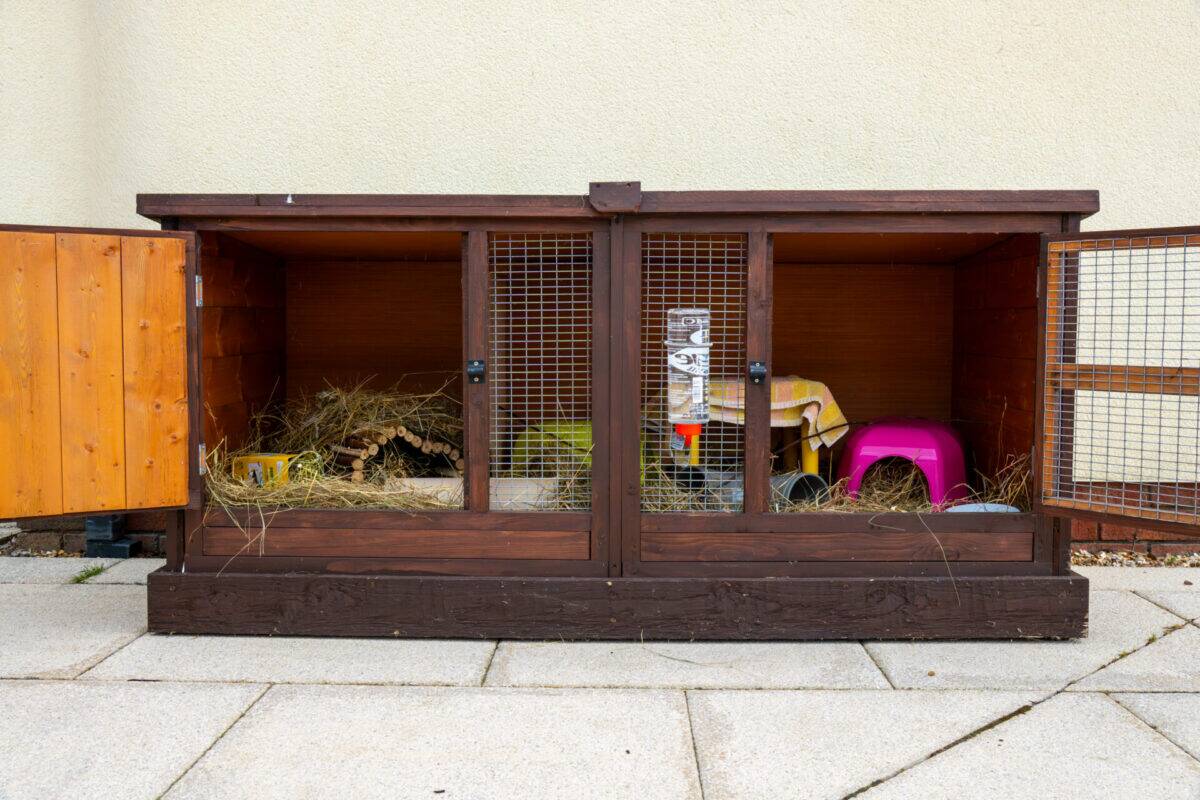
A hutch suitable for a pair of guinea pigs
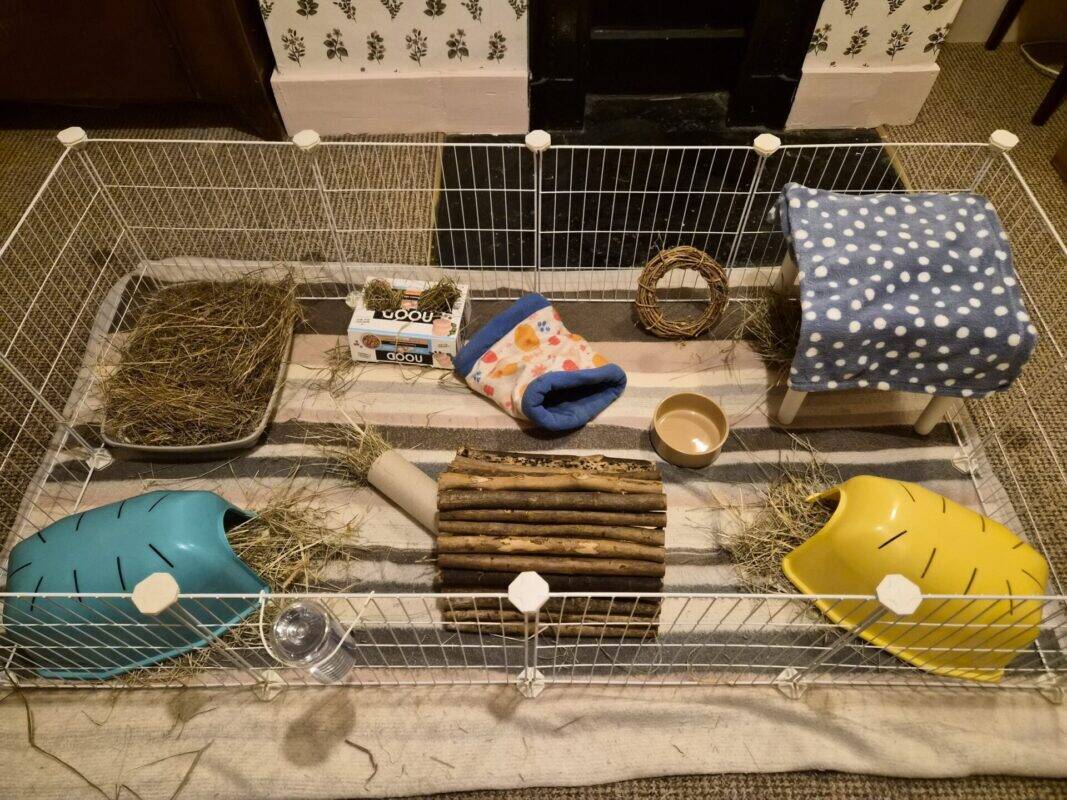
An indoor cage, suitable for a pair of guinea pigs.
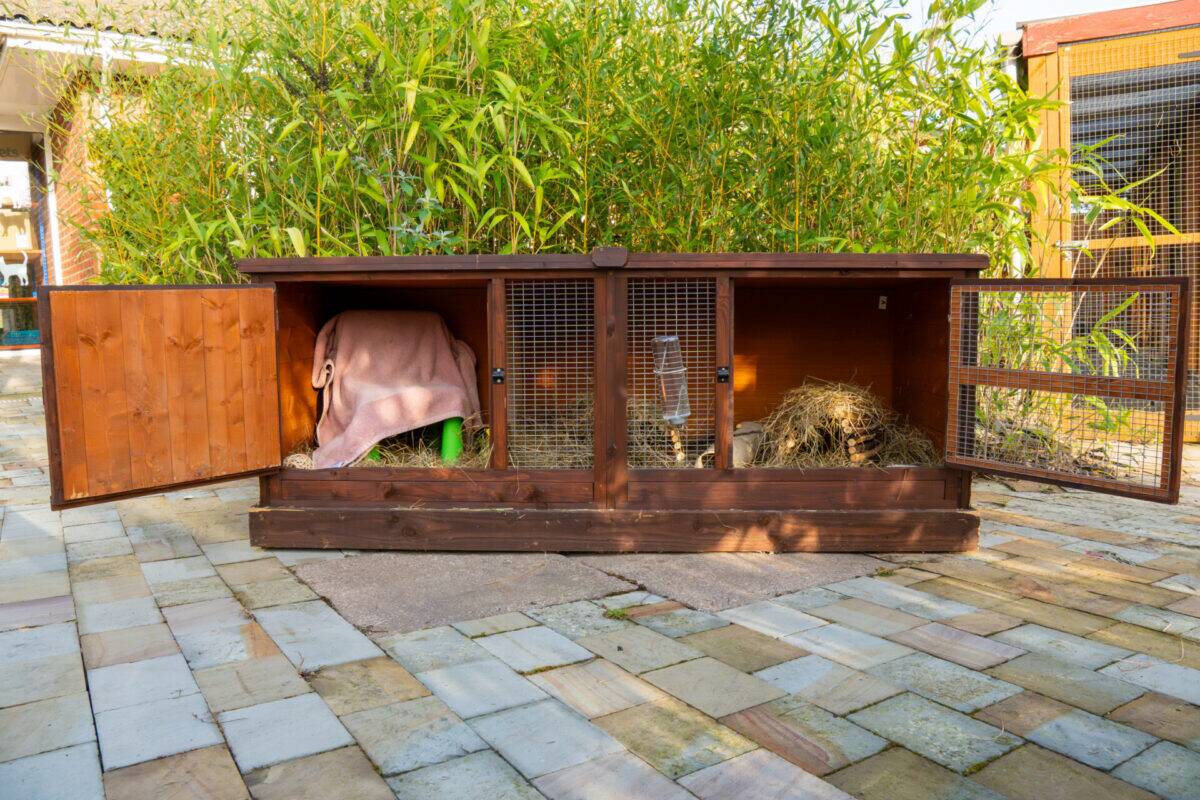
A hutch suitable for a trio of guinea pigs or a pair of males.
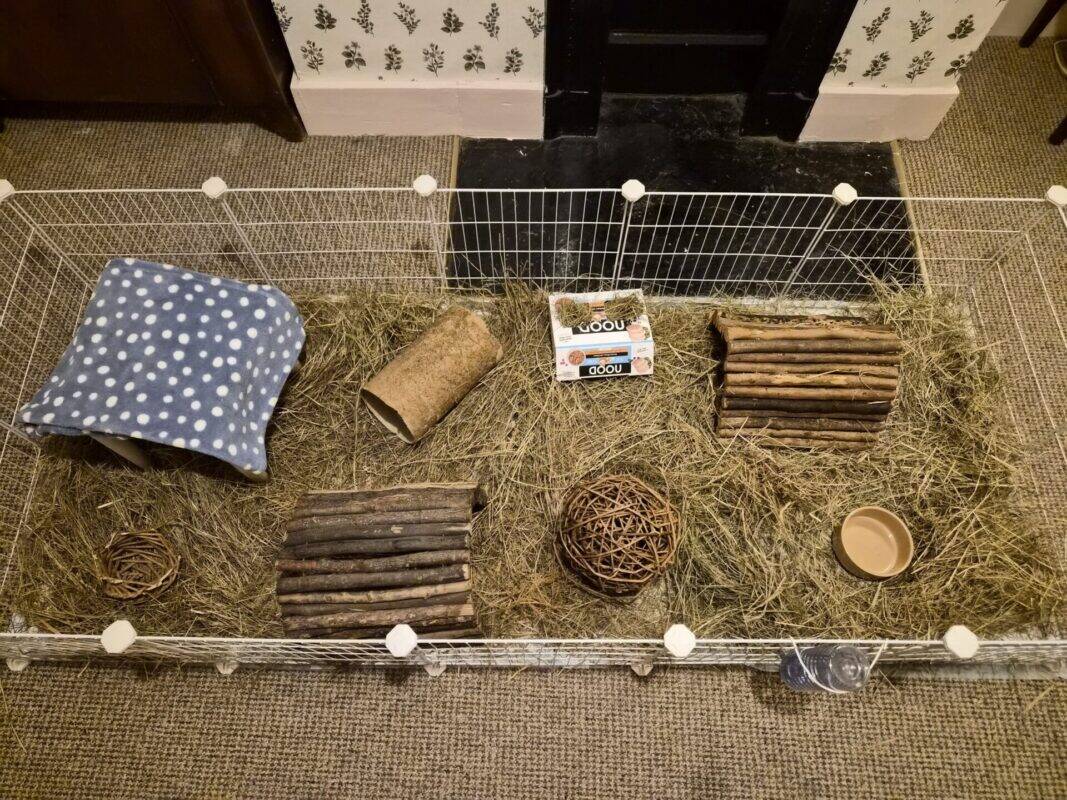
An indoor cage suitable for a pair of guinea pigs, or trio of guinea pigs
Four or more guinea pigs will need a larger indoor setup or a converted shed/ Wendy House, along with a bigger run for the garden. If you’d like more information about this, don’t hesitate to contact our friendly team!
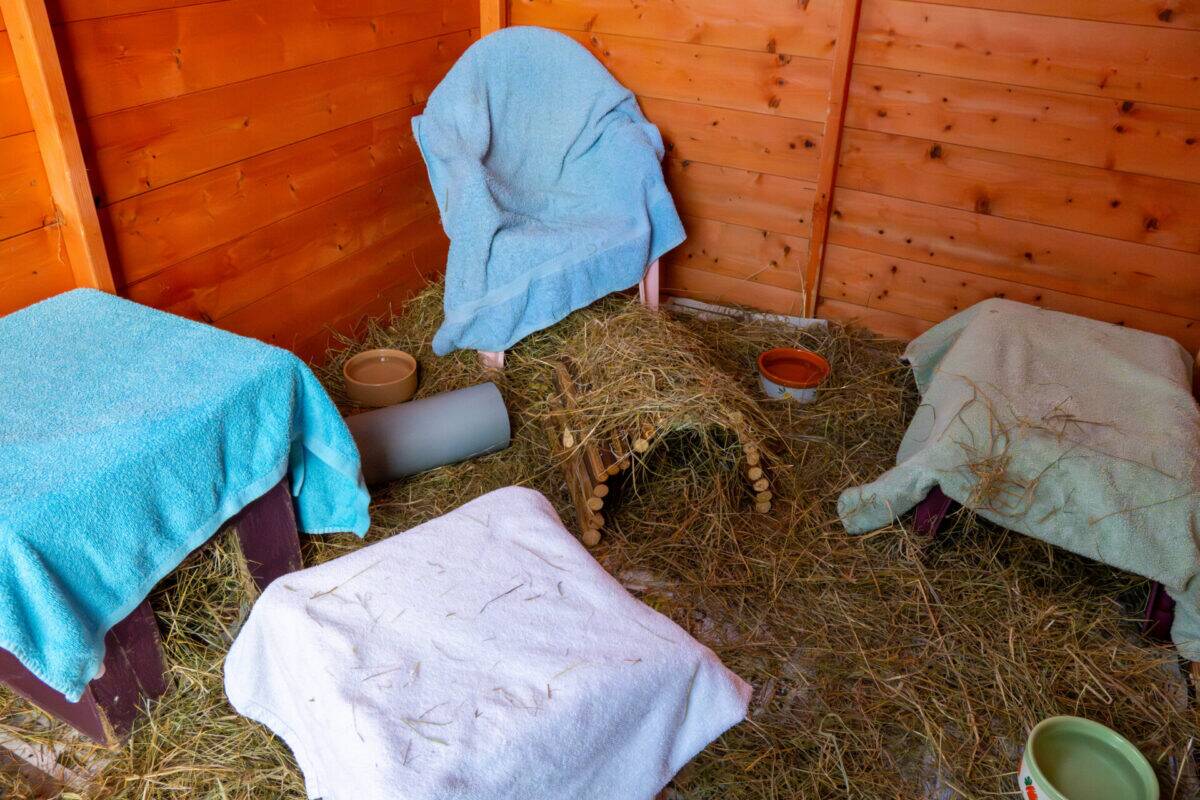
A shed suitable for 4 or more guinea pigs.
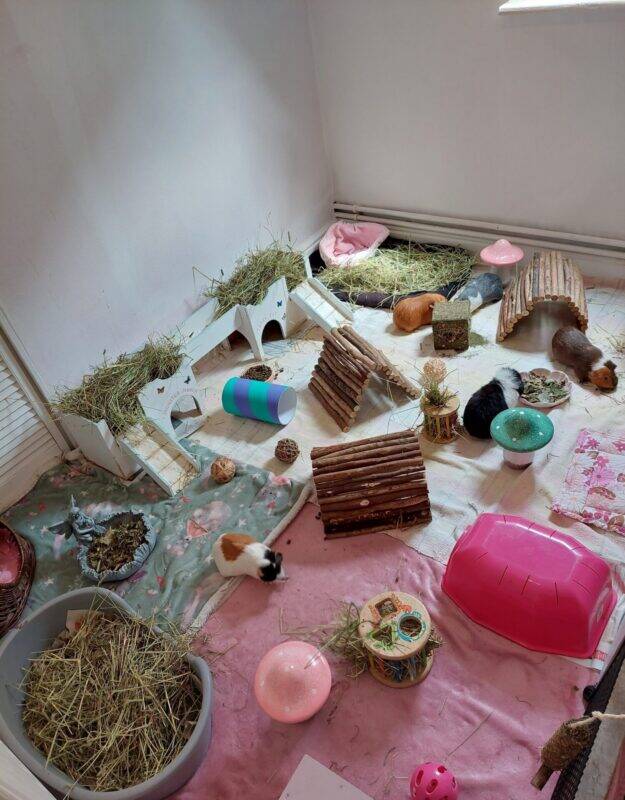
An indoor roaming area, suitable for 4 or more guinea pigs.
| Indoor pros | Outdoor pros |
|
|
| Indoor cons | Outdoor cons |
|
|
Although cages can come in various sizes, many of them are quite small and not suitable for a pair of guinea pigs. A lack of space can also make it tricky to be creative with their environment.
Look out for modular cage ranges like those offered by C&C Guinea Pig Cages. They’re more flexible and more suited to empty spaces in your home. Plus they’re usually more affordable and easy to make. But due to their open top design, they’re not suited to homes with cats, dogs or young children.
Guinea pigs are a prey species and are easily scared by loud noises. So avoid placing them in busy, noisy rooms like the living room, kitchen or a play room. Keep their enclosure away from any draughts throughout the year and hot sunny windows in the summer.
Double level hutches are not ideal for guinea pigs. Most will only end up using one level, as the ramps are usually quite steep and provide little grip, if any at all. They’re also at risk of falling down the ramp or floor hole when they’re elderly and less mobile.
Instead, get a single level hutch like the one below which you can find available in pet stores and online. Many hutches are very poorly made and often fall apart within the first two years. So consider investing a little more, if you can, with a welfare approved hutch company and get yourself a hutch which is made of strong wood.
Your hutch should also have suitable bolts on the doors – cunning predators can easily open hutches with swivel latches.
A hutch suitable for a pair of guinea pigs
Wendy Houses or garden sheds make an ideal home for your guinea pigs, especially if you have a herd. Sheds can easily be converted with mesh doors to provide good ventilation, and a step over barrier to stop them escaping. A shed also offers more floor space for the guinea pigs, which means more space to explore! It also means you can socialise with your guinea pig, whatever the weather.
Top tip: Avoid plastic children’s play houses for guinea pig accommodation. These aren’t suitable for them due to how hot they can become in the summer months.
Ready to get started? Read our step-by-step Converting a shed for guinea pigs guide to find out how.
Guinea pigs are grazing animals – it’s in their DNA! Weather permitting, they need a minimum of four to six hours a day on grass, or access to a good mixture of safe garden plants.
There are other reasons why the outdoors is good for them. Guinea pigs who are confined to a hutch for long periods of time are more likely to fight with their companions. There’s also a greater risk of them suffering from health conditions due to a lack of Vitamin D and space to exercise.
Avoid using metal folding runs and A-frames for your guinea pigs. Metal runs often don’t have a secure lid, are flimsy against predators and weather, and guinea pigs can get trapped or injured due to the large mesh spacing.
A-frames often only have one door so rounding up the guinea pigs can be very tricky. And they’re rarely available in the required minimum size.
The garden run will need to be:
Your guinea pigs will need multiple hiding areas/tunnels spread throughout their whole run – the more the better. They don’t feel safe grazing in open spaces – it gives them the heebie-jeebies! So they’ll often hide in one corner or under the only shelter available. Make sure they have several options to move between.
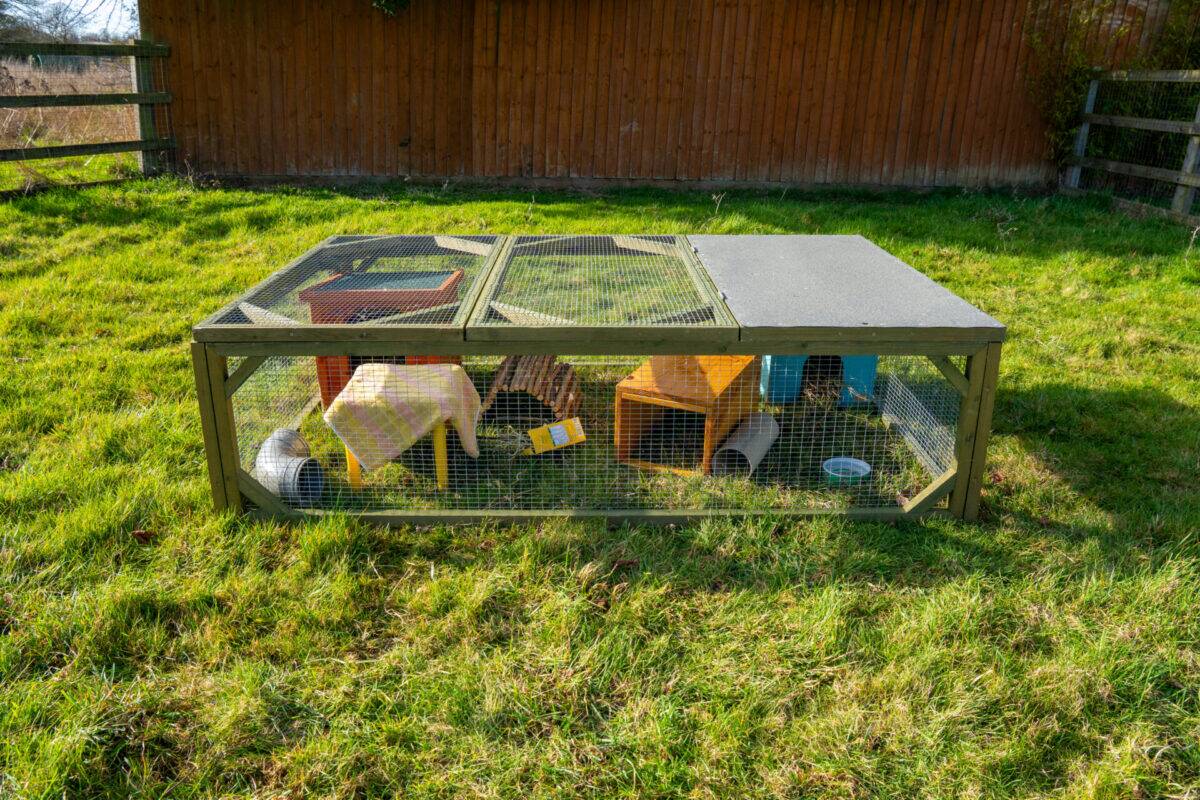
A 6ft x 4ft outdoor run for guinea pigs
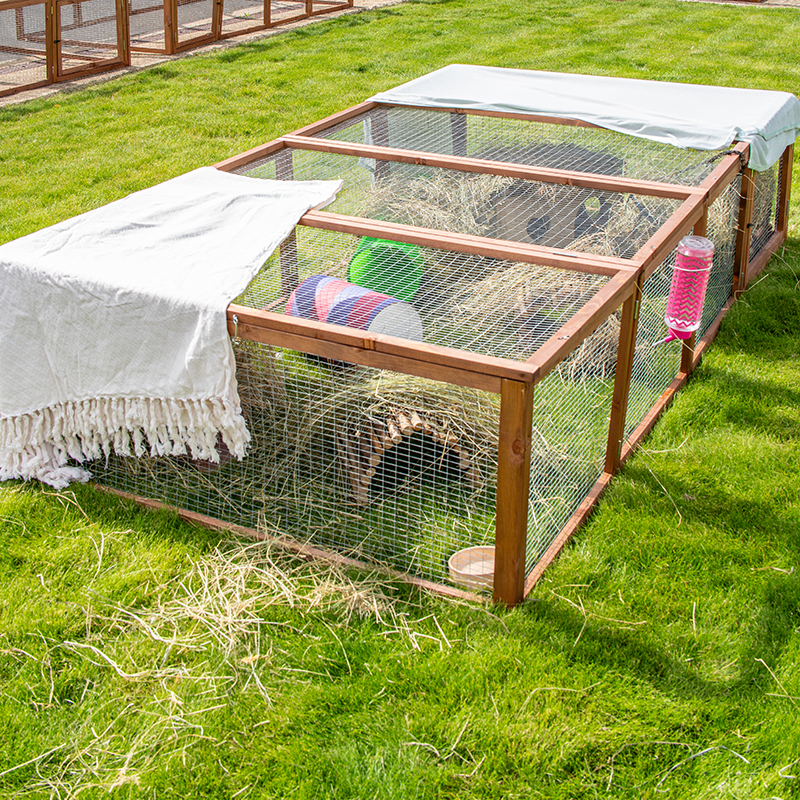
Like us humans, a guinea pig’s happiness is influenced by their environment. So it’s vital you provide them with everything they need to keep active and mentally stimulated.
Although guinea pigs aren’t naturally playful, they do like to be kept busy with toys and will love anything involving food.
Enrichment ideas for your guinea pig enclosure include:
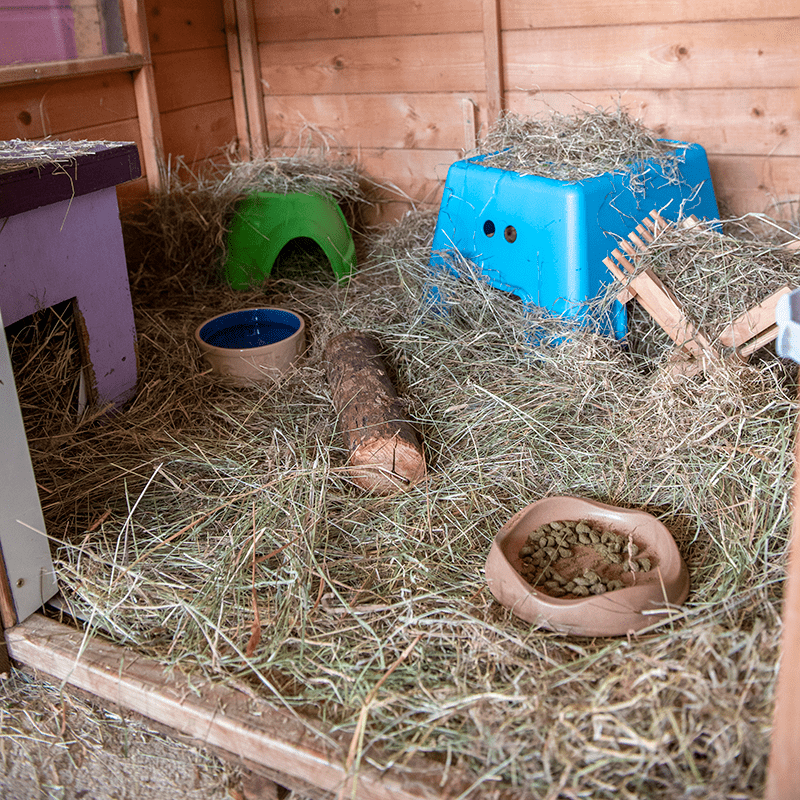
A converted wooden wendy house for guinea pigs with hay covering the floor, a wooden log, food bowl, water bowl and colourful plastic hideouts.
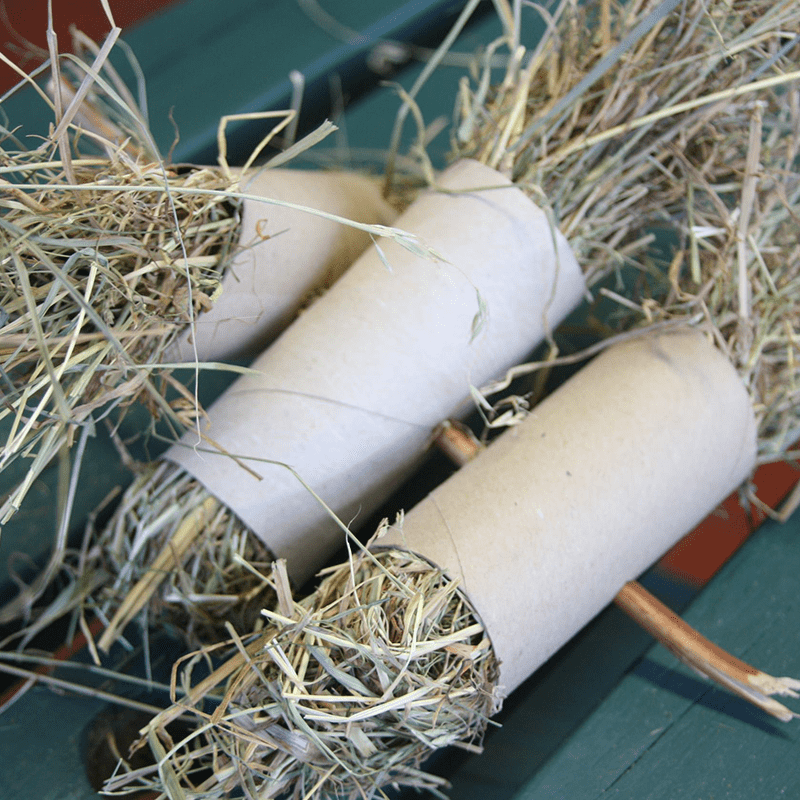
Stuffed toilet rolls with hay or forage hay as a treat
It’s important to make the right choices when it comes to your guinea pigs’ bedding. The wrong bedding can have a very negative effect on their health.
Wood shavings, sawdust and straw can often contain fur mites, cause respiratory, fungal and mange conditions, and could give them (and their humans) an allergic reaction.
The most suitable bedding for your guinea pigs is hay. It also makes up a large chunk of their diet, so it has multiple uses! Line their enclosure with a thick layer of newspaper and completely cover it with a good, deep layer of fresh, sweet-smelling green hay.
In the wild, guinea pigs live in dense vegetation and will use this to hide from predators, so the deeper you can make the hay, the better! Be aware that some people can be allergic to hay, mistakenly thinking they are allergic to the guinea pigs themselves.
It’s often more cost-effective to purchase hay from a local farm or equine shop by the bale. You can then pick a nice, green bale and reduce the risk of it being old stock and possibly contaminated or filled with sharp thistles.
Go to hay in the diet section of this guide for examples of different hay you can use.
You can also use fleece bedding for indoor guinea pigs, as long as they have multiple piles of fluffy hay to graze from. But be prepared to sweep and wash lots of blankets in your machine, as they’ll need changing every couple of days.
This may need to be done more often if you have a herd, and also throughout the winter when their time in the run is reduced.
Guinea pigs are naturally sociable creatures that need companionship to stay happy. In the wild, they live together in large herds, so they should always be kept in pairs or small groups. If you find yourself with a lone guinea pig of any age, contact Woodgreen or your local rescue centre to help find a pal for your guinea pig.
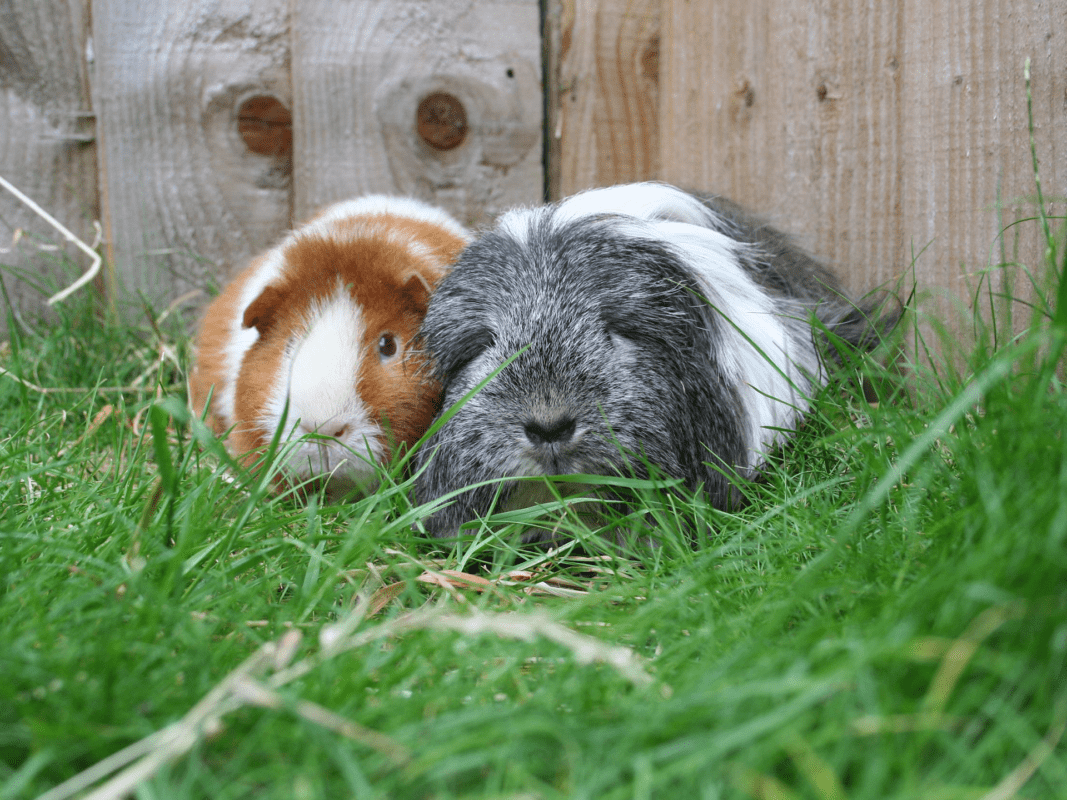
While mixing guinea pigs isn’t as easy as you might think, there are choices you can make to increase your chances of success.
A rabbit and a guinea pig shouldn’t live together. Although some owners have found that a rabbit and guinea pig can seemingly live happily in each other’s company, there’s a big risk that the guinea pig will be accidentally kicked when the rabbit is running and hopping about.
Guinea pigs are also vocal communicators, whereas rabbits are mostly silent, and this can be upsetting for them both.
If you find yourself with a lone guinea pig, we can help! We have an onsite mixing service where we can support you with finding a companion for them. This could involve mixing onsite or providing you with advice on how to mix guinea pigs at home.
When introducing guinea pigs, it’s very important that it’s done on neutral territory. Ideally, mix them in the outside run, on a patch of grass they haven’t previously had access to. This will give them plenty of space, and the fresh grass will be neutral. If you do mix indoors, make sure they have plenty of space.
To get ready for the mix you will need to:
To help your guinea pigs live a long and healthy life, their diet should be as natural and varied as possible.
Guinea pigs are herbivores who need a full belly of fibre at all times. In the wild, they’d live in dense foliage and spend their days grazing, so a healthy daily diet should include the following:
Spread this around the whole enclosure, run space and under hiding spaces. Guinea pigs need constant access to hay/grass, as they‘ll continuously eat. Seriously, they can’t get enough of it.
They should be eating a pile of hay the same size as themselves each day. It’s also great for helping to keep their teeth healthy!
Offer a mixture of varieties such as:
Avoid short, brown or yellow, dusty, mouldy hay as it lacks in nutrition and may harm your guinea pigs
Around 1 egg cup (20g) of pellets per guinea pig, per day. Guinea pigs shouldn’t be fed muesli mixes as they’re high in sugar and can lead to dental problems and selective feeding.
Here at Woodgreen, we feed our guinea pigs on Burgess Excel pellets, which you can buy online or from most pet shops.
A handful per guinea pig, per day. Give them a variety of different fresh foods each day. You can pick and grow your own foods to feed them –see our list of safe foods on the next page.
Daily fresh water is extremely important. Many guinea pigs prefer to drink from a bowl. Bottles are suitable but can often leak and be tricky to clean.
For a full diet breakdown and safe vegetables, see our guide on what guinea pigs can eat.
As well as the food and snacks, there are all sorts of other natural foods – or forage – you can give your guinea pigs. And, if you fancy getting out into nature, you can go foraging to pick and collect lots of them yourself, for free!
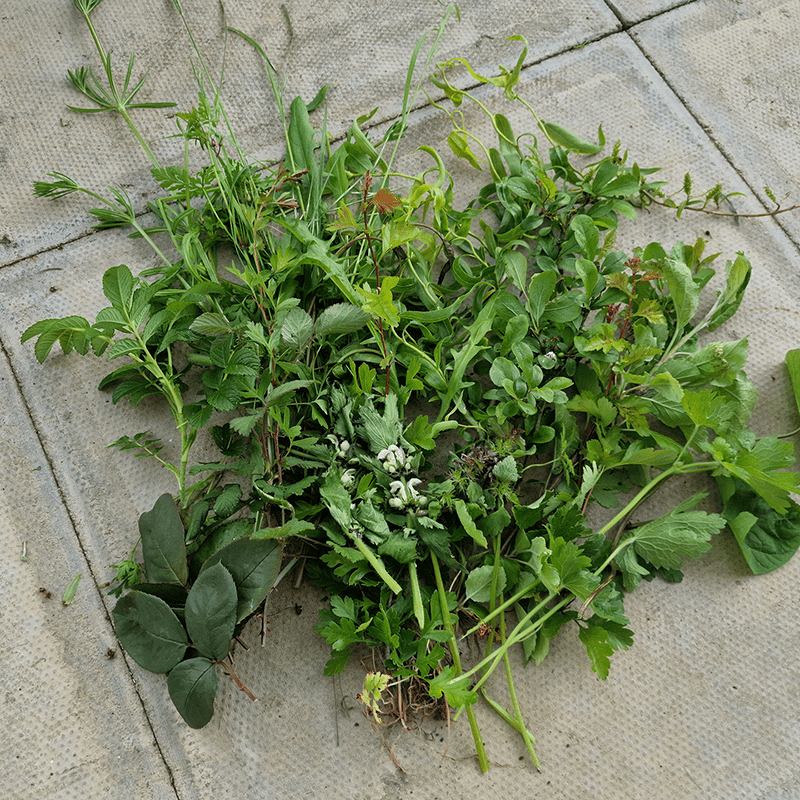
A variety of freshly picked wild green plants and herbs; ideal forage for guinea pigs or rabbits.
Forage is food you can gather from where it grows naturally, and it doesn’t cost you anything.
It’s more natural and closer to the diet these animals would have in the wild.
It’s also:
You can find all sorts of edible plants in fields, hedgerows, even in your garden – and you can feed your pets most of them fresh. But there are some, like nettles, that are better dried.
Remember to pick carefully! Never collect protected plants or plants you don’t recognise.
Although you may not be able to ‘forage’ for fruit and vegetables as easily, here’s a list of what’s safe for your pets:
As an extra, occasional treat, you can give your pets a small piece of apple, pear or tomato.
Guinea pigs also love to eat strawberry leaves, blackberry leaves and raspberry leaves (not the fruits).
Most guinea pigs will wriggle or try to run away when you want to pick them up – this is completely natural. Although you can socialise with them, feed them from your hand and have them sit on your lap, they’ll always remain slightly wary of humans. You’re still a potential ‘predator’ in their eyes.
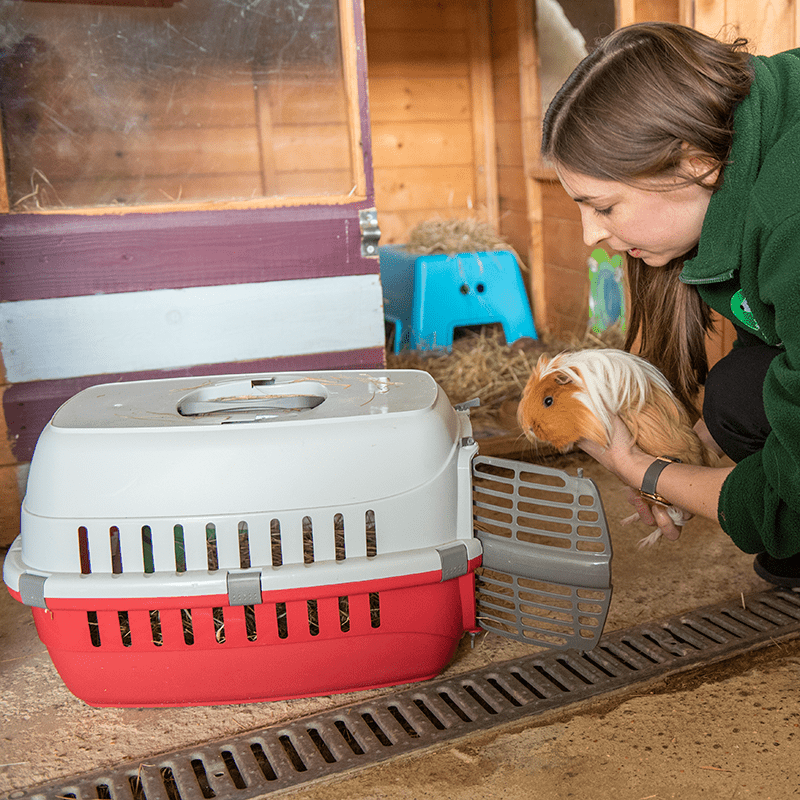
Guinea pigs can be fantastic pets for children, but make sure you supervise them at all times to prevent the guinea pigs from being squeezed or dropped. Encourage them to sit on the floor with a blanket on their lap for the guinea pig to sit on. This way, if your guinea pig moves, there’s no risk of a fall or of your child being scratched.
It’s important that you always have a suitable pet carrier available, just in case you need to rush your guinea pigs to the vet. They’re also handy for when you’re cleaning out their enclosure.
Avoid cardboard boxes, as these can quickly and easily be chewed through, leading to escapees.
Hard plastic cat carriers like this one are perfect for your guinea pigs to use. To keep your guinea pigs relaxed and happy, place some newspaper or a fleecy blanket in the base of the carrier, along with lots of hay for them to eat and hide in
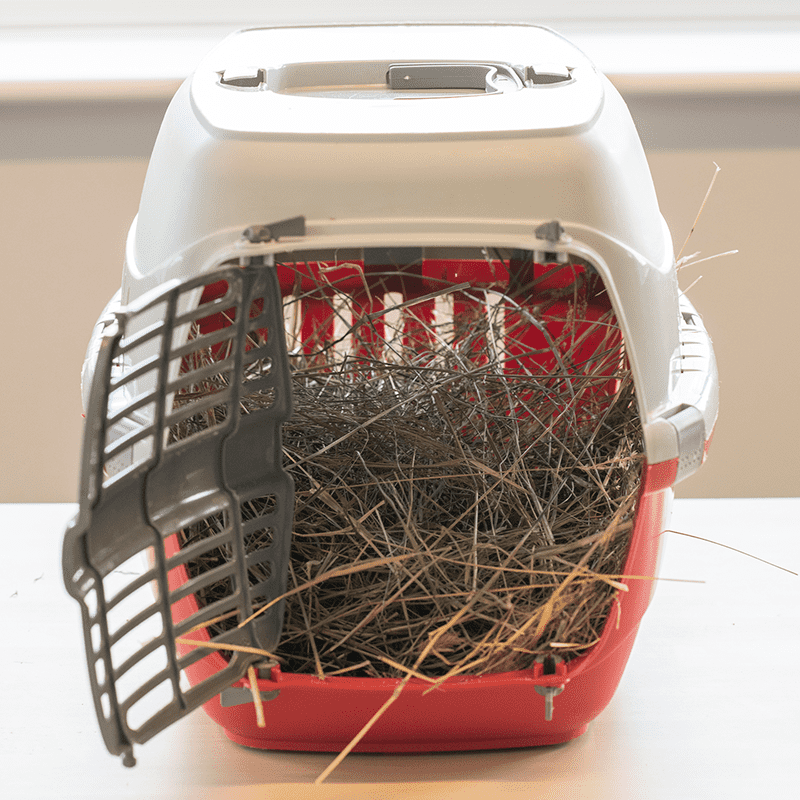
A cat carrier can be used to transport guinea pigs.
For step-by-step advice, see our guide on how to safely handle your guinea pigs.
There are lots of things you can do to ensure your guinea pigs are in tip-top condition. Make sure you health check your guinea pigs weekly and look out for any changes in their behaviour every day (more on this below). Guinea pigs can be very good at hiding any health issues until they’re really suffering!
Sometimes even the smallest thing, such as their poo looking a little smaller than normal or not rushing out to receive fresh food straight away, can be a clue to a poorly guinea pig.
If you have any concerns, act quickly and contact your guinea pig savvy vet.

Most male guinea pig owners don’t realise they need a little extra care and observation.
Males over a year old need to have their penis cleaned every few months. This involves gently pushing down above the exposed skin and using damp cotton wool.
This area is prone to a build-up of cheese-like discharge, which can eventually prevent your guinea pig from weeing normally.
Large dominant males can also be prone to ‘impaction’ from around three years old onwards. This is a rather smelly situation but can be fatal if not spotted and managed correctly.
Impaction causes the anus to bulge, and a large ball of faeces will appear to be blocking him – despite a few normal poos in the cage. Speak to your guinea pig savvy vet if you spot this.
For more advice on keeping your guinea pigs in good health, visit our guinea pig health guide.
It’s really important to find a vet in your area who has lots of experience with guinea pigs. Most vets will see cats and dogs on a daily basis and will have an extensive knowledge of their needs.
Other species such as guinea pigs will rarely be seen by most vets. So finding someone who has lots of experience of seeing, diagnosing and treating this species is very important.
Contrary to popular belief, guinea pigs do not need to be bathed. Like a lot of other pets, they do a great job of keeping themselves clean. Bathing them can strip the fur of its natural oils, so it is best to leave them be (unless advised to by your vet).
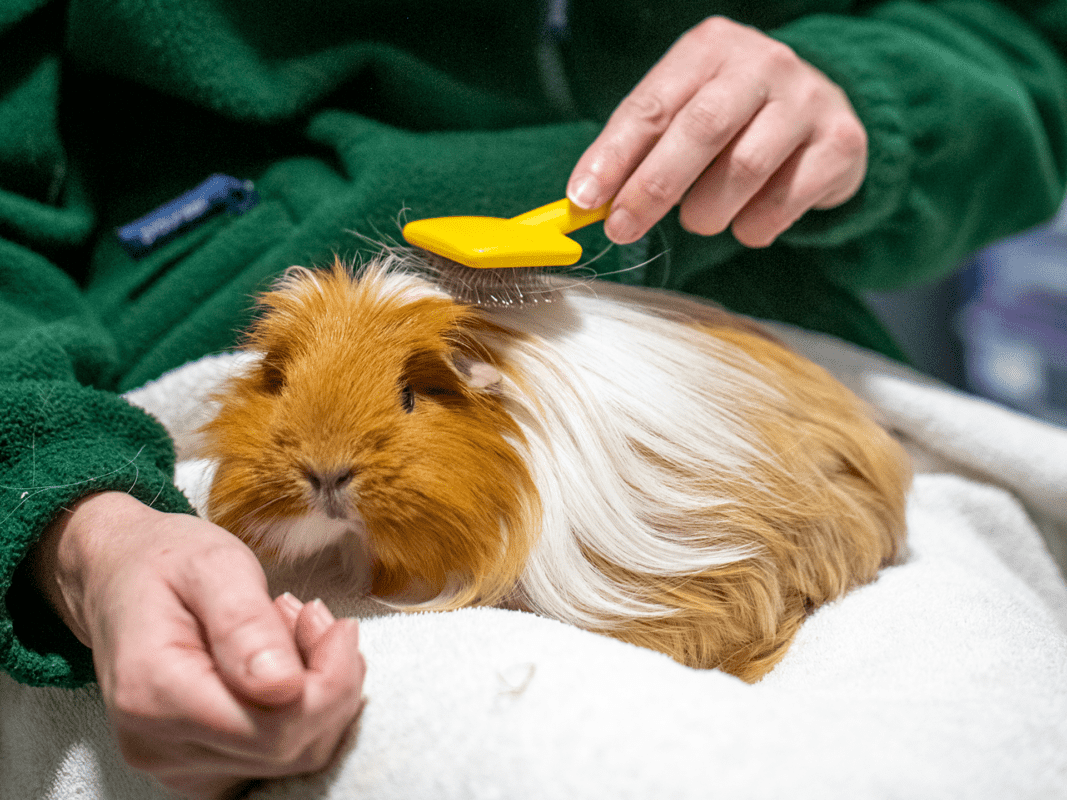
If you have longer haired guinea pigs, they’ll need daily grooming with a brush like this one to avoid their fur from becoming matted. This can quickly happen if bedding becomes tangled within their fur.
You may also notice the fur around their bottom becoming discoloured and tangled – regular grooming and being bathed if they get particularly dirty, will help with this. Trimming the long fur a little bit around this area to prevent it from dragging along the floor will also help.
We cover a range of different topics on our website – and not just for your small furry friends, but cats and dogs, too!
Not only that, but we also offer phone appointments, workshops, training classes, webinars and courses.
Visit our pet advice hub or call 0300 303 9333
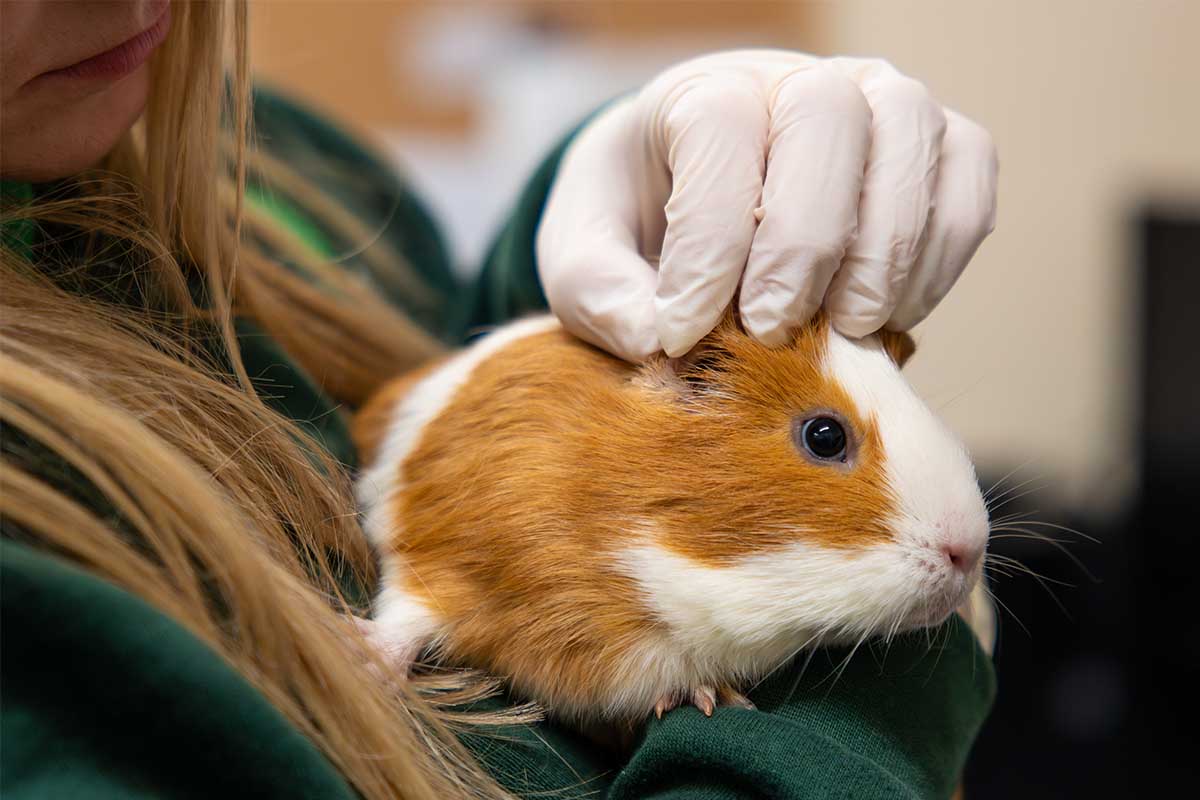
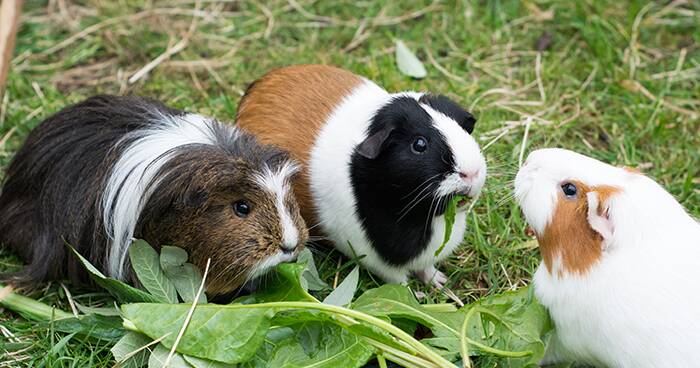
Learn all about what guinea pigs need with this interactive online course. Whether you are thinking of getting guinea pigs or want to know if yours are happy, this course will help! Suitable for all the family.
Read more about 'An introduction to guinea pigs – Online family course'