PAGE
Adopt pet rats
Thinking about adopting rats from Woodgreen? Here’s everything you need to know before getting started.
Read more about 'Adopt pet rats'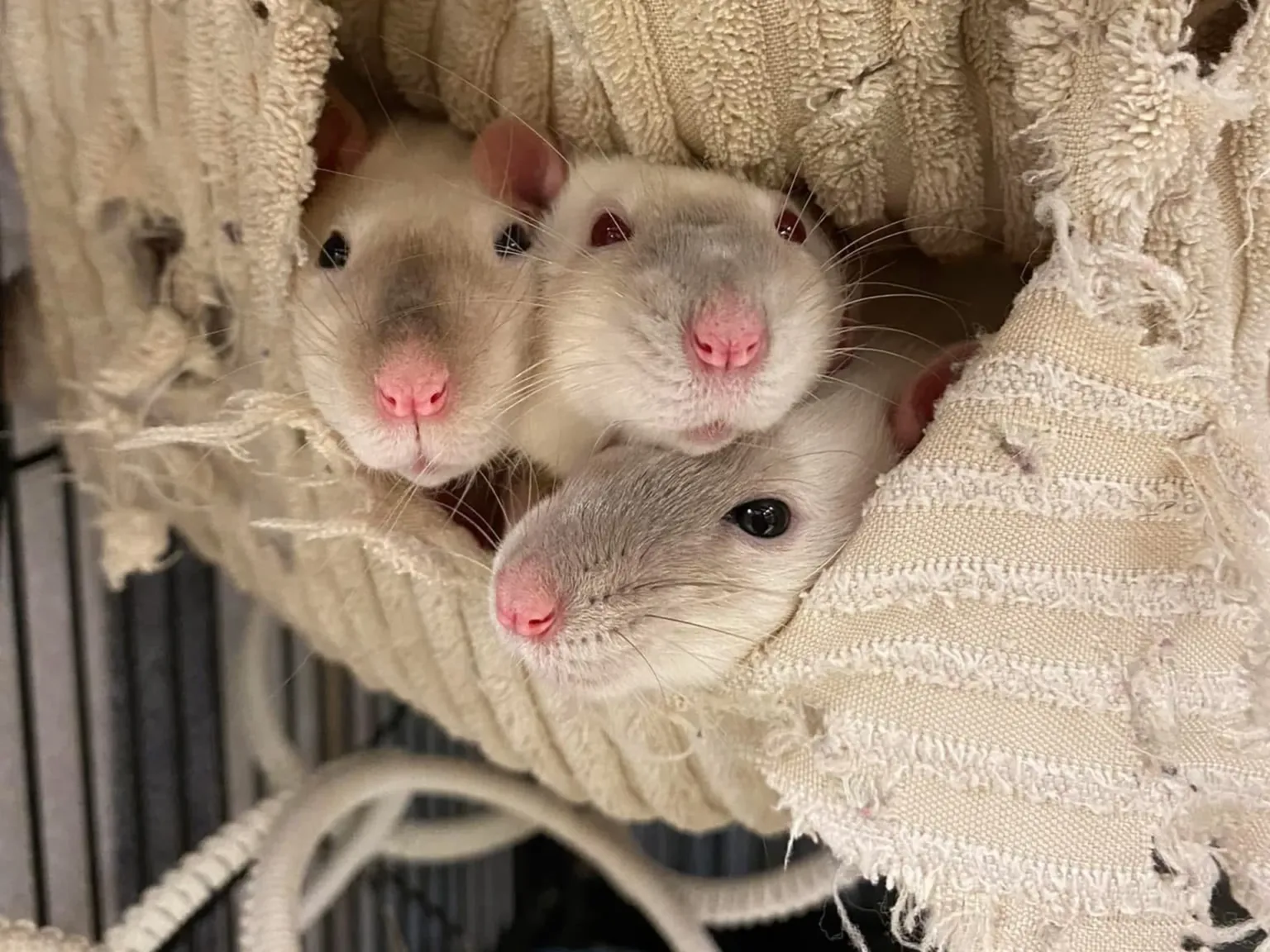
So, you’re thinking about getting some pet rats?

In this guide, you’ll find lots of useful information about how to care for them and everything else to help you decide if they’re the right pet for you (we hope they are). And if you already have rats, you might learn something new!
At Woodgreen, we know that owning pet rats can be very rewarding. These fun, loveable, intelligent creatures will keep you entertained with endless exploring of their surroundings. They really enjoy interacting with humans too – what’s not to love?
While most pet rats like to keep busy, in general females are known to be the most active, whereas males are more partial to a cuddle on the sofa – just some food for thought when you get to choosing your furry friends.
They love to come out to play and adapt to your daily routine. Rats love to have some free-range time in a secure playroom where they can run, forage, climb and interact with their owners.
They are very intelligent! Rats are very inquisitive and love to learn. They are rather partial to a bit of agility, and learning a few tricks… as long as a tasty treat is on offer that is!
It is a common misconception that rats are dirty. In fact, they spend many hours of the day busily cleaning and washing themselves, and will even use a litter tray.
They give lovely cuddles. Everyone needs a cuddle, and rats happen to love snuggling into you for an evening in front of the TV.
They are great with children! Rats really adapt well to children, and get used to coming out to play in the morning and after school. Children can also have lots of fun getting creative and learning new skills, by making enrichment for their rat’s cage. These can include hammocks, cardboard castles, tunnel mazes, rope ladders and rummage boxes.
As we’ve mentioned, rats are extremely inquisitive. In fact, they take the word to a whole new level! They love nothing more than climbing, exploring and learning about their surroundings. So, that’s why it’s really important you provide your rats with a suitable sized enclosure. And it should include plenty of fun things to keep them fit and healthy.
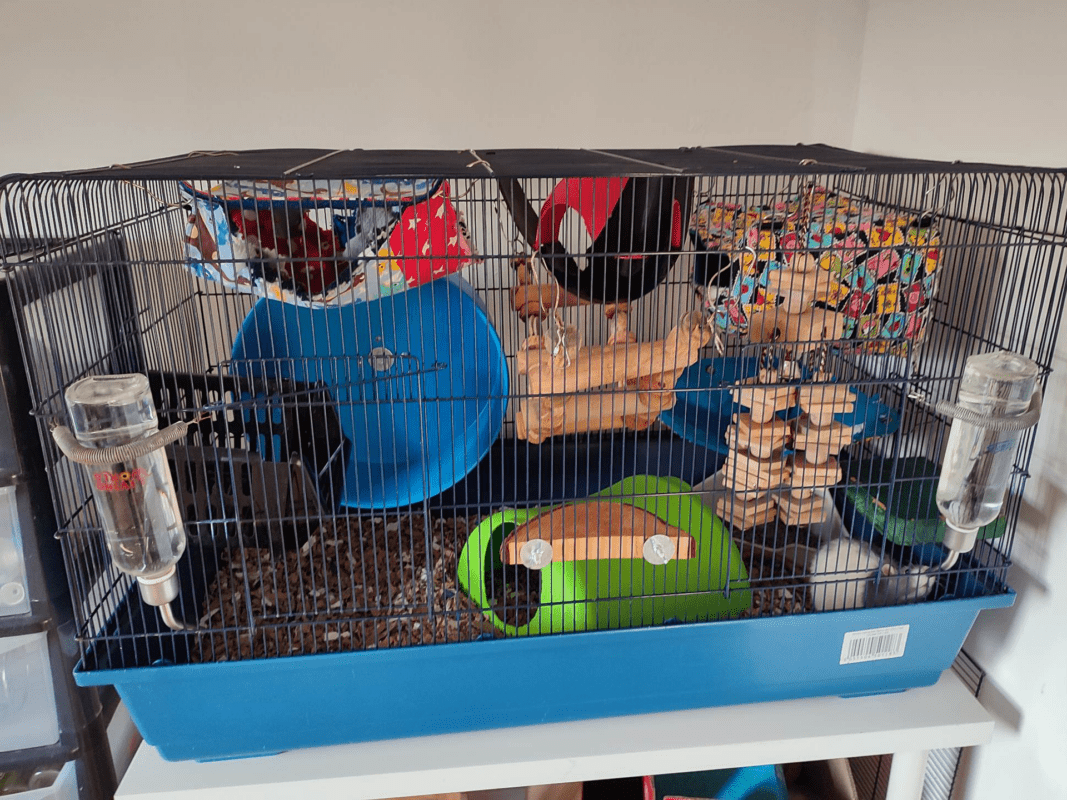
A typical rat cage set up for up to four rats
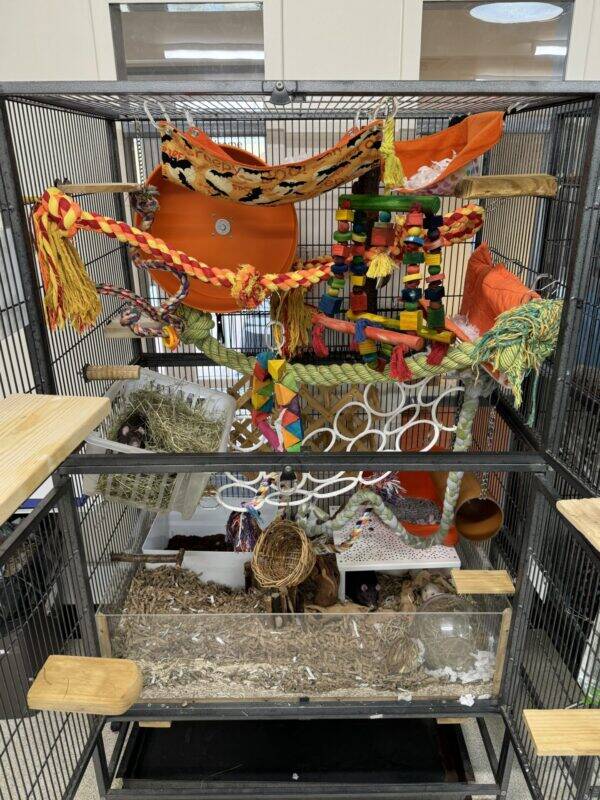
A typical rat cage set up for up to 10 rats
When you’re choosing a location for your rat cage, make sure it’s:
Once your rats have bonded with you and settled into a routine, you can start to allow them free-range time several times a week in a rat-safe room or secure playpen. This will enable you to sit and socialise with them. You can also set up the space with lots of different toys for them to explore and interact with.
Rats are super smart and can easily be trained using small amounts of their favourite treats. Try making your own agility courses or teach them how to do tricks like fetching items and weaving in and out of objects.
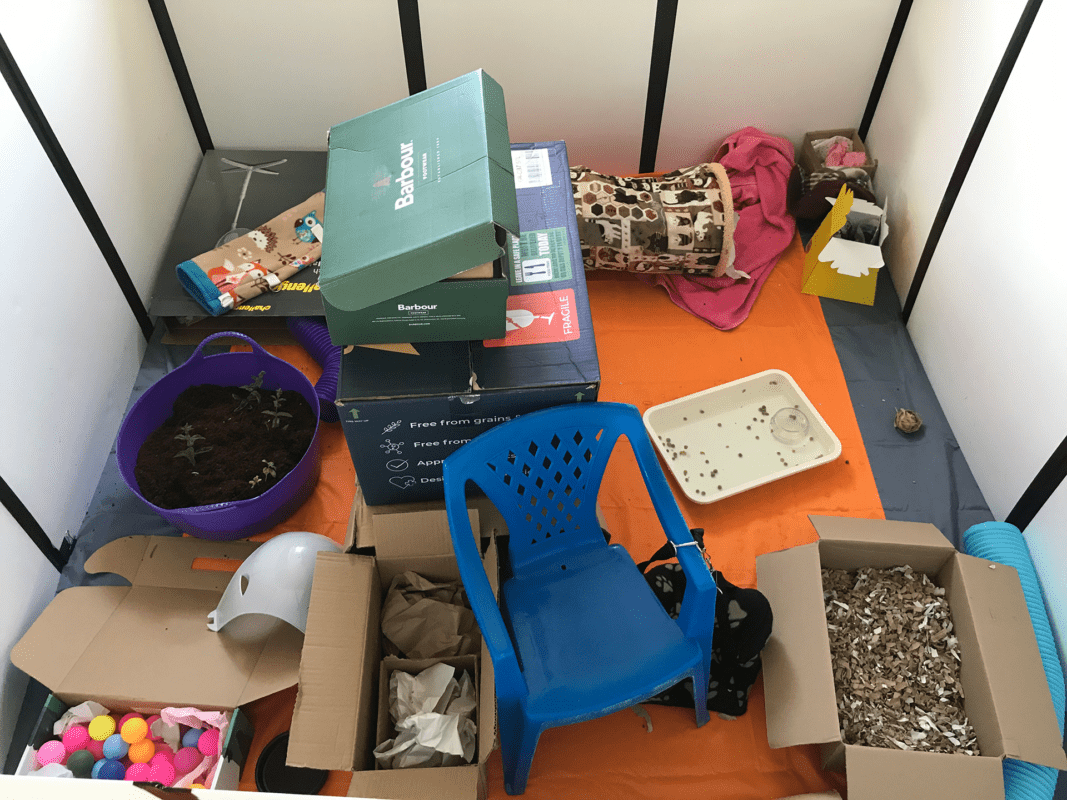
Rat enrichment ideas: a blue plastic chair, cardboard boxes, stacked shoe boxes, a purple tub with compost and herbs, a pea fishing tray, bedding, toys, and tunnels

Rats will happily spend hours each day exploring and investigating their surroundings – it’s just what they do! So it may not come as a surprise to you that these busy creatures are also great at climbing. For this reason, make sure you provide them with lots of toys and activities both in and out of their cage. This will help to keep them fit, healthy and happy.
Your rats will enjoy:
For more enrichment ideas, visit:
Top tip – use shower curtain hooks to attach hammocks and toys to your cage
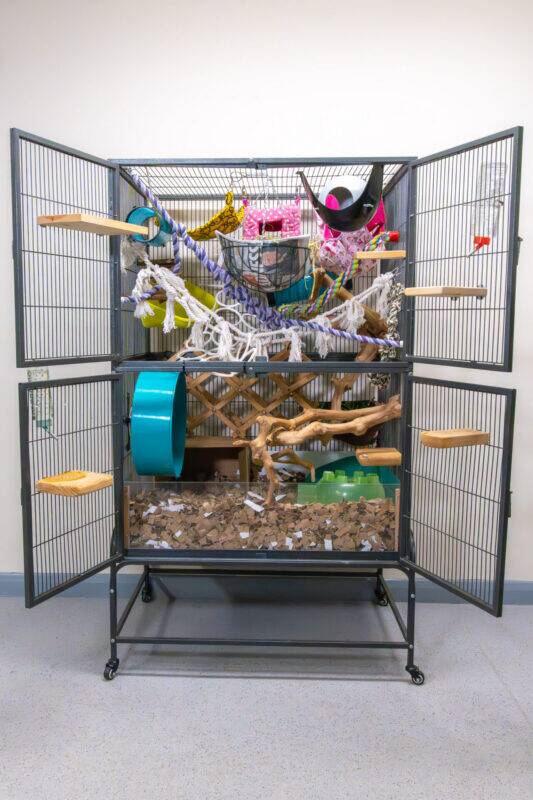
A large rat cage with wheels, filled with toys, wooden branches, ropes, ledges and shredded cardboard substrate.
Like us humans, rats like a comfy bed. And it’s vital to use the correct bedding and substrate for your rats, otherwise it could have a negative effect on their health. Sawdust and most standard wood shavings sold in pet shops can be harmful to your rats’ skin and airway, and can give you an allergic reaction too!
For the base of the cage:
*Avoid cotton-wool type bedding – this can be very dangerous as it can get tightly wrapped around their body, tail and legs.
Use non-fragranced paper pellets e.g. Back to Nature.
Keeping your rats’ cage clean is key to preventing serious health conditions such as respiratory problems and bumble foot – a very painful foot infection.
This may need to be done more often depending on the number of rats you have in the cage:
Top tip – place any items that need to be machine washed into an old pillow case or a laundry bag. This will stop rat hair and any metal clips from clogging up or damaging the machine
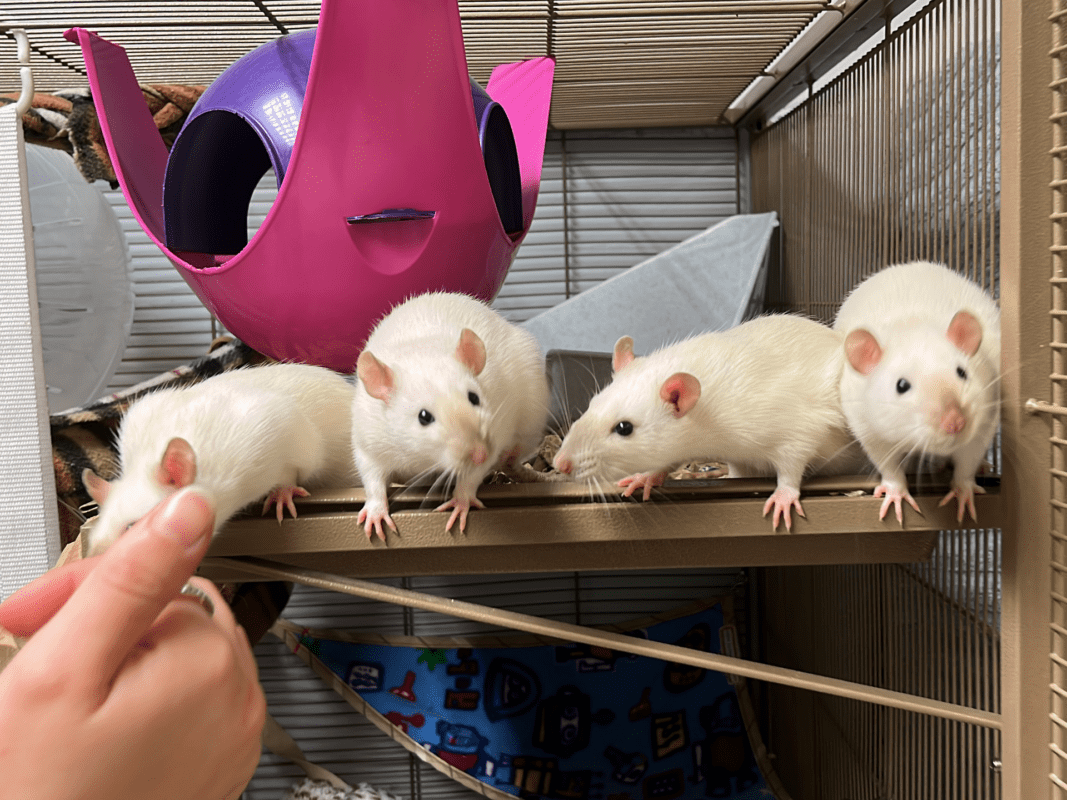
Rats are social butterflies and need the companionship of other rats to truly thrive. Lone rats crave this attention so will often become depressed or display aggressive, nervous or over-affectionate behaviour.
When it comes to the number of rats you should keep, three (or more) is ideal. This means they will create their own social network, which maintains a healthy dynamic. Having more than two can also help to prevent a rat from being left on their own if one passes away.
It’s usually best to keep rats in same-sex groups. However, males can be castrated if they display hormone related behaviours and successfully mixed back with their male friends, or with females.
Female rats can also rats can also be neutered if they’re displaying hormonal behaviour. If they still can’t be mixed then they can live with males, either neutered or entire. An experienced, rat-friendly vet can neuter your rats.
If you find yourself with a lone rat, or you’d like to increase the size of your mischief, Woodgreen can help! We have an onsite mixing service which could introduce your rat (or rats) to a new companion or three. This happens through mixing onsite or by providing you with advice to enable you to mix them at home.
Unlike other small pet species, introducing rats is best done in a smaller neutral space which doesn’t contain the scent of any of the rats. This reduces the chance of potentially dangerous fights starting out. It also encourages mutual feeding, grooming and the building of strong relationships quicker.
Always start mixes early in the morning so you have plenty of time to monitor initial interactions.
For more mixing advice and techniques, visit our mixing guide.
As rats are omnivores, they need both protein and vegetables in their diet. There are many rat complete mixes available to purchase, but finding one that meets their exact requirements is tricky.
We recommend the great homemade rat food mixes available from ratrations.co.uk, which include mixes for the different stages of their life.
Lots of rat owners choose to make their own rat food – making sure their rats get everything they need. See our simple homemade rat food recipe, which Woodgreen use for our rats.
If you’d like to learn more about making your own mixes, you can’t go wrong with the book: The Scuttling Gou.rmet: A Guide to Wholesome Nutrition for Rats by Alison Campbell
Feed your rats around 15g of dried food each, per day (around two tablespoons each). Rats are scavengers – they love to forage for food and tasty treats. So mix it up by scattering their daily allowance around their cage and hiding treats in toys or interesting items. You can also make your own toys to hide some of their food in, like these Rodent crackers.
Explore our guide to foods rats can eat and foods to avoid for more feeding ideas and advice.
It’s important your rats have access to daily, fresh, clean water. Ideally, provide this in two bottles or securely mounted bowls, at each at each end of the cage, or across both levels if you have a large two-tier cage, in case one breaks
If you’d like to have a go at making a healthy mix for your pet rats, below is a basic recipe we use at Woodgreen that will suit rats of all ages. Once you’ve made your mix, store it in a suitable container with an airtight lid. Note down the date you made the mix, and aim to use it within three months.
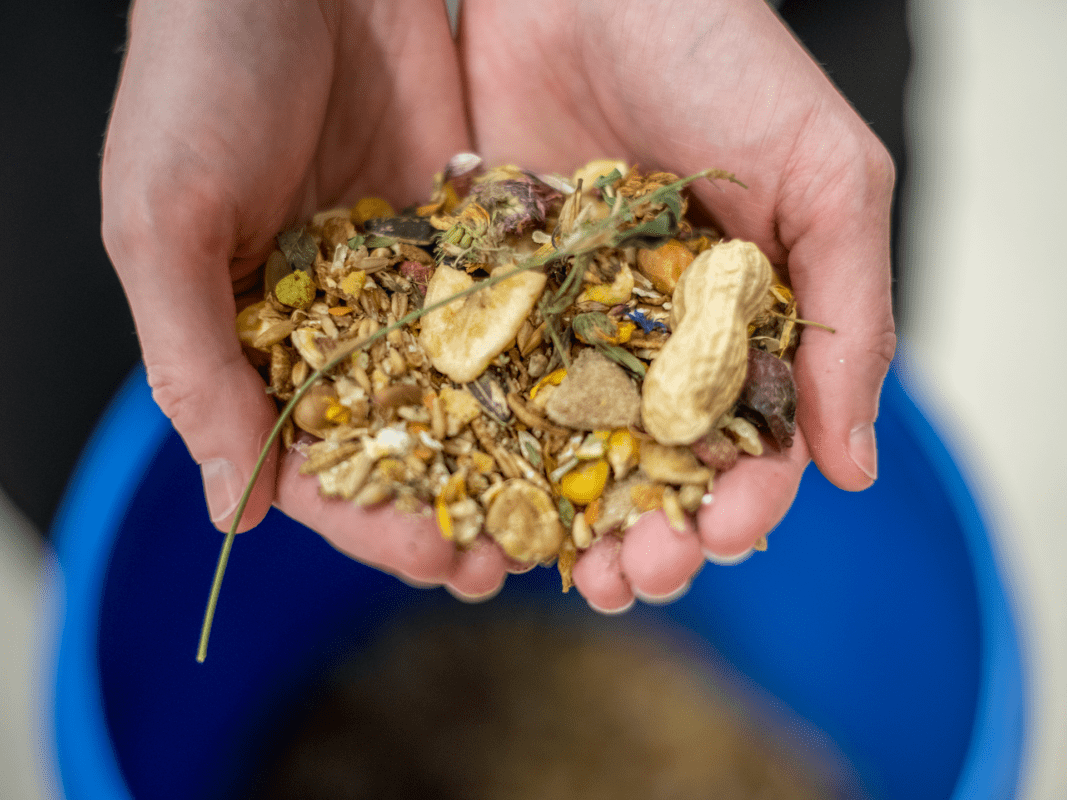
A mixture of the following:
A mixture of at least three of the following:
A mixture of the following:
A mixture of the following:
When taking your new furry friends home, allow them to settle for a day or two before regular handling and time out of the cage. New owners and environments can be very intimidating for a rat, possibly resulting in a bite.
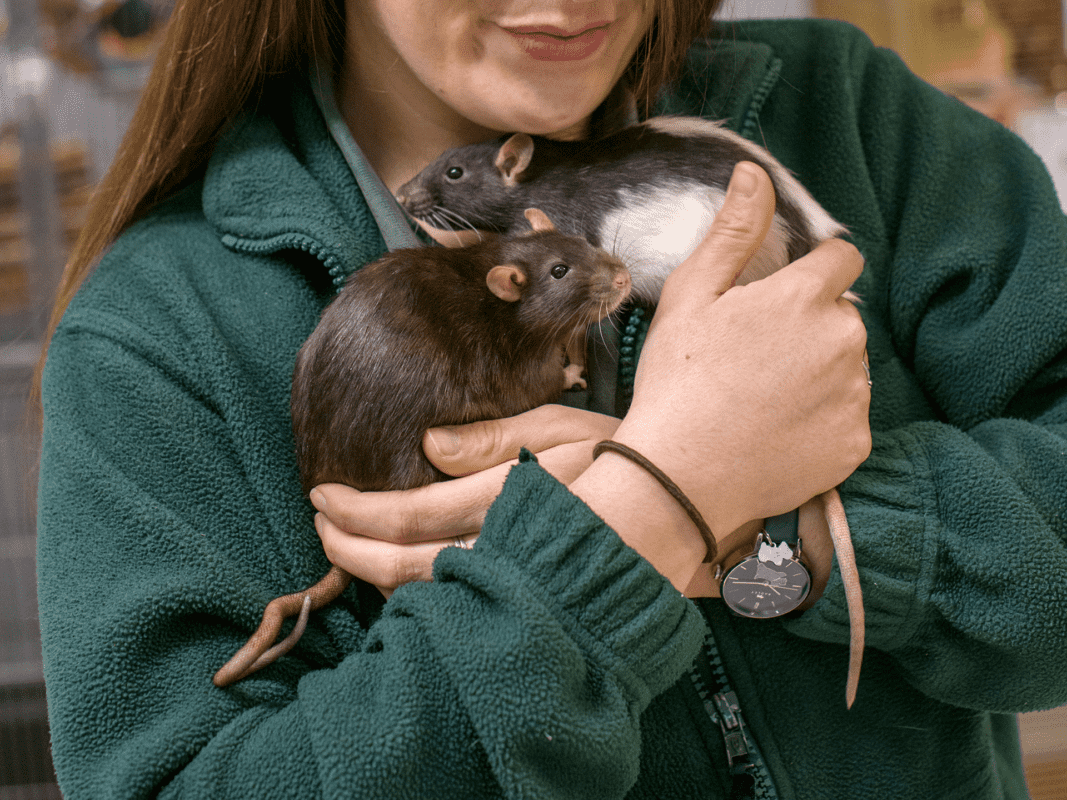
Your rats will find it more enjoyable and relaxing to climb and sit on your arms and shoulders rather than being held. Have some tasty treats on hand to encourage them to come towards the front of the cage, then place your arm out for them to climb onto.
If your rat is a little timid, encourage them to walk into a tunnel and allow them to climb out onto your lap in their own time.
Rats can feel threatened by the sight of a hand suddenly hovering above them when they’re resting. Those who have bonded with their owner are often very inquisitive and will come to the door of the cage or stand on the edge of their hammocks, ready for you.
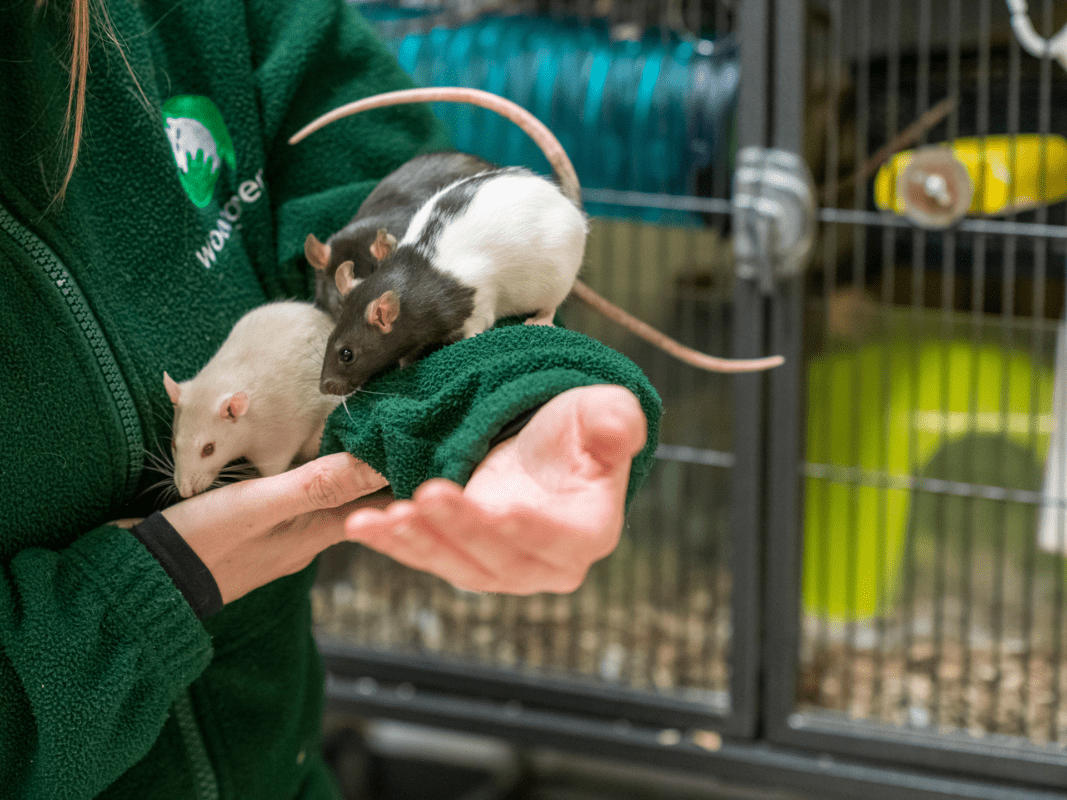
When picking them up:
Never try to pick rats up by their tail – this can result in damage or even loss of the tail.
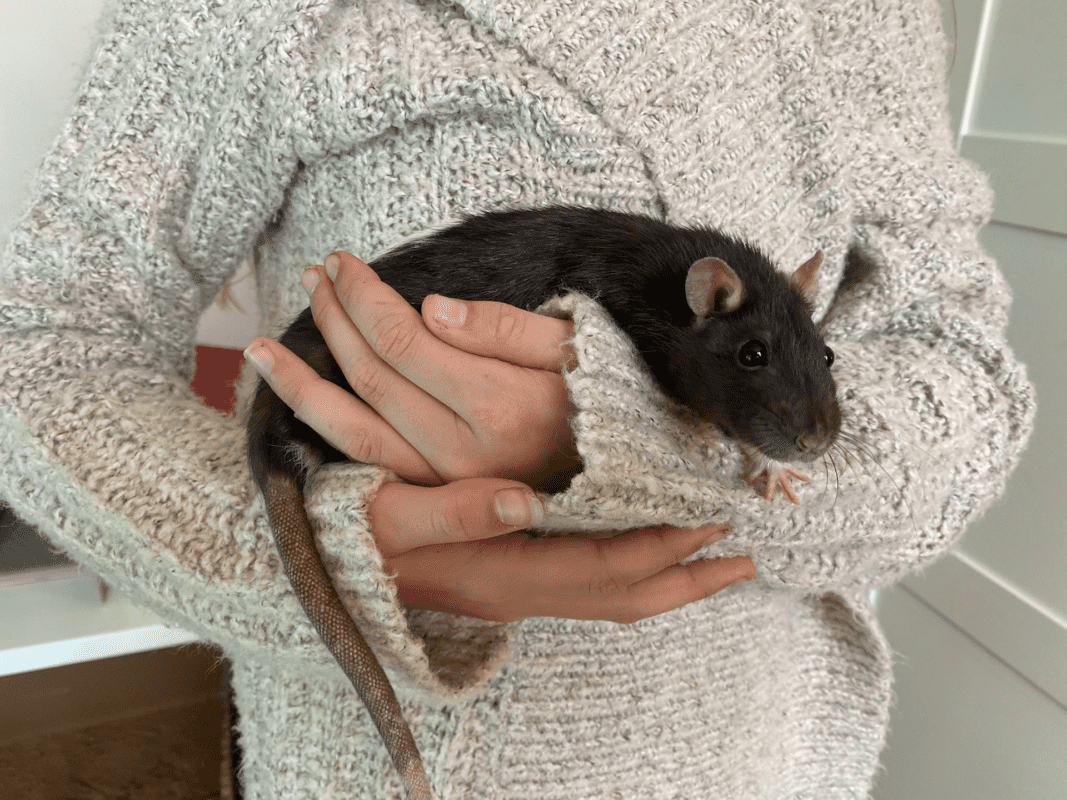
Wearing a baggy hoody or a dressing gown during free-range time is always popular with rats. They can sit and snuggle with you once they’ve had enough of exploring – or use you as a safe space to return to if they’re not feeling confident outside of their accommodation.
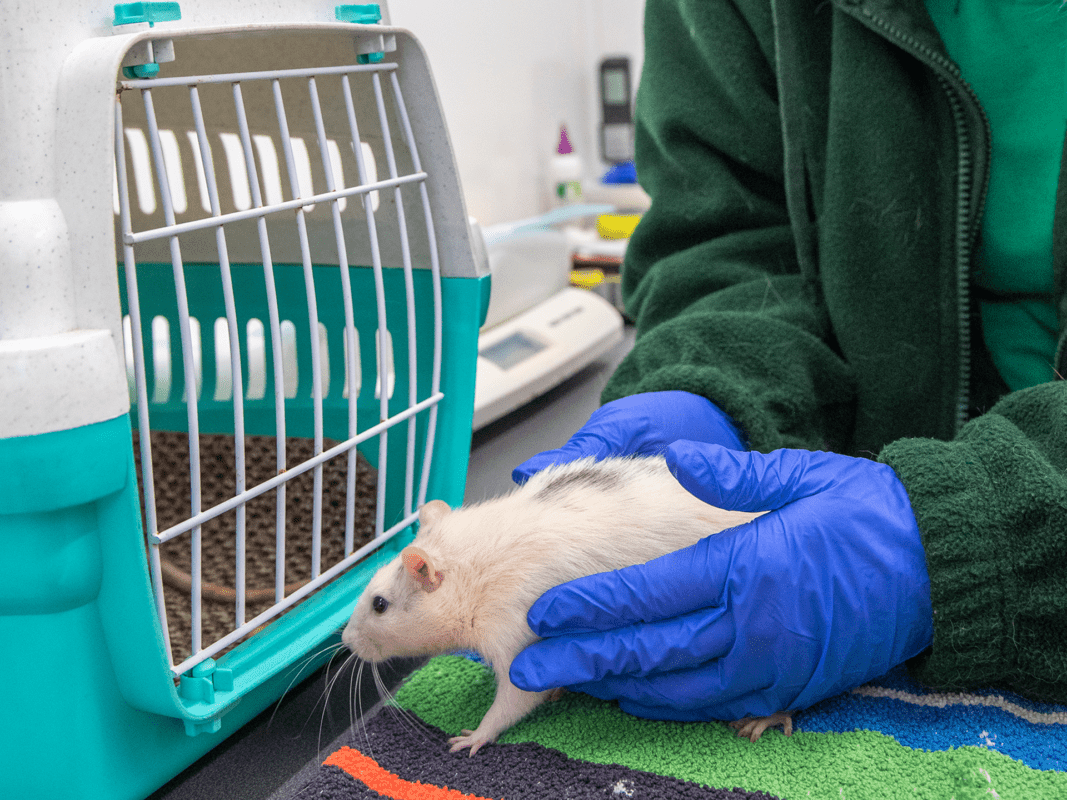
It’s important that you always have a suitable pet carrier available in case you need to rush your rats to the vet, or to use whilst you clean out their enclosure. Cardboard boxes can quickly and easily be chewed through, leading to escapees.
Hard plastic cat carriers like the one in the image below are perfect for your rats to use. Make sure the bar spacing is small enough so that any female or young rats can’t escape through them. To keep them relaxed and happy, place a fleecy blanket in the base of the carrier for them to snuggle and hide in
To keep your rats in tip-top condition, carry out a weekly health check and monitor their behaviour daily. Rats are very good at hiding illness, so signs of health problems may not appear until they are seriously unwell.
If you notice any changes or have concerns, contact a rat-savvy vet as soon as possible.
You can also watch our guide to rat health checks (see below) and learn what signs to look out for on our Rat Health Advice page.
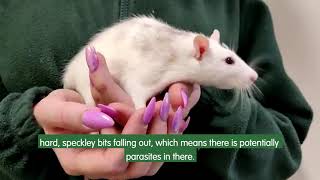
When it comes to your rats’ care, it’s really important to find a vet in your area who has lots of experience with rats. Most vets will see cats and dogs on a daily basis and will have an extensive knowledge of their needs. Other species such as rats will rarely be seen by most vets.
So finding someone who has lots of experience of seeing, diagnosing and treating these species is vital.
Sadly, tumours and benign masses are very common in rats, especially females. These can develop as young as a year old, so health check your rats regularly.
Respiratory infections are also a very common illness in rats. These are caused by bacteria in the respiratory tract, which makes the rat unwell.
Pre-existing respiratory conditions in rats can be exacerbated by stress, as a result of poor ventilation, dusty substrate, change in temperatures, predators in the home, bullying by other rats and old age.
Along with medical support from your vet, choosing suitable substrate, cleaning the cage to a high standard, washing the hammocks and bars of the cage, keeping it well ventilated and predators away, will all help prevent and manage this illness.
Although rats are typically not neutered, it’s possible and could have many benefits. Some rats become hormonally aggressive and get into spats with one another, or take it out on people.
In these cases, neutering can stop this behaviour and can also help them stay in a bonded pair or group. If you do choose to neuter your rats, choose an experienced vet.
Find out more about pet rat health and care
We cover a range of different topics on our website – and not just for your small furry friends, but cats and dogs, too!
Not only that, but we also offer phone appointments, workshops, training classes, webinars and courses.
Call 0300 303 9333 or email info@woodgreen.org.uk
Thinking about adopting rats from Woodgreen? Here’s everything you need to know before getting started.
Read more about 'Adopt pet rats'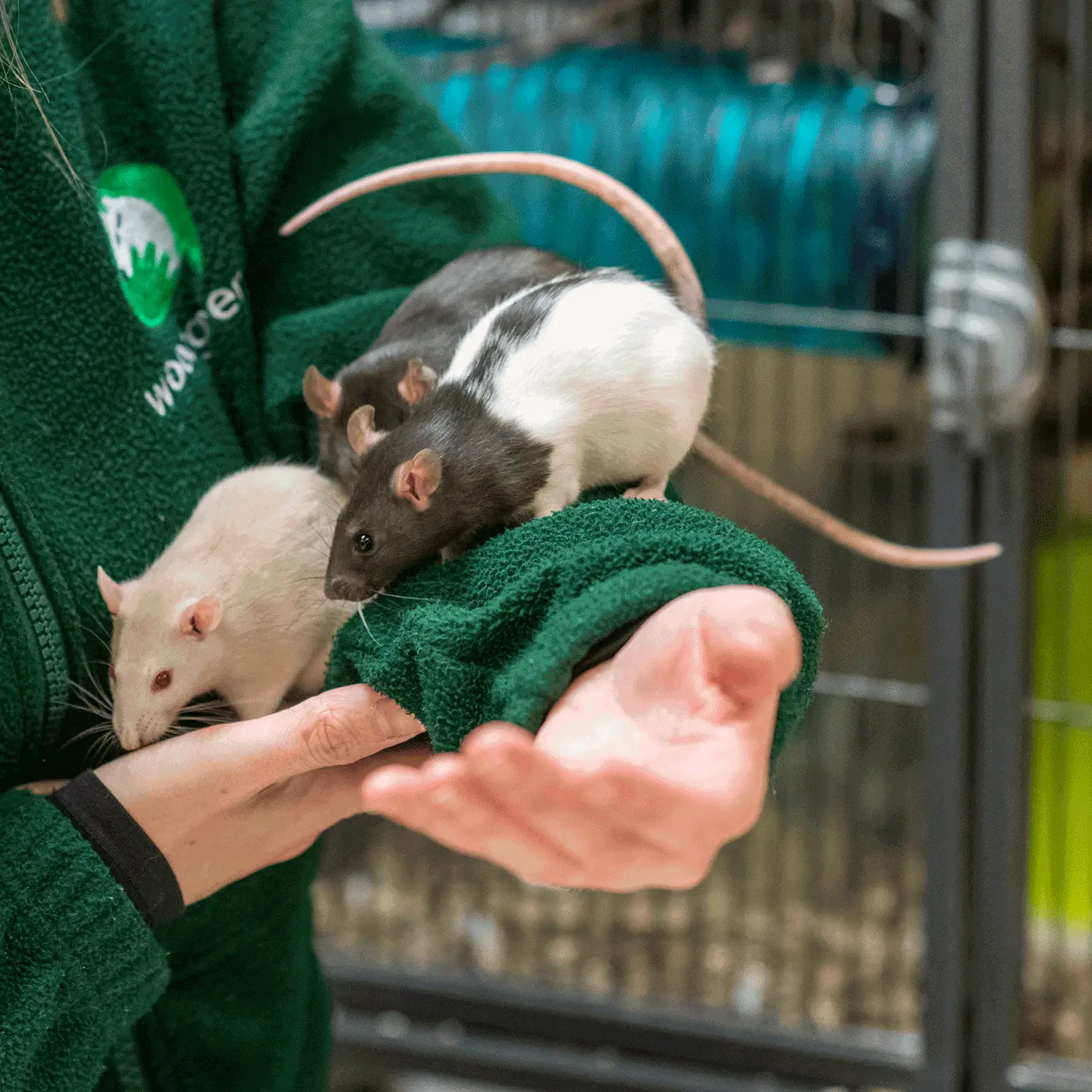
Learn how to handle your pet rat with our expert advice. If you've recently got a new pet rat, allow them to settle for a day before handling them for the first time.
Read more about 'How to handle pet rats'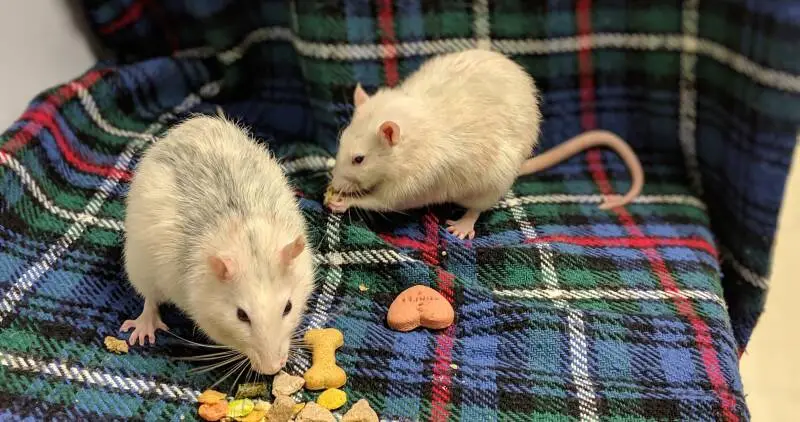
Rats need both meat and vegetables in their diet (they’re omnivores). The basis of your rats’ diet should be a good-quality, complete, dry mixture that has the nutrients they need.
Read more about 'What do pet rats eat?'